A new analysis from Newmark indicates that major technology companies are actively increasing their office footprints even as broader economic uncertainty persists. Reviewing the largest tech leases in the U.S., the firm found that the average transaction size among these top deals climbed 33% year-over-year to 165,000 square feet. Much of this expansion is being driven by artificial intelligence and AI-adjacent firms that are committing to larger spaces. The report also notes that the average term for new leases in the segment is 120 months, underscoring a preference for long-duration occupancy strategies.
While deal sizes are growing, Newmark reports that the largest tenants are concentrating their leasing activity in a smaller set of office markets. The 100 largest tech leases were executed across 14 U.S. markets, down from 21 in the prior period. This indicates a narrowing focus on select locations rather than widespread geographic expansion. According to the report, activity was especially strong in the San Francisco Bay Area and New York City, which together captured a significant share of these large commitments.
Within the Bay Area, there has been a notable shift in where the largest leases are landing. Silicon Valley has overtaken San Francisco as the subregion with the greatest share of major tech leasing. This pivot highlights how established and emerging tech firms are emphasizing locations most closely aligned with deep talent pools and existing innovation ecosystems. At the same time, the report finds that just 10 tenants account for the largest proportion of leasing activity, suggesting that a relatively small group of companies is driving much of the current office demand in the tech sector.
Newmark researchers Jessica Morin and Keith Reichert describe these leases as deliberate, large-scale real estate commitments undertaken against a backdrop of macroeconomic and geopolitical headwinds and a constrained pipeline of new office supply. They observe that tech firms are concentrating in major talent hubs, seeking higher-quality workplaces, and in many cases expanding their overall presence. In their view, the pattern suggests that leading tech companies continue to treat physical office space as a key tool for attracting talent, fostering collaboration, and supporting long-term growth even during periods of uncertainty.
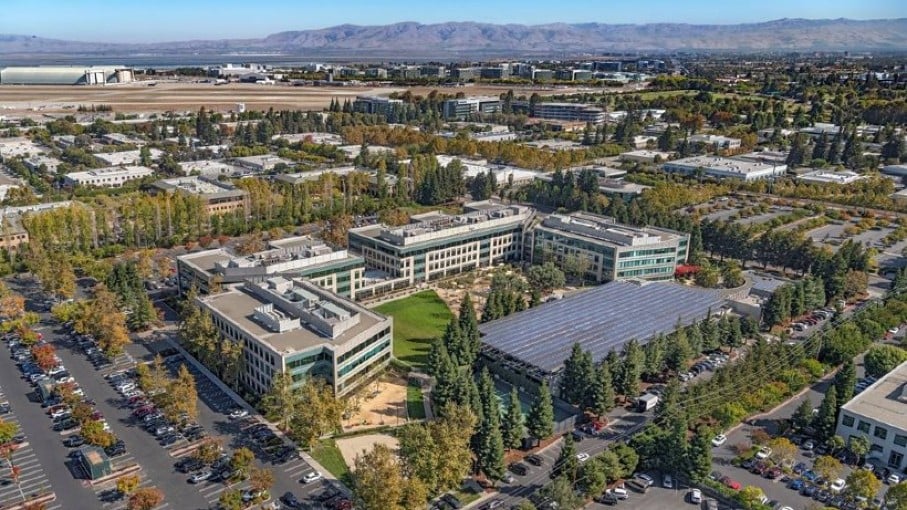
The report’s themes are illustrated by a recent lease at 350-380 Ellis Ave. in Mountain View, CA, where OpenAI took 450,000 square feet in March. This commitment reflects both the growing space needs of AI-focused firms and the continued importance of Silicon Valley within the broader San Francisco Bay Area office market. Taken together, the data points in Newmark’s analysis indicate that while tech office demand may be consolidating into fewer markets and a smaller group of large tenants, those tenants are committing to sizable, long-term leases in the locations they prioritize most.