A new report from Colliers and Placer.ai finds that the 2026 FIFA World Cup generated sharp but highly localized gains for retail and dining businesses in the 11 U.S. host cities. During the 39-day tournament, locations closest to match venues saw the strongest performance, while activity across the broader metro areas changed little compared to the prior year.
According to the analysis, dining venues situated near World Cup stadiums recorded a 53.7% year-over-year increase in visits. Retail locations in the same immediate trade areas posted a 22% rise in traffic over the same period. These gains were concentrated around the venues themselves, indicating that most fan-driven spending stayed in close proximity to where matches were played rather than diffusing widely across the metropolitan regions.
Retail performance varied significantly by category. Sporting goods stores emerged as the most consistent beneficiary of the World Cup, outperforming other retail segments throughout the tournament window. In contrast, apparel stores and superstores saw more uneven results, with no clear pattern of uniform uplift across markets or match days. This divergence underscores that not all retailers located near major events benefit equally, even when overall foot traffic is elevated.
Food and beverage concepts also experienced differentiated outcomes. Bars and pubs near match venues averaged a 9% increase in visits on game days, reflecting their role as gathering points for fans before and after matches. These results suggest that concepts directly aligned with the fan experience, such as viewing environments and social gathering spaces, were better positioned to capture incremental demand.
Colliers national director of retail services and practice groups | U.S., Anjee Solanki, noted that mega-events generate significant consumer demand but do not automatically translate into stronger performance for nearby businesses. She emphasized that the most successful properties were those that became part of the overall fan experience, whether through a targeted tenant mix, well-designed gathering areas, or event-focused activations that encouraged fans to linger and spend.
Solanki added that landlords and retailers need to go beyond simply being located near a major venue or event. Instead, they should aim to create destinations that fans actively choose to visit, both during and between matches. The findings from the World Cup period highlight the importance of curating uses and programming that resonate with event-driven visitors, rather than relying solely on baseline foot traffic generated by stadium proximity.
The report also illustrates how outcomes can differ even among properties that share similar locations relative to a venue. For owners and operators, the World Cup experience points to the value of using data on visitation patterns to refine merchandising strategies, invest in placemaking, and align offerings with how fans actually move through the area on event and non-event days.
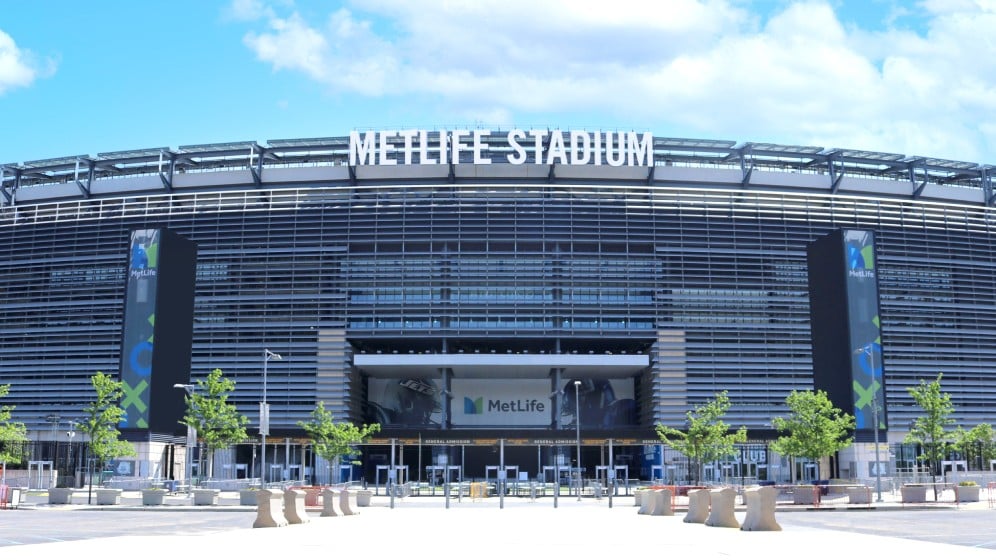
The localized nature of the World Cup lift is exemplified by MetLife Stadium in East Rutherford, NJ, one of the 11 U.S. venues selected for matches. While the stadium area captured elevated game-day activity, the broader metro-level impact was limited, reinforcing the report’s conclusion that proximity alone is not a sufficient strategy for capturing mega-event demand.