Colliers has completed the $8,500,000 sale of a multifamily co-living property near UCLA, with plans to convert the asset to student housing. The property is located at 1775 Beloit Avenue in West Los Angeles and was sold through a court-appointed receivership process. Colliers vice chair Kitty Wallace represented both the buyer, UCLA Housing Group, and the seller, Enterprise Bank, in the transaction.
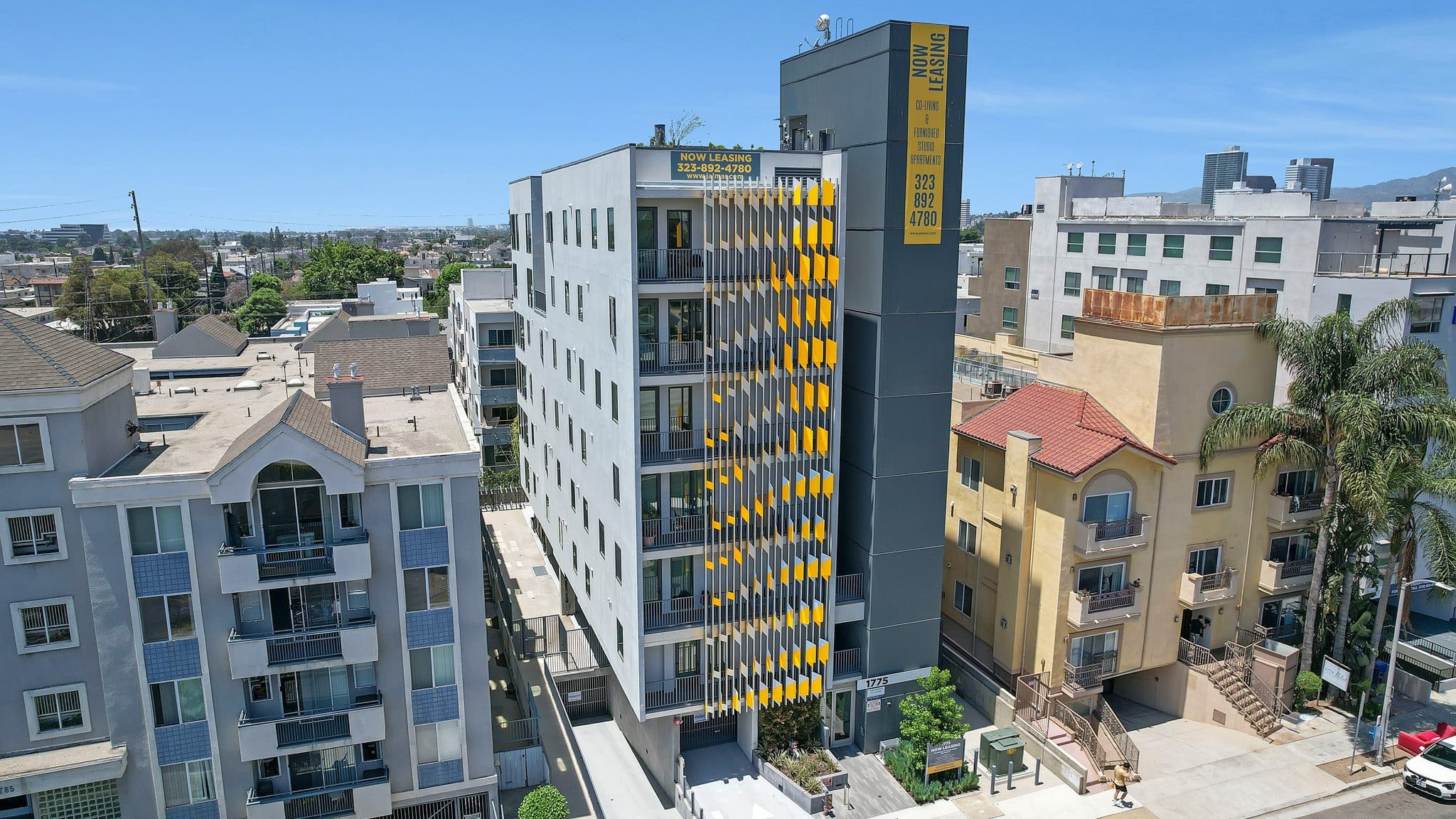
The seven-story property was constructed in 2023 as a Type II co-living community and totals approximately 18,000 square feet. The building includes 16 residential units configured for 48 beds. Based on the reported sale price, the transaction equates to $531,250 per unit, or roughly $472 per square foot.
UCLA Housing Group plans to convert the co-living complex into dedicated student housing, aligning the asset more directly with demand generated by the nearby university. The existing bed count and relatively recent construction position the property for a transition from a general co-living model to a student-focused use.
According to Wallace, the sale is indicative of a broader shift underway in the Los Angeles multifamily market. Over the past decade, developers brought forward co-living communities to create more attainable housing options close to major employment and education centers. In the period following the pandemic, however, Los Angeles experienced muted rent growth even as household incomes, replacement costs, and home prices continued to rise.
Within this context, new development has become more difficult to execute and the forward construction pipeline has continued to contract. Wallace noted that investors are increasingly concentrating on well-located existing assets that can be acquired below replacement cost. The strategy reflects a view that tighter new supply and steady demand will improve future supply-demand fundamentals for multifamily assets in markets such as Los Angeles.
The receivership sale of 1775 Beloit Avenue and its planned conversion to student housing illustrate how buyers are repositioning relatively new multifamily properties to better match local demand drivers. The transaction also highlights the role of court-supervised processes in resolving ownership and facilitating trades in a segment of the market where ground-up development has become more challenging.