New industrial leasing in the United States has rebounded to levels in line with its historical peak, even as renewal activity shows signs of softening, based on data reported by CoStar Group. The firm’s new lease count index indicates that overall deal volume for fresh commitments has effectively returned to prior highs, underscoring resilient demand for warehouse and logistics space across size segments.
Large occupiers have played a central role in the recovery. CoStar’s index for leases of 200,000 square feet or more has climbed to 92% of its previous peak, indicating that big-box demand is approaching its former high-water mark. The 50,000 to 199,999 square-foot tranche has also strengthened, with activity in that band now at roughly 90% of its historical top. Together, these categories show that larger requirements are once again driving a material share of industrial leasing.
In contrast, renewal momentum has weakened, with the renewal index falling even as new deal volume improves. That dynamic suggests tenants are more willing to relocate or adjust footprints rather than simply extending existing agreements. CoStar’s analysis notes that the full impact on occupancy will depend not only on gross leasing volume but also on how efficiently landlords can backfill space vacated through relocations and lapsed renewals.
Smaller tenants remain closer to their previous highs than larger users. Across all size categories under 50,000 square feet, leasing stands at roughly 91% to 98% of peak levels. This indicates that demand from smaller space users has been comparatively stable, though CoStar observes that activity in several size ranges has begun to level off, hinting at a possible plateau after the initial recovery phase.
Juan Arias, national director of industrial analytics at CoStar Group, cautions that strong new leasing does not automatically translate into equivalent net absorption. According to Arias, relocations and softer renewals can leave space behind, and the trajectory of recovery will depend on how quickly owners can re-lease existing product. Nationally, he notes that demand is broadening beyond the newest logistics facilities and into older buildings larger than 500,000 square feet, signaling that well-located, big-box assets do not have to be brand new to attract tenants.
At the same time, midsized buildings are contending with excess supply and elevated competition for tenants. This divergence within the industrial sector highlights that while headline leasing metrics point to a recovery in activity, performance remains highly dependent on building size and position in the competitive set.
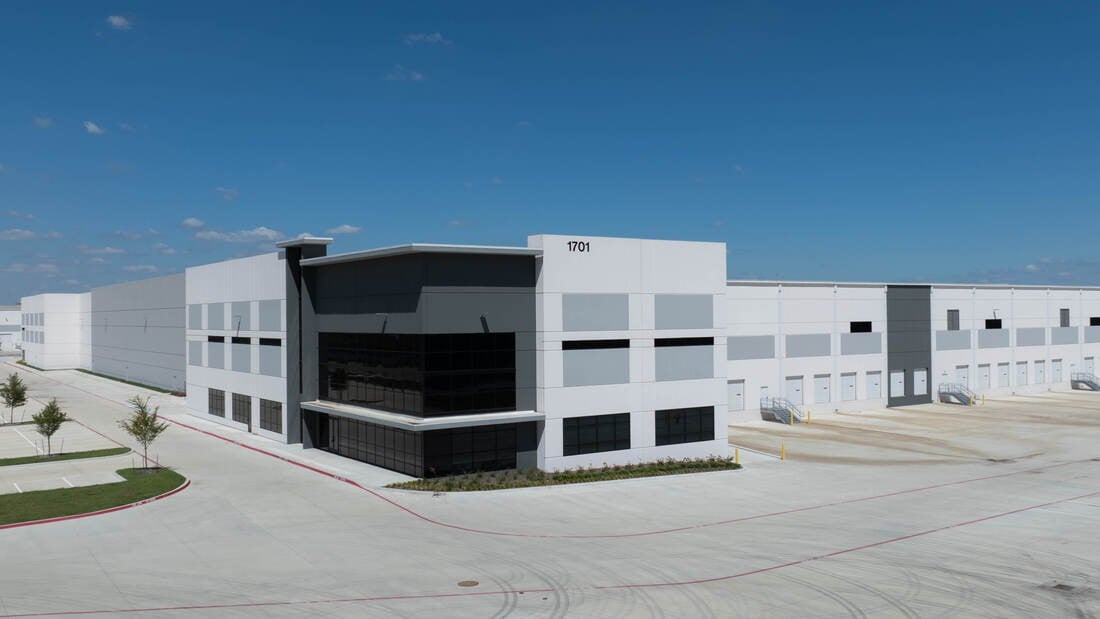
An example of ongoing demand for large logistics facilities is Building 2 at Southport Logistics Center in Wilmer, TX, where Logistics Plus leased 744,452 square feet in August. The transaction underscores the ability of sizable, established industrial properties to secure major users even as certain segments of the market contend with greater availability and slower backfilling.