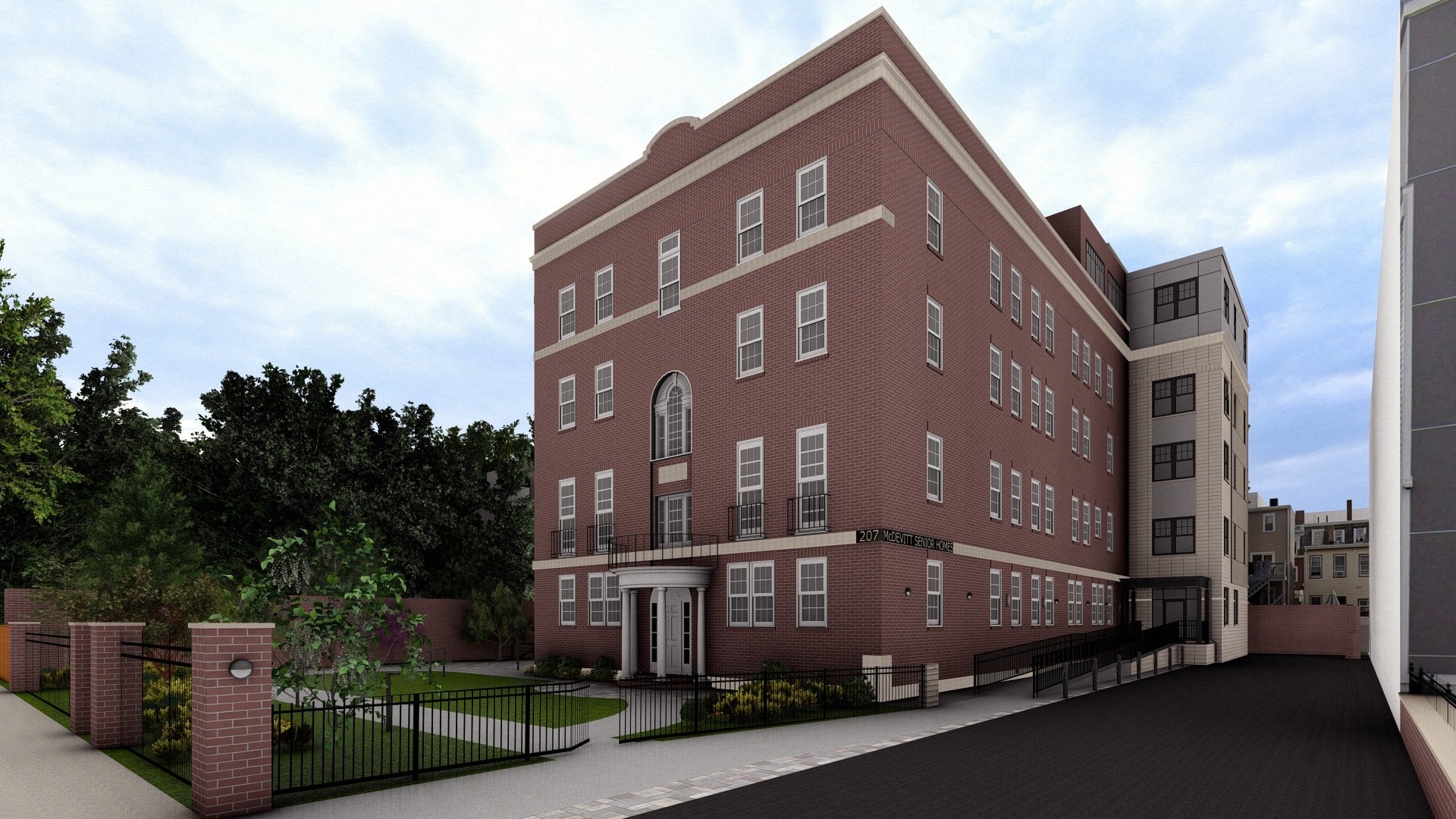
MassDevelopment has issued a $7,760,000 tax-exempt bond on behalf of 207 E Street LLC, an affiliate of South Boston Neighborhood Development Corporation, to support the conversion of the former St. Augustine’s convent at 207 E Street in South Boston into senior housing. The convent is currently vacant and will be repositioned to provide housing specifically for older adults in the neighborhood.
Eastern Bank purchased the tax-exempt bond, giving the project access to lower-cost capital than would typically be available through conventional financing. The bond structure is designed to reduce borrowing costs for the sponsor, helping to make the adaptive reuse of the historic property financially feasible while keeping the focus on affordability for senior residents.
In addition to the bond financing, MassDevelopment assisted the Massachusetts Executive Office of Housing and Livable Communities in securing federal tax credits for the project. Those tax credits are expected to generate approximately $11.7 million in equity, providing a substantial portion of the capital stack needed to convert the former religious facility into senior housing. The combination of tax-exempt debt and tax credit equity underscores the use of public-sector tools to advance community-based housing initiatives.
State officials framed the project as both an economic and community development initiative. Economic Development Secretary Eric Paley, who chairs MassDevelopment’s Board of Directors, noted that creating housing is central to sustaining strong local economies and stable neighborhoods. He emphasized that repurposing the former St. Augustine’s convent into senior housing preserves the property’s historic legacy while allowing long-time older residents to remain connected to the South Boston community.
The project illustrates how mission-driven organizations, including affiliates of local neighborhood development corporations, can leverage state agencies, bond financing, and federal tax credits to reposition underutilized properties. By channeling tax-advantaged capital into a vacant building, stakeholders aim to address senior housing needs without relying solely on market-rate development models.
While specific development details such as unit count, total project cost, and construction timeline were not disclosed, the financing structure outlined in the announcement points to a capital strategy that blends bank capital, public financing tools, and federal incentives. For commercial real estate participants, the transaction highlights how tax-exempt bonds and tax credits continue to play a critical role in funding specialized housing assets, particularly in urban neighborhoods seeking to preserve community fabric while expanding housing options for aging residents.