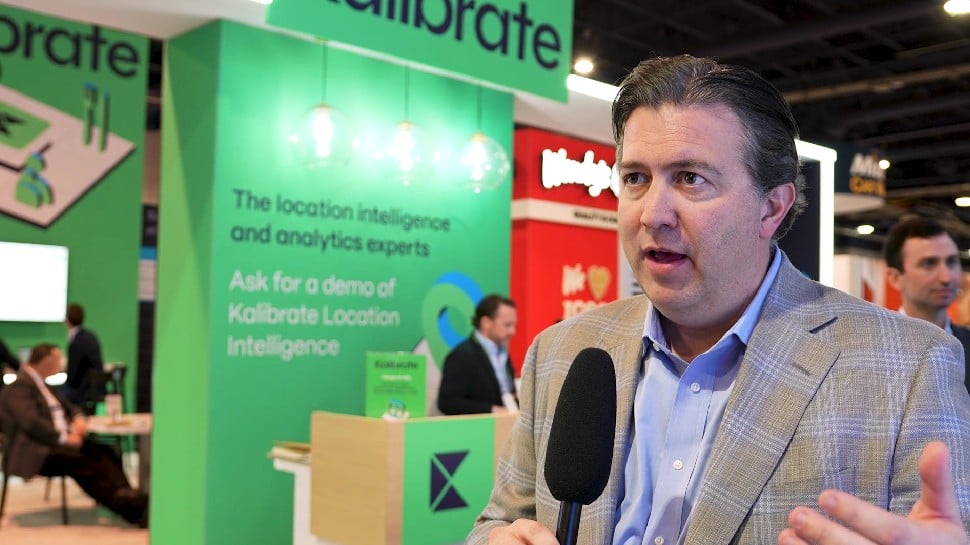
Kalibrate CEO Charles Wetzel reflects on how the location analytics business has shifted from a primarily service-based model in the 2000s to one in which software now plays a central role. Speaking with Connect CRE during ICSC Las Vegas, he notes that early in his career most client work in this space depended on bespoke consulting and manual analysis. The introduction of more sophisticated software has since allowed Kalibrate to deliver analysis much more quickly, reshaping expectations around speed and scalability in decision support for clients.
Wetzel explains that, despite initial optimism that software alone could solve most location analytics challenges, the firm has concluded that neither pure services nor pure software is sufficient on its own. He describes how combining consulting expertise with technology creates a more durable and resilient solution. By bringing together what he characterizes as both the art and science of location analytics, Kalibrate aims to generate outputs that remain relevant over longer time horizons and hold up better in practical application.
In the interview, Wetzel highlights how Kalibrate leverages this integrated approach to outperform standalone software platforms or traditional consulting engagements. The firm seeks to embed human expertise directly into its tools and workflows, offering clients interpretive guidance alongside quantitative outputs. This combination is presented as especially important as retailers and restaurants make high-stakes real estate decisions in dynamic markets.
Wetzel also points to situations in which Kalibrate has identified market opportunities that retail or restaurant clients might not have spotted on their own. By pairing data-driven models with domain specialists who understand how operators actually run stores and restaurants, the company works to surface pockets of underappreciated demand or overlooked trade areas. The goal is to help users avoid walking away from viable locations simply because surface-level data or off-the-shelf tools did not capture the full picture.
Looking ahead, Wetzel discusses how Kalibrate is evolving its data models and analytics capabilities so clients can better anticipate structural shifts in their markets, rather than simply reacting after the fact. This includes adjusting frameworks and inputs to account for changing consumer behavior and competitive dynamics. The same focus on anticipation applies to day-to-day market volatility, as Kalibrate refines its tools to help users respond to emerging trends in real time.
The video interview delves into these themes, underscoring how Kalibrate is working to align technology, data and subject-matter expertise. For retail and restaurant decision-makers evaluating new locations or optimizing existing portfolios, the company positions its blended services-and-software model as a way to gain deeper insight into where demand is headed and how to position their site strategies accordingly.