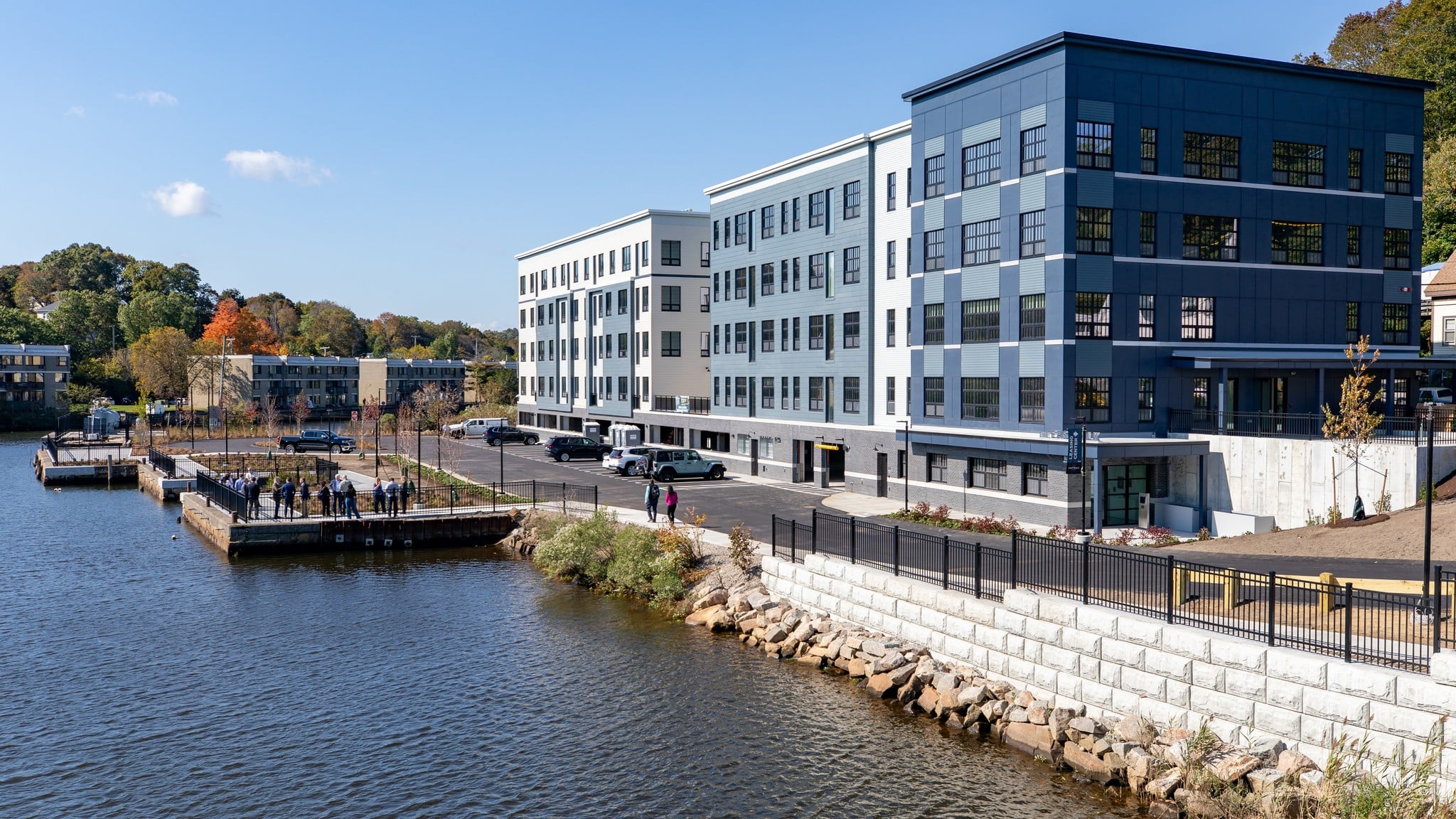
WinnCompanies and its development partner Arch Communities have completed The Eastwalk, a 56-unit, mixed-income multifamily community in Braintree, MA. The project is described as transit-oriented and is positioned to serve a range of household income levels in a riverfront setting.
The Eastwalk represents a $47 million investment on the long-vacant site formerly occupied by the Braintree Electric Light Department power plant. The redevelopment replaces a legacy utility use with new residential housing, marking a shift in how the property contributes to the local community.
Federal, state and local officials joined WinnCompanies executives for a tour of the completed property, underscoring public-sector engagement with the project. The five-story building offers a mix of bedroom sizes and is intended to accommodate low-income, middle-income and market-rate households under one roof.
The community is located in a riverfront neighborhood that is expected to benefit from future infrastructure investments by both the city and the state. Those anticipated improvements are positioned to complement the new residential development and support the broader area around the site.
WinnCompanies CEO Gilbert Winn noted the site’s long-standing role in Braintree’s history, observing that for four generations it helped meet the town’s electric needs. He contrasted that legacy with the property’s new purpose, describing The Eastwalk as providing a different type of power by creating a new community for residents of varied incomes, ages and talents.
Beyond the housing component, the development includes a new pedestrian riverwalk along the Monatiquot River. The project also introduces public gathering areas and upgrades to the existing riverfront seawall, extending the impact of the investment beyond the building itself.
By combining mixed-income housing with public-access riverfront improvements, The Eastwalk ties new residential supply to enhanced open space and shoreline infrastructure. The project’s transit-oriented character and its integration with future public investment frame it as a notable example of contemporary multifamily development on a previously underutilized site.