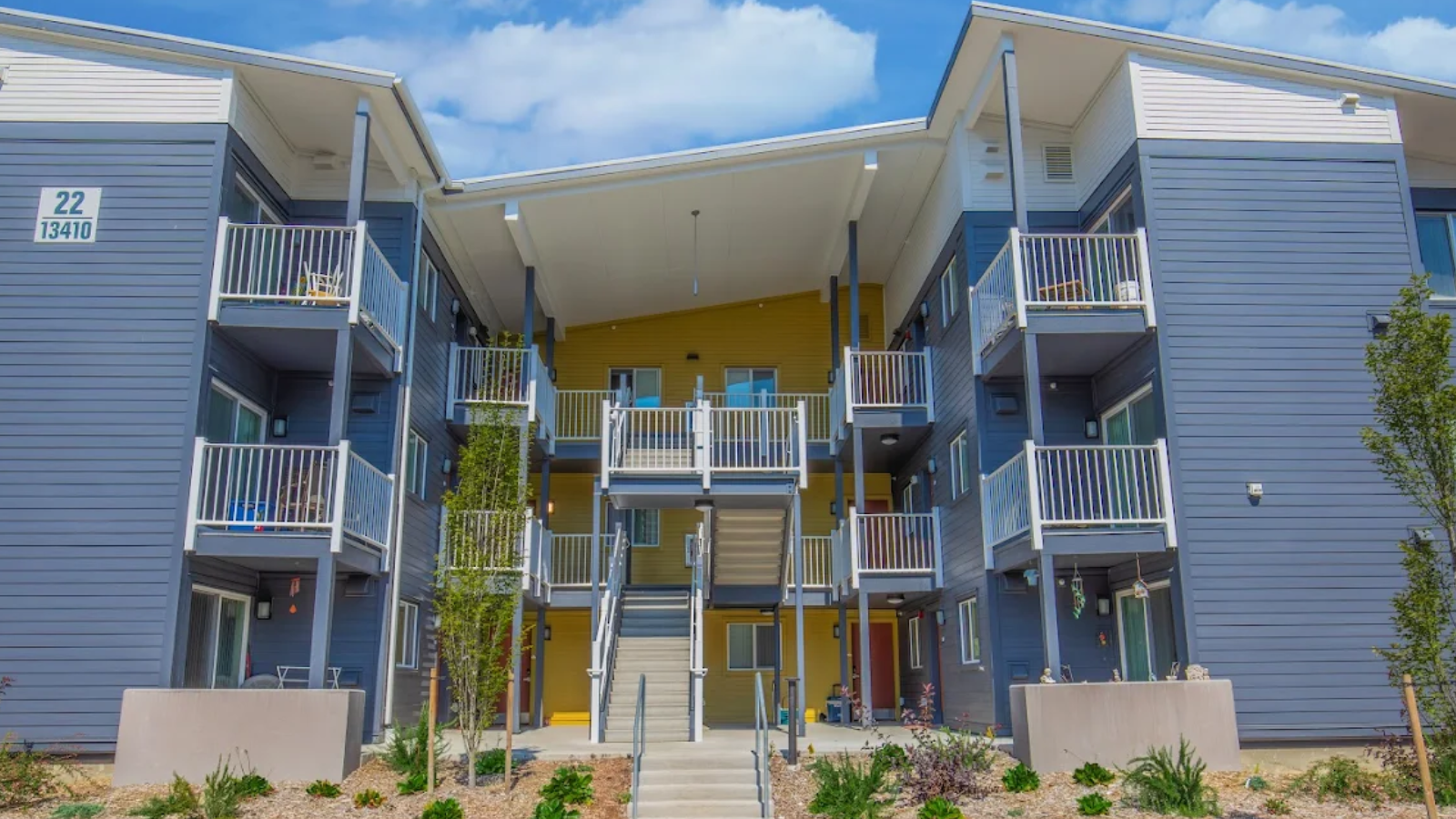
The King County Housing Authority has completed a multi-year redevelopment of Kirkland Heights, repositioning the long-standing multifamily property as a modern affordable housing community for families in Kirkland. The agency recently marked the milestone with a grand opening event, highlighting the preservation of affordability and the expansion of income-restricted housing choices in the city.
The project transforms a 13-acre site into a contemporary garden-style community with 276 affordable rental homes distributed across 27 residential buildings. The redevelopment was designed to both retain existing residents and accommodate additional households, aligning with King County Housing Authority’s broader mission to address housing affordability and reduce displacement pressures in the region.
King County Housing Authority acquired the property in 2019 specifically to secure its long-term affordability and protect tenants from displacement. Following the acquisition, the agency initiated a full redevelopment program beginning in 2022. As part of that effort, King County Housing Authority rehabilitated 180 existing units, extending the useful life of the original housing stock while upgrading quality and functionality for residents.
The redevelopment also meaningfully expanded capacity by adding 96 new units. This growth was achieved through vertical and horizontal expansion on the site, including the addition of a third floor to several existing eight-unit buildings and the construction of two new 24-unit buildings. The result is an increase in the total number of affordable homes on the property, while maintaining the garden-style character of the community.
Financing for the Kirkland Heights redevelopment drew on a combination of public and private capital sources oriented toward affordable housing and energy efficiency. The capital stack includes 4% Low-Income Housing Tax Credits, Renewable Energy Tax Credits, tax-exempt bonds, and direct investments from King County, A Regional Coalition for Housing, and King County Housing Authority. Together, these sources supported approximately $125 million in construction investment over a three-year period.
Local government support complemented the capital package. The City of Kirkland contributed to the feasibility of the project by waiving impact fees, reducing upfront costs associated with the redevelopment. In aggregate, the financial structure and public-sector participation enabled the full rehabilitation and expansion of the property while maintaining affordable rents, positioning Kirkland Heights as a long-term community asset for income-qualified households.