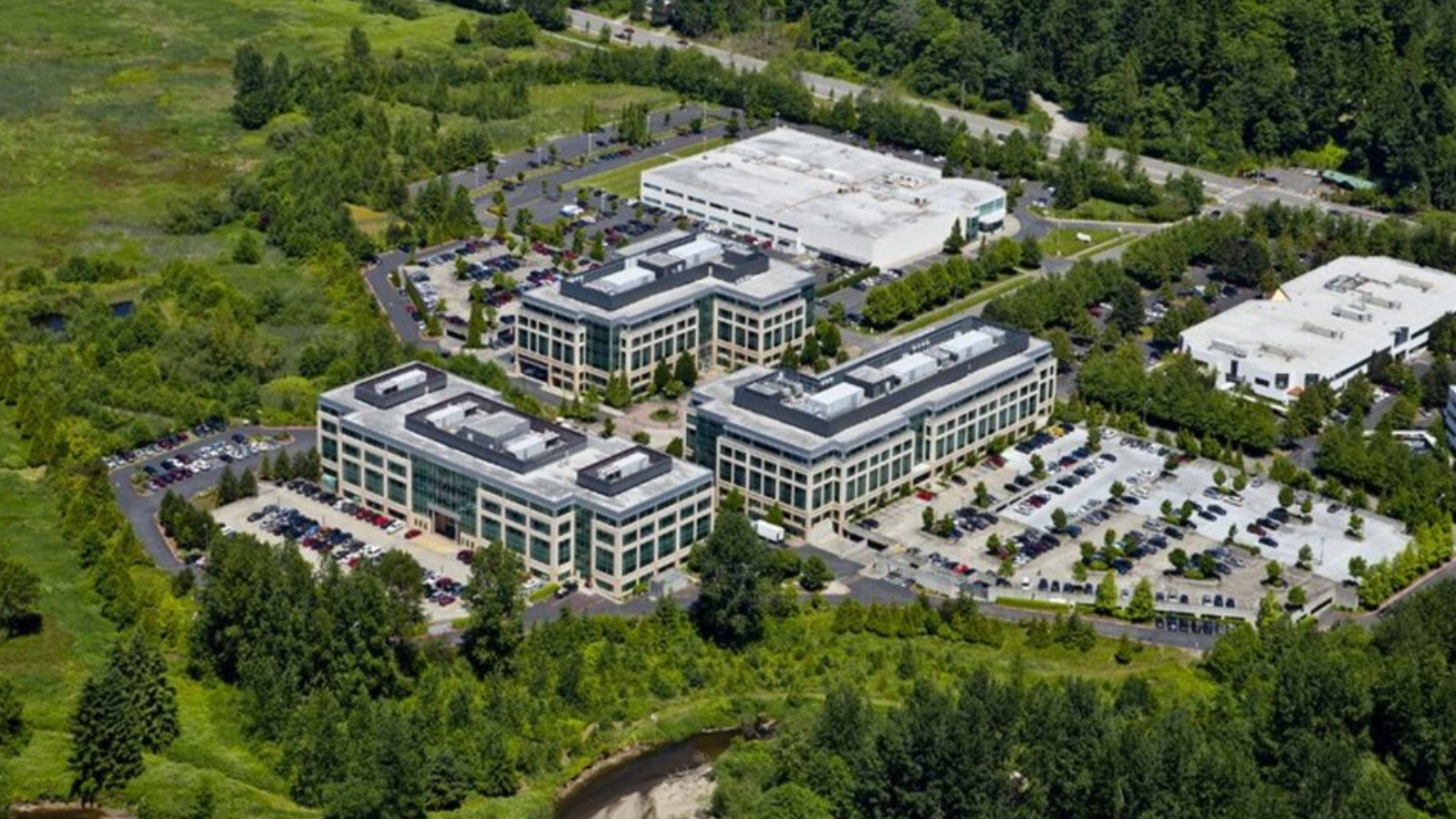
Two vacant office buildings near Costco’s headquarters in Issaquah are being positioned for a major shift in use, with a proposal on file to convert them from corporate space into multifamily housing. The plan would replace former Microsoft offices with 262 apartments, transitioning a portion of the long-standing suburban office park into residential use.
Newport Beach, California-based Vintage Housing has filed a notice of application with the city of Issaquah outlining its intent to redevelop 410,848 square feet of vacant Microsoft office space. The proposal focuses on two of the three buildings within the complex, which has been rebranded as The ParQ. Microsoft exited the campus in 2023 at the expiration of its lease, leaving the two buildings empty and available for reuse.
The third building at The ParQ is not part of the conversion plan. That asset has been fully leased to Costco since 2014 and remains an active corporate facility. In 2024, the Costco-occupied building traded for $61.8 million, underscoring investor interest in stabilized, single-tenant office assets even as neighboring space faces a different future.
The landlord for the office park is an affiliate of Kennedy Wilson, which is also the majority owner of Vintage Housing, according to reporting by the Puget Sound Business Journal. This relationship aligns ownership and development interests as the parties evaluate repositioning options for the underutilized portion of the campus.
The 20-acre office park was originally developed by Vulcan Real Estate, a prominent regional player in large-scale mixed-use and commercial projects. In the current leasing environment, CBRE has been marketing the two vacant buildings for office tenants, but the new application signals that long-term demand may favor residential use over a return to traditional corporate occupancy.
If approved and executed, the conversion would mark a significant repositioning of a former Microsoft campus into a residential community adjacent to Costco’s Issaquah base. The shift illustrates how owners and affiliated developers are exploring alternative uses for vacant office inventory, particularly in locations with strong employment anchors but evolving space needs.