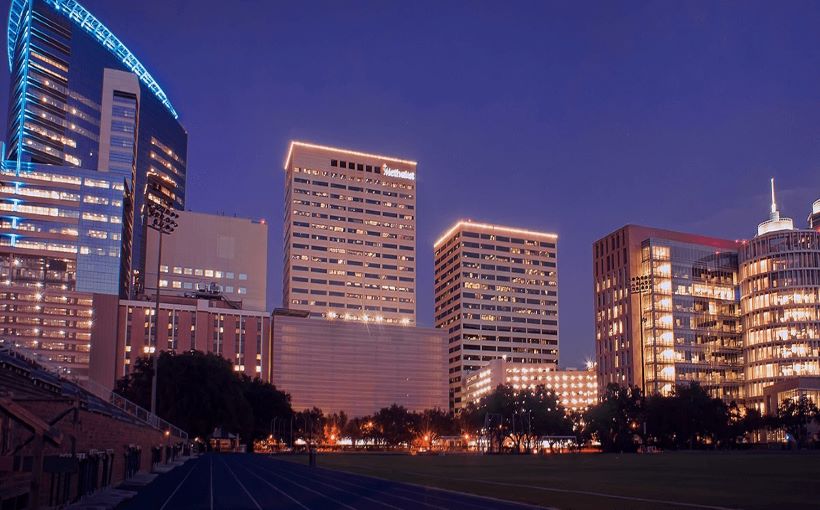
The University of Texas governing body has authorized a major funding package that clears the way for a $2.9 billion expansion of the MD Anderson Cancer Center at the Texas Medical Center in Houston. The approval allows MD Anderson to advance a large-scale capital project that will significantly expand its clinical and research footprint on the medical campus.
Under the adopted funding measure, the University of Texas system will combine institutional revenue with proceeds from financing bonds to support the development. Those university funds will be paired with a substantial commitment from MD Anderson itself, which plans to contribute approximately $1.6 billion from its hospital revenues toward the expansion. In addition, about $1.2 billion will be generated through UT revenue bonds, providing a second major capital source for the project.
The expansion program centers on new construction at the Texas Medical Center, including a new standalone building that will house the Therapeutic Radiation Center along with a 25-floor patient care tower. The Therapeutic Radiation Center is planned at 1.8 million square feet and is designed to consolidate and grow a range of advanced treatment, diagnostic, and support services within a single large-scale facility.
According to the plan, the Therapeutic Radiation Center will accommodate imaging and therapy functions, including infusion services and cell therapies, along with diagnostic imaging capabilities. The program mix will also bring together pathology and laboratory medicine, pharmacy operations, and outpatient surgery into the complex. Extended-stay beds, endoscopy services, outpatient clinics, and various ancillary services are also slated to be part of the center, reflecting a broad continuum of patient care and clinical support uses within the new space.
The 25-floor patient care building, to be integrated with the Therapeutic Radiation Center, is intended to expand inpatient and outpatient capacity on the campus. While specific design and programming details for the tower were not described, the combined project is positioned as a major addition to the Texas Medical Center environment in Houston, both in terms of square footage and medical capabilities.
The expansion will be delivered in phases, with the final stage of the project scheduled for completion in October 2032. This extended timeline reflects the scale and complexity of the undertaking, as MD Anderson and the University of Texas system deploy a mix of hospital revenues and bond financing to deliver the new cancer treatment infrastructure.