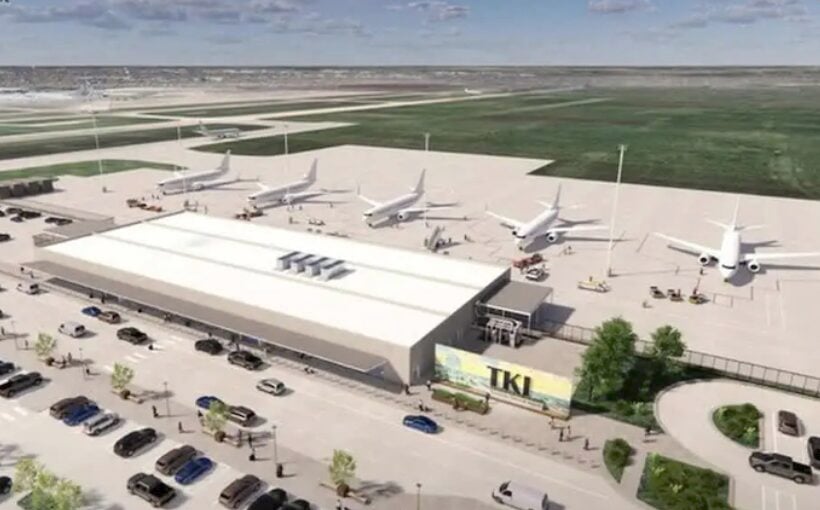
McKinney National Airport is moving closer to welcoming commercial airline service as city leaders advance key airfield and terminal projects. McKinney officials state that adding commercial service could generate economic benefits exceeding $1 billion within five years, underscoring the significance of the airport in the community’s long-term growth plans.
The McKinney City Council has approved a project to rehabilitate Taxiway A at McKinney National Airport. According to reporting cited from the Dallas Business Journal, the work will include widening the existing taxiway, adding new connector taxiways and removing deteriorating pavement. These upgrades are intended to modernize the airfield infrastructure in preparation for commercial operations.
The council awarded the construction contract for the taxiway rehabilitation to Mario Sinacola & Sons. The project carries a budget of $7,600,000, reflecting a substantial public investment in the airport’s airside facilities. The scope focuses on improving safety and functionality for current general aviation users while positioning the airfield for scheduled commercial flights.
In parallel with the taxiway work, construction is underway on a new 46,000-square-foot commercial terminal at McKinney National Airport. The new terminal is designed to support the transition from a purely general aviation facility to one that can host commercial airline operations. City leaders are targeting the first commercial flight from the new terminal for November, aligning airside improvements with terminal delivery.
Avelo Airlines is slated to become the first commercial carrier operating at McKinney National Airport. Its planned service marks a shift in the airport’s role within the regional transportation landscape, expanding from private aviation to include scheduled passenger flights. The introduction of a named commercial airline reflects growing demand for additional air travel options in and around McKinney.
Currently, the airport, identified by the code TKI, functions as a general aviation facility serving private aircraft. Users include recreational pilots and corporate operators that rely on the airport for business travel. Corporate users of McKinney National Airport include Toyota, Texas Instruments and Cirrus Aircraft, highlighting the airport’s connection to major employers and aviation industry participants.
Cirrus Aircraft also provides flight training at McKinney National Airport, adding an aviation education component to the airport’s activity base. This training use complements the corporate and recreational traffic already in place, creating a diversified user mix that supports continued investment in airport infrastructure.
With taxiway rehabilitation approved, a sizable terminal under construction and a commercial carrier identified, McKinney National Airport is progressing through several concrete steps toward initiating commercial airline service. These actions collectively reinforce the airport’s role as an economic and transportation asset for the city and the surrounding region.