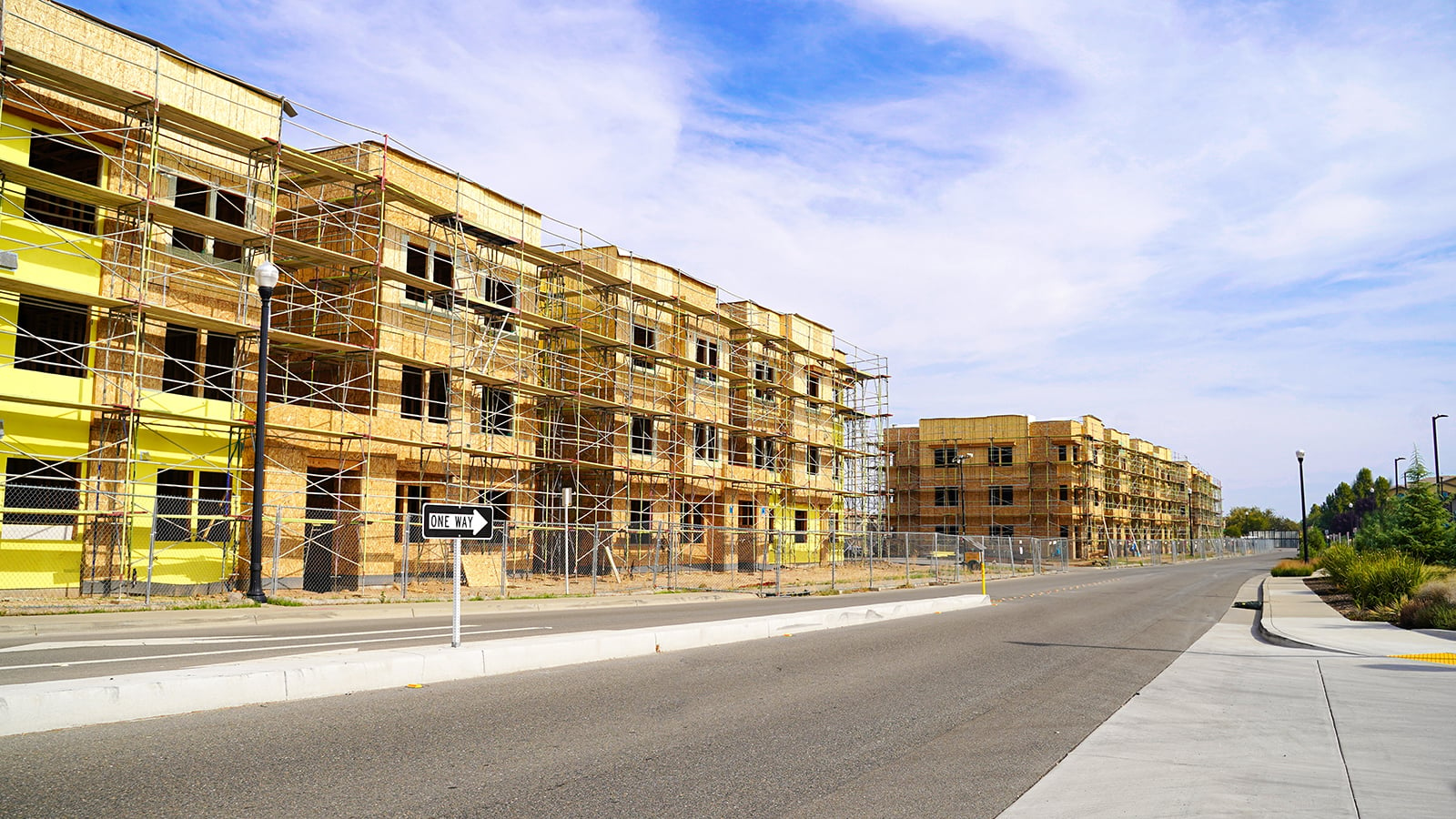
Over the past five years, the U.S. multifamily sector has undergone a substantial expansion phase, with builders delivering 2.1 million new apartments and lifting the national multifamily inventory by 11.2%, according to commentary from John Chang, Senior Vice President at Marcus & Millichap. A large share of that construction activity has been concentrated in Sun Belt markets, where the apartment stock has risen 17.9% since the early 2020s, nearly double the 7.8% increase recorded in other parts of the country.
Chang noted that this concentration of new supply has weighed on fundamentals in certain Sun Belt metros, contributing to softer rent growth and higher vacancies as the new units are absorbed. He described the elevated supply risk as a localized, short-term challenge rather than a structural shift, particularly as many non-Sun Belt markets such as the Bay Area, Chicago and New York have seen relatively little inventory growth over the same period.
Construction activity is already decelerating sharply. Multifamily starts are down 75% from their 2022 peak, which Chang said is helping stabilize market conditions. In major Sun Belt metros, the average vacancy rate has leveled off at 6.3% in the first quarter as development pipelines roll off. While cities including Austin, Charlotte and Nashville are still digesting a notable wave of new deliveries, limited recent supply growth in gateway markets points to a more modest risk of overbuilding there.
On the demand side, Chang highlighted that the macroeconomic backdrop has shifted. Average monthly job creation in the United States slowed from 122,000 in 2024 to 9,700 in 2025. He said the combination of weaker employment growth and subdued consumer sentiment is constraining household formation, which in turn is softening near-term apartment absorption. Metros that added large numbers of jobs earlier in the cycle, particularly many Sun Belt markets, scaled up construction in response to that earlier demand, but are now contending with slower domestic migration and household formation.
International migration has also eased, adding another drag on new household formation and apartment demand. Chang said that, taken together, slower job growth, weak consumer sentiment, sharply lower immigration and reduced household formation will likely restrain apartment demand in the short term, even though underlying renter interest in markets such as Atlanta, Dallas and Phoenix remains solid compared with pre-2020 benchmarks.
Over a longer horizon, Chang pointed to structural tailwinds that support the multifamily sector. He contrasted today's homeownership economics with conditions 15 years ago, noting that the monthly payment on a median-priced home used to be roughly in line with average apartment rent. Now, the median home payment exceeds average rent by more than $1,100 per month, and he said only about 31% of U.S. households earn enough to qualify for a loan on a median-priced home. At the same time, there are 78 million Americans in the prime renting cohort of 24 to 40 years old, a figure that he expects to remain steady over the next five years, with a record number of young adults still living with family.
Chang said that once the current headwinds around jobs, sentiment and migration ease, these demographic forces and the wide cost gap between renting and owning should reassert themselves, supporting stronger apartment absorption. Coupled with a pronounced slowdown in construction, he characterized the setup as one that could ultimately lead to falling vacancy rates and firmer rent growth for the multifamily sector.