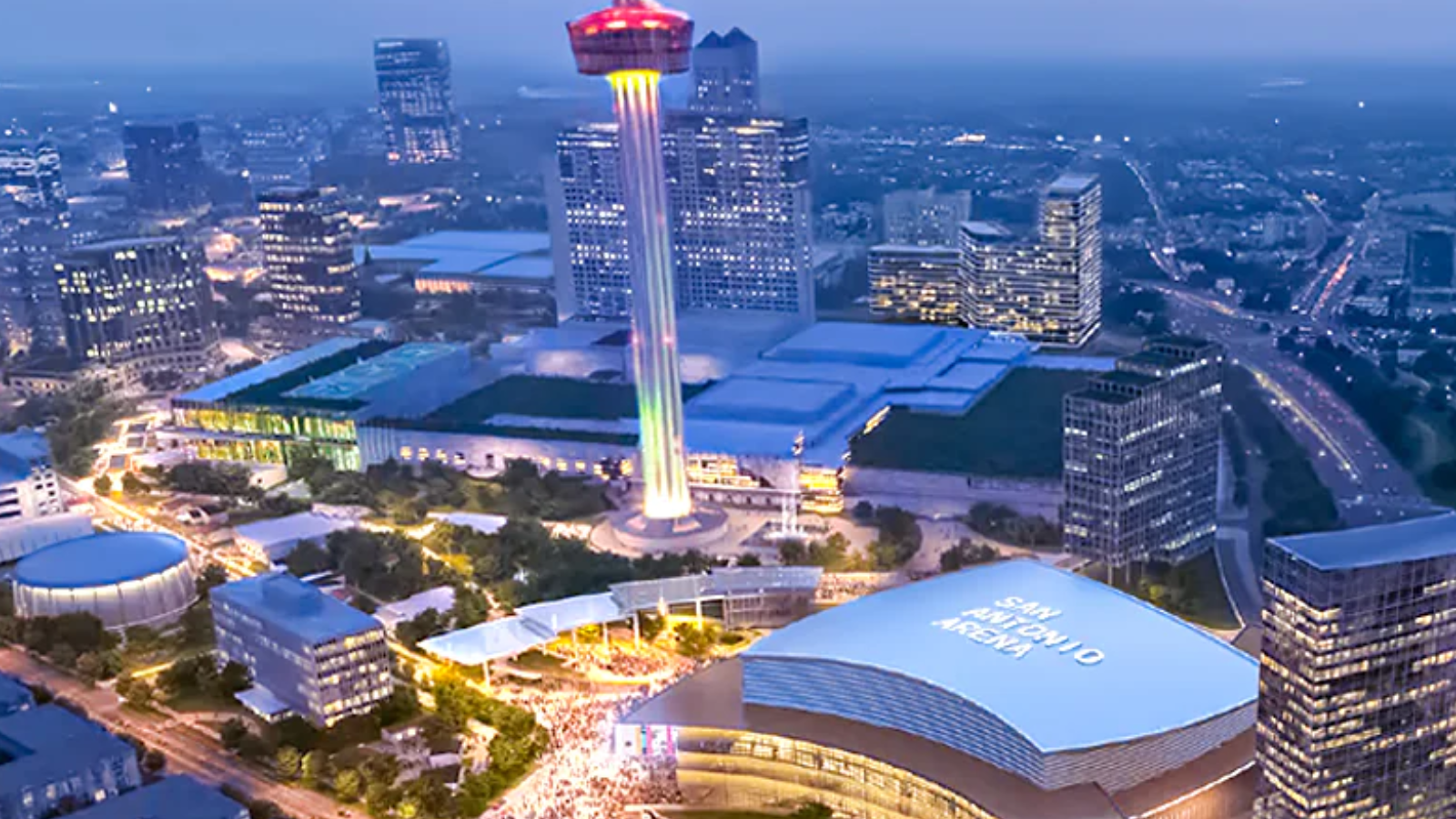
The San Antonio Spurs ownership group is moving ahead with plans for a new arena district, starting by seeking to hire a design and construction team for the project. This step signals an early but concrete move toward realizing a large-scale redevelopment vision anchored by a new arena.
According to reporting cited from the San Antonio Business Journal, the Spurs have been in discussions with the City of San Antonio about a potential public contribution to the arena component of the district. The city is considering committing as much as $490 million toward the development of a roughly $1 billion arena, reflecting a substantial public investment in the proposed venue.
The arena initiative is also backed by county-level support. In November, voters in Bexar County approved allocating more than $300 million in county funding toward the project. The combination of potential city participation and voter-authorized county funds underscores the role of multiple public entities in the capital stack for the proposed arena.
On the private side, the Spurs organization is expected to be a major capital contributor. Reporting indicates that the Spurs’ contribution to the arena itself could exceed $500 million. In addition, the team’s investment in the broader arena district is described as potentially surpassing $1 billion, highlighting the scale of private investment the ownership group is contemplating around the venue.
The planned arena is envisioned as the anchor for a larger entertainment district following the emerging model of pro sports-led mixed-use developments. These districts are built around stadiums or arenas and are designed to function as year-round, walkable neighborhoods rather than single-purpose event venues. They typically integrate residential units, restaurants, hotels, and office space into a cohesive environment intended to draw visitors on non-game days.
Such entertainment districts aim to transform sports facilities into daily destinations, expanding the fan experience beyond game time and supporting additional revenue streams for teams and surrounding businesses. The concept is already established in several markets, with cited examples including The Battery Atlanta, the Deer District in Milwaukee, and Texas Live!. The Spurs’ arena district effort is positioned within this broader trend of using sports-led mixed-use development to reshape the urban environment and support sustained activity around professional sports venues.