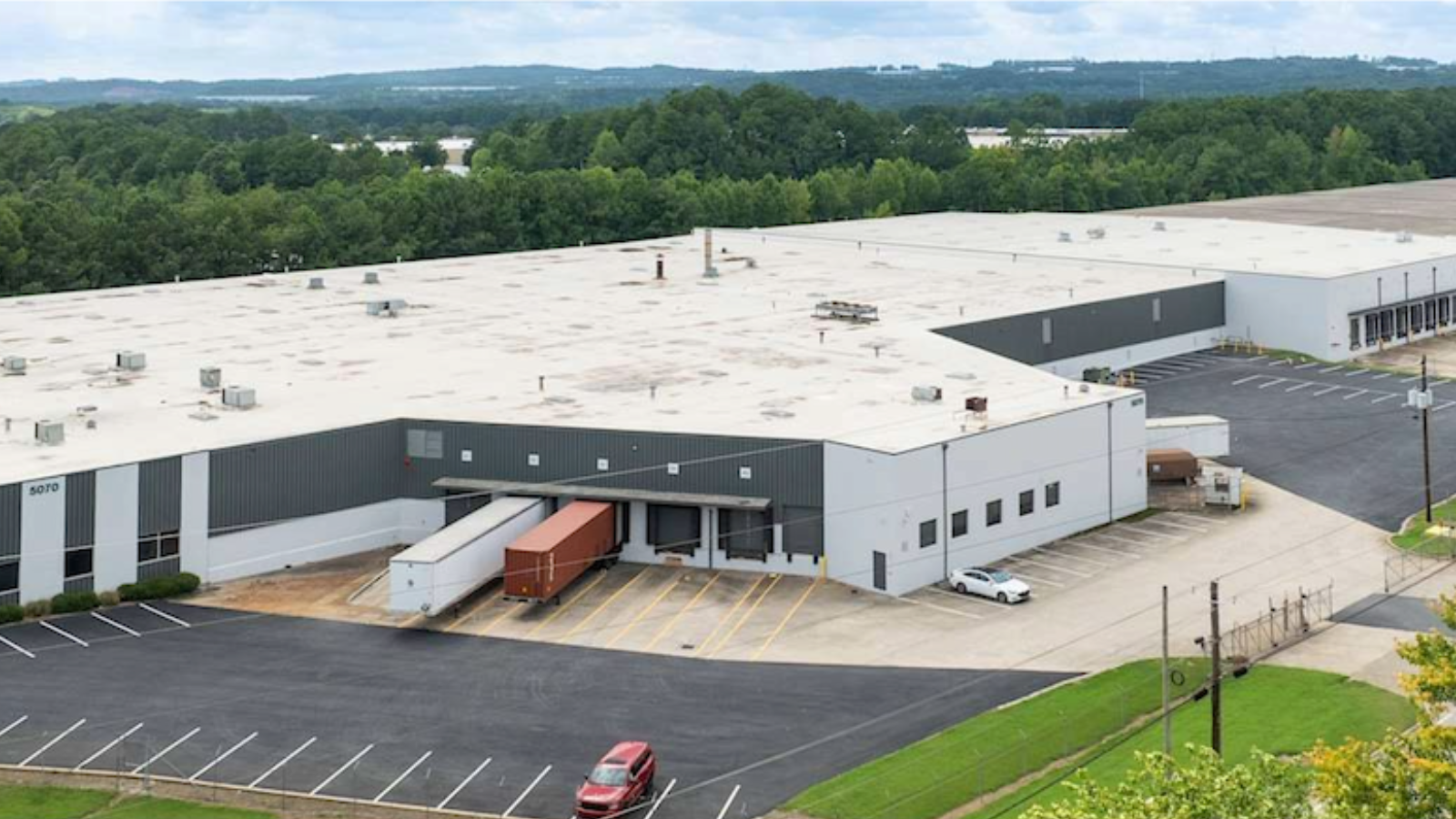
Sagard Real Estate has acquired an industrial complex at 5070 Phillip Lee Drive SW, a 400,800-square-foot warehouse property in Atlanta’s Fulton Industrial submarket. The seller was SkyREM. The transaction involves an established distribution asset in one of the region’s core industrial corridors.
The acquisition was completed on behalf of Sagard Real Estate’s open-end core-plus real estate fund. The property consists of four contiguous warehouse buildings situated on 15.5 acres, providing a sizable footprint for industrial users. Located along the Fulton Industrial Boulevard corridor, the complex benefits from regional connectivity that supports both manufacturing and distribution operations.
The site is positioned approximately two miles from Interstate 20 and about four miles from Interstate 285, placing it within convenient reach of major transportation routes that serve metro-area and regional logistics needs. The location also offers access to downtown Atlanta and Hartsfield-Jackson Atlanta International Airport, supporting both local and national distribution capabilities.
The property is fully leased to Kittrich, a manufacturer and distributor of rug underlays, non-slip products, bath mats, and related home goods. Kittrich has occupied the facility for more than 20 years, indicating a long-term operating presence at the location. This in-place tenancy provides income stability for the new ownership while reflecting the asset’s fit for the tenant’s production and distribution requirements.
Existing demising walls and office configurations within the buildings are designed to allow the property to be reconfigured for multiple users over time. While the complex currently operates under a single-tenant occupancy, this physical layout offers the potential for a multi-tenant format in the future if market conditions or tenant demand change.
At the time of acquisition, there was no competitive warehouse product under construction in the Fulton Industrial submarket, according to the parties. The existing development pipeline in the area was instead described as being designated for data center use. This absence of new, directly competing warehouse supply may support the submarket’s occupancy fundamentals for existing industrial users.
The combination of long-term tenancy, embedded flexibility in the buildings, and a constrained pipeline for new warehouse development frames the acquisition as a stabilized industrial investment in a mature logistics corridor. The transaction also underscores how some land and development capacity within established industrial areas is being diverted to data center uses rather than traditional warehouse product.