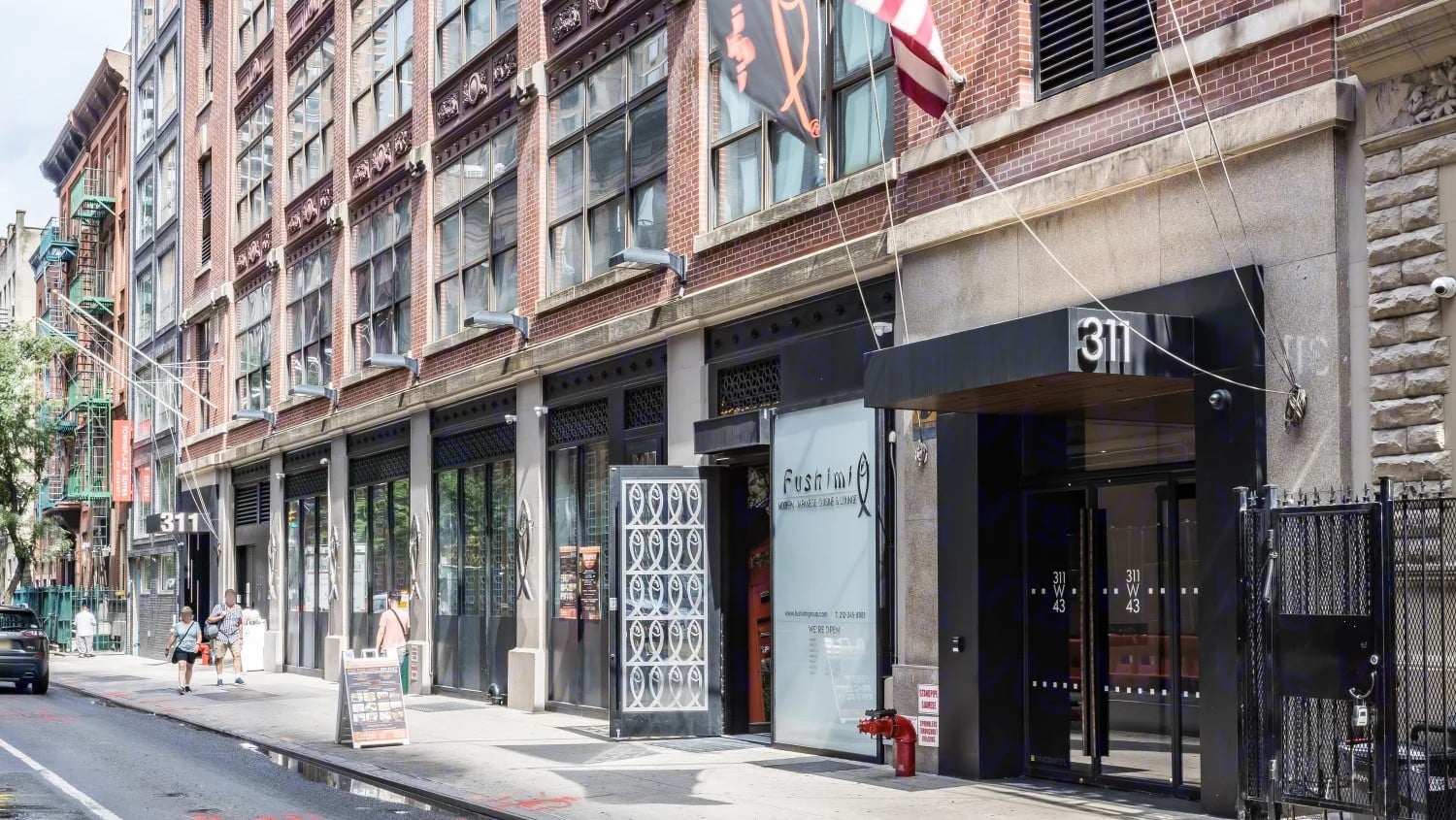
S3 Capital has provided a $102 million construction loan for the planned residential conversion of 311 W. 43rd St., a 15-story office building in Manhattan’s Hell’s Kitchen neighborhood. The property, totaling 168,299 square feet, is currently configured as an office asset and is slated to be transformed into a 160-unit residential building with ground-floor retail space.
The financing represents S3 Capital’s first loan backing an office-to-residential conversion after what the firm describes as years of evaluating similar opportunities. The decision to move forward on this project reflects S3’s comfort with both the business plan and the sponsor team, as well as the characteristics of the submarket and the existing building.
The sponsor on the project is Hershy Silberstein, who is leading the conversion effort. Bluesky Builders is serving as the general contractor. According to S3 Capital, the sponsor and contractor together have delivered thousands of residential units, and S3 has previously financed multiple projects with one or both parties. That track record of execution was cited as a key factor in S3’s decision to originate the loan.
Shawn Safdie, head of origination at S3 Capital, noted that the firm has underwritten many potential office-to-residential conversion deals but had not closed one until now. He attributed the move to a combination of a sponsor relationship that has been tested across prior transactions, a building layout that is well-suited to residential use, and the location in one of Manhattan’s more supply-constrained submarkets.
Safdie described the sponsor relationship as a repeat partnership built on consistent performance over time, indicating that S3 views sponsor execution as central to underwriting more complex transition projects such as office conversions. He also pointed to local housing supply dynamics in Hell’s Kitchen, as well as the physical attributes of 311 W. 43rd St., as elements that aligned to make this financing opportunity compelling for the lender.
The planned program for the property includes a full residential conversion of the upper floors, while maintaining ground-floor retail. No additional financial terms, development timeline, or details on the future retail mix were disclosed. However, the transaction illustrates how experienced sponsors in dense, supply-constrained neighborhoods are accessing construction capital to reposition older office buildings into residential use.