
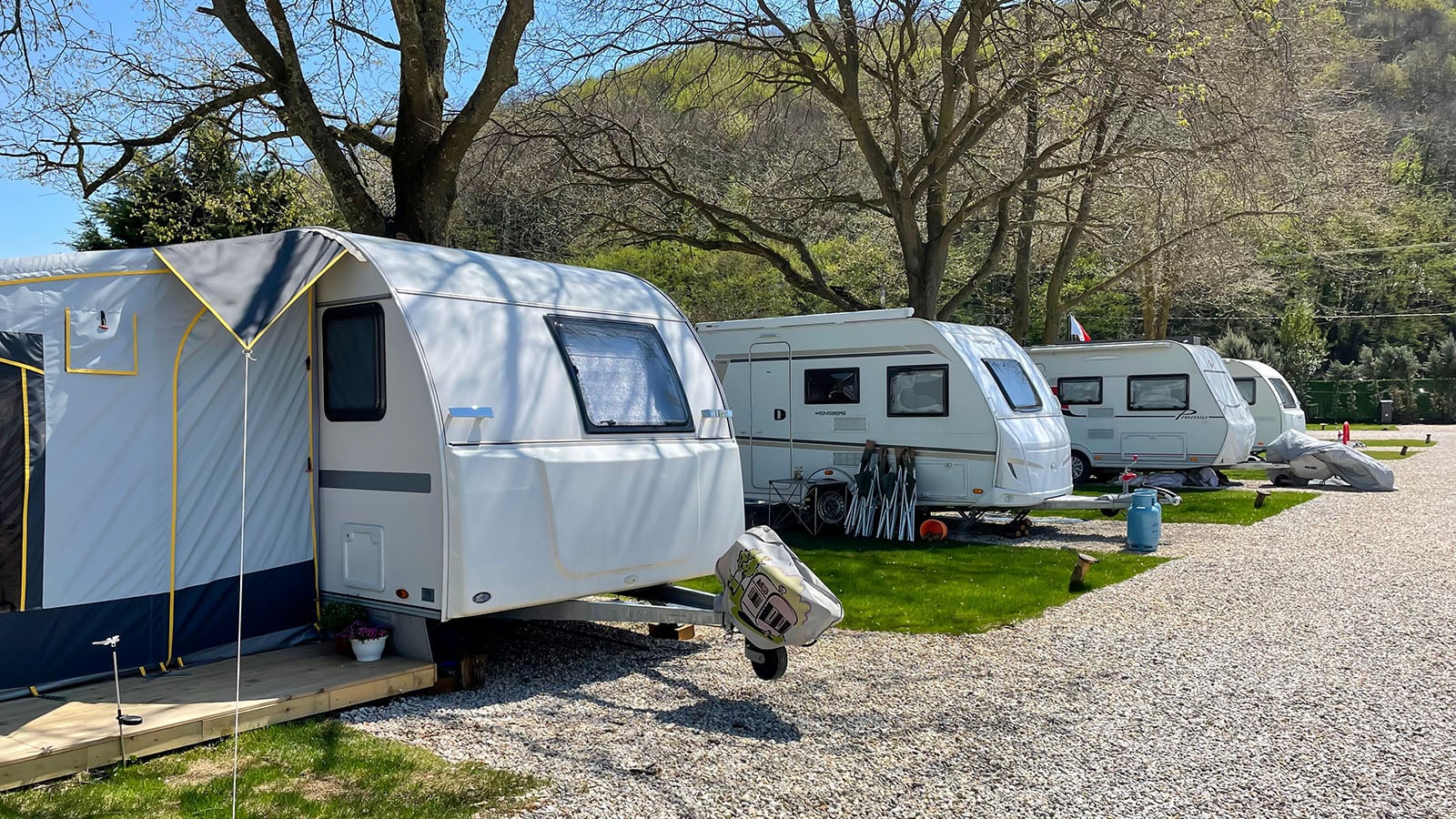
Discussions around housing affordability among policymakers, financiers, researchers and real estate stakeholders often focus on familiar tools such as zoning changes, faster permitting, adaptive reuse, rental assistance and community land trusts. A recent Urban Land Magazine piece adds another strand to that conversation by examining how travel trailers, recreational vehicles and tiny homes could play a role in addressing the shortage of attainable housing.
The article notes that interest in full-time RV living is no longer a niche phenomenon. Citing data from the RV Association, it reports that about 486,000 people now live full-time in recreational vehicles, roughly double the number seen in 2021. While some of these residents are choosing RV life for lifestyle reasons, others are doing so because traditional permanent housing has become unaffordable for them.
Despite this growing population, RVs and travel trailers face significant regulatory barriers when considered as long-term housing. They do not meet the U.S. Building Code for year-round residences and are categorized as vehicles rather than housing. As a result, they fall outside the jurisdiction of the U.S. Department of Housing and Urban Development. Federal regulations also require a sticker on RVs stating that they are not intended for year-round use, reinforcing their status as temporary or recreational units.
Even so, there are examples of RV-oriented communities, particularly in states such as Arizona, Florida and Texas. These communities are more likely to appear in rural settings under county rather than municipal zoning oversight, where regulations can be somewhat more permissive. In many of these locations, park model homes have gained a foothold. These units, classified as semi-permanent RV dwellings that remain parked, occupy a gray area between traditional housing and vehicle-based shelter.
Experts interviewed in the Urban Land Magazine article are advocating for policy and standards changes that would make these formats more viable for long-term occupancy. One step they suggest is removing the required “no year-round” sticker from RVs to reduce a key regulatory barrier. They also call for expanding the supply of very small homes at lower price points to broaden access to affordable shelter.
The article points to ongoing work by the International Code Council and the Tiny Home Industry Association to update the International Residential Code’s Appendix AQ, which addresses tiny home construction. The goal is to establish a dedicated standard for tiny homes that would clarify how they can be built and certified. Under the proposed framework, park model homes designed for year-round use in jurisdictions that adopt the new standard could receive formal certification for permanent occupancy.
In addition, sources in the article recommend that HUD and the Manufactured Housing Consensus Committee revise standards so that tiny homes can more easily be built to HUD Code. Streamlining that pathway could allow manufacturers to produce park models and tiny homes at larger scale, potentially lowering per-unit costs and offering another tool for communities trying to expand their stock of affordable housing options.