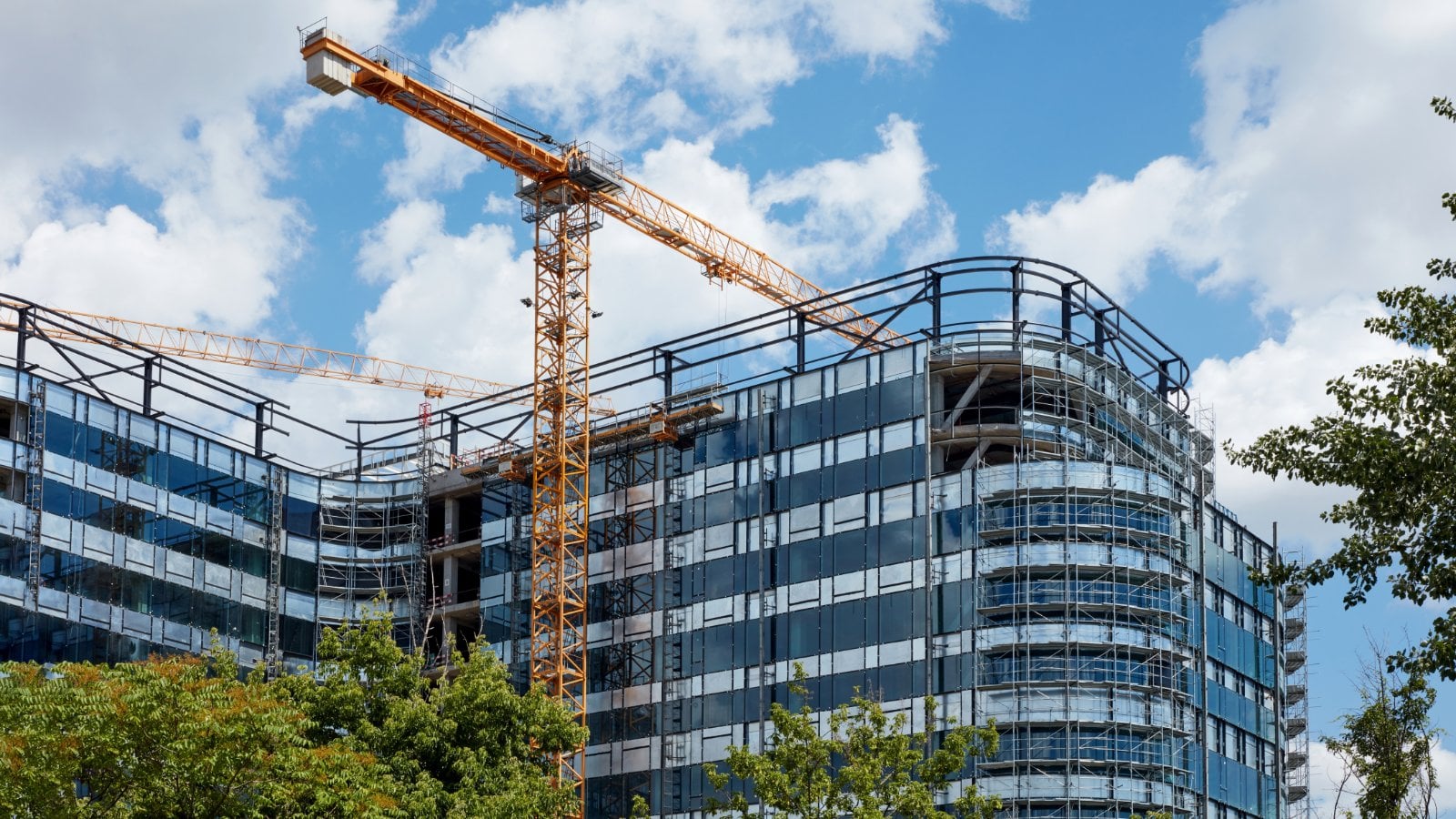
Global office construction has fallen to its lowest level in a decade even as demand intensifies for the best buildings, according to Cushman & Wakefield’s latest Global Office Supply report. The firm reports 580 million square feet of office space under construction worldwide as of Q3 2026, leaving the pipeline 45% below its Q3 2017 peak of 1.04 billion square feet. In the United States, the under-construction total has contracted to 23 million square feet, down 83% from the 2020 high.
Sandy Romero, head of office & alternatives, global research at Cushman & Wakefield, said occupiers are concentrating demand in high-quality, amenitized properties. She noted that this segment is being absorbed faster than it can be replaced, driving Class A vacancy lower and supporting rent growth in the buildings tenants perceive as top tier.
The report attributes the slowdown in new development primarily to escalating costs. Building expenses have risen faster than consumer prices, pressured by supply chain disruptions, higher energy and shipping costs, and construction labor shortages. U.S. base rates stood at 3.75% in the third quarter, with further increases expected into early 2027, adding to the overall cost of capital.
Cushman & Wakefield evaluated project feasibility using economic rent, defined as the minimum rent required for a new office building to be profitable after accounting for land, construction, operations, leasing, developer margins and borrowing costs. On average, market rents across North America are about 6% below economic rents, with conditions varying widely by metro.
In New York, market rents of $156.64 per square foot sit nearly 60% above the economic rent of $98.69, supporting 6.4 million square feet under construction, almost double year-ago levels, plus more than 2.5 million square feet under renovation. Miami has seen Class A starting rents rise 39% over three years while Class A vacancy has declined to 16%, and its 1.8 million-square-foot pipeline is nearly three times last year’s level.
Dallas has recorded a roughly 230-basis-point drop in Class A vacancy over the past year to 26.3%, alongside a 36% increase in starting rents over three years, with Romero expecting build-to-suit and renovation activity to dominate near term. Boston’s market rents, at $78.59 per square foot, remain 8% below its $85.38 economic rent and there are currently no active projects, though market rents are projected to exceed economic rent in 2029. San Francisco’s market rents of $98.43 per square foot sit just 4% below economic rent of $102.94, but Class A vacancy is elevated at 31.1% and the development pipeline has been empty for nearly four years. In Chicago, market rents of $84.56 per square foot are 10% below economic rent, and new construction is not expected to be financially viable until 2032. Los Angeles remains furthest from break-even, with Class A vacancy at 25.8% and rent growth lagging construction and other cost pressures despite a 16% rise in Class A starting rents over three years.
Romero said federal funds rate hikes influence economic rent but are not the decisive factor for new projects, emphasizing that rent growth is the more powerful driver where demand for prime space is already lifting achievable rents. She also pushed back on fears of broad-based oversupply, noting that New York’s inventory has shrunk by 1.6% over the past three years, with annual completions averaging 1.8 million square feet, about 45% below the 10-year average of 3.2 million square feet.
The report highlights a growing divide between top-tier and older stock. While value-focused tenants may consider Class B space, Romero warned that highly amenitized workplaces are not easily substituted. Owners of aging assets may need to invest to reach Class A standards where feasible, or face extended vacancy or consider conversion to other uses.
For capital allocators, the report recommends targeting markets with strong fundamentals and clear signs of supply shortages, while developers are advised to focus on cost advantages, secure skilled labor early and look at distressed opportunities with redevelopment potential. Romero added that tenants and owners with leases expiring between 2028 and 2030 should begin renewals and renovation planning early, as demand for high-quality space is likely to remain ahead of supply, and owners who invest now may improve retention outcomes.