Partial office-to-residential conversions are emerging as a targeted strategy for repositioning select office assets, with lenders evaluating buildings floor by floor rather than as single-use properties. Northwind Group Founder and Managing Partner Ran Eliasaf told Connect CRE that this approach can preserve income from the strongest office space while unlocking residential value in portions of a building where conversion economics are more compelling.
Northwind has recently financed two such projects: a $219 million construction loan for 100 Wall Street in Lower Manhattan and a $208 million construction loan for 141 Willoughby Street in Downtown Brooklyn. Together, the two loans will support the creation of 407 rental apartments while maintaining commercial space in both properties.
At 100 Wall Street, the business plan calls for a partial conversion in which floors 2 through 11 will be redeveloped into 168 apartments. The upper office floors, from 15 through 29, are nearly fully leased and will remain in office use, providing existing tenancy and cash flow to support the conversion period. Eliasaf said this split allows the property to retain an income-producing office component while adding a new residential revenue stream.
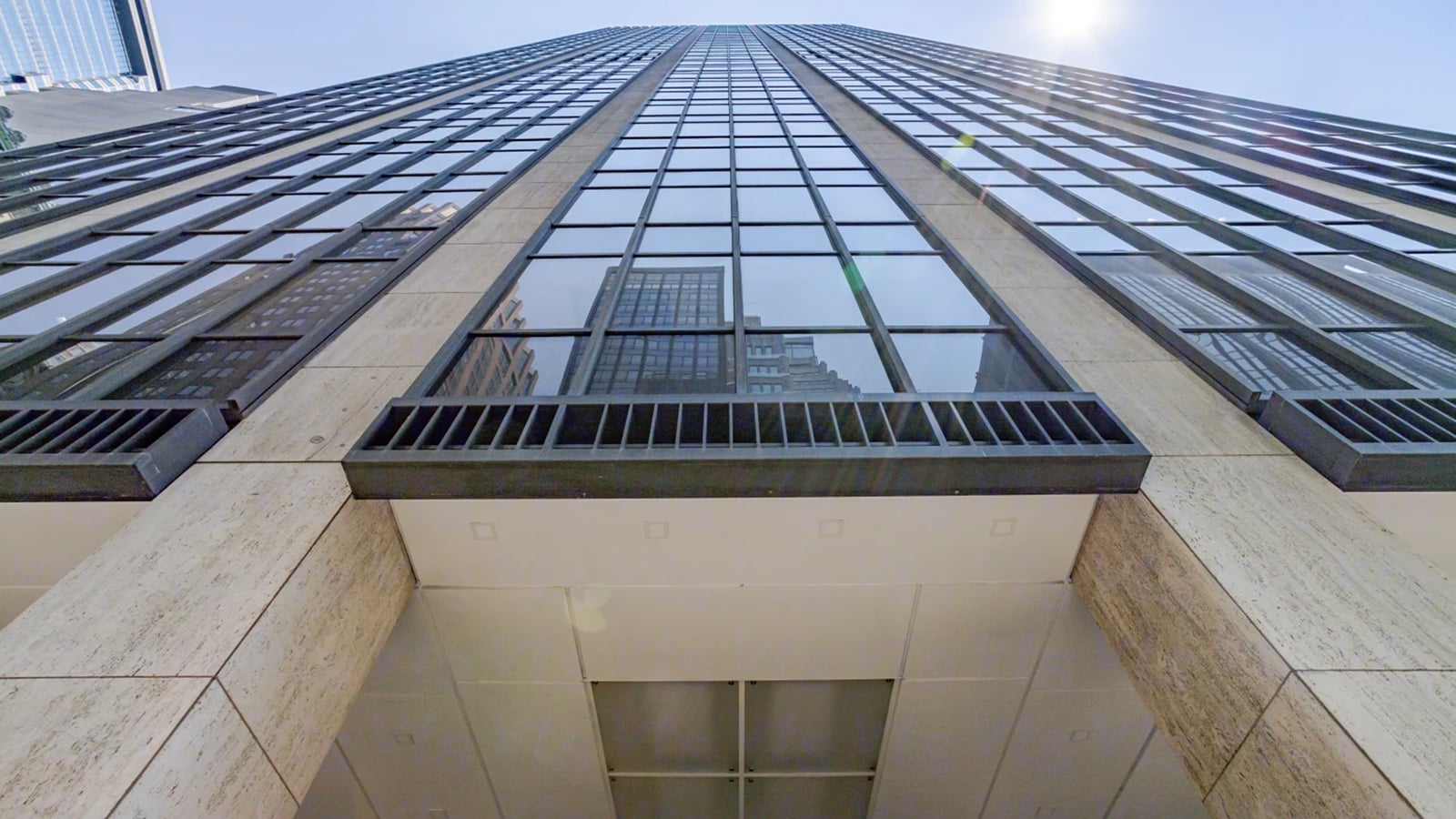
The plan at 141 Willoughby Street reflects a different starting point. The 24-story, 355,000-square-foot Class A tower was completed in 2023 but has never been occupied. Under the proposed conversion, floors 8 through 23 will be reconfigured into 239 apartments, while floors 1 through 7 will continue as commercial space. The absence of existing tenants removes relocation and lease-termination risk, and building features such as nearly column-free floor plates, floor-to-ceiling glazing, 15- to 17-foot slab-to-slab heights, and strong access to light and air are seen as favorable for residential layouts.
Eliasaf noted that these examples share a key characteristic: the buildings are not being forced into residential use where it does not make physical or economic sense. Instead, the conversions establish a clear division between office and residential components, each with its own viable business plan.
From an underwriting perspective, Eliasaf cited several requirements for partial conversions, including strong residential demand, attractive acquisition basis, supportive zoning, an experienced sponsor and the capacity to manage complex construction. He added that markets are not selected simply because of elevated office vacancy. In New York, the combination of constrained residential supply, repricing of older office buildings and policy changes such as City of Yes and the 467-m tax incentive has been particularly important.
Physical attributes are equally critical for lenders. Northwind looks for floor plates with no more than about 60 feet between the elevator core and curtain wall and generally avoids projects that would require new light wells, courtyards or other major structural interventions. The firm also emphasizes conservative basis and valuation, adequate construction contingencies, sponsor economics and conservative leverage.
Looking ahead, Eliasaf said more owners are analyzing buildings on a floor-by-floor basis to determine which areas are best suited for residential, office or retail uses. However, he cautioned that not every obsolete office building is a conversion candidate and that some assets initially considered for alternative uses may remain in office as the market improves. He expects capital to remain available for well-structured partial conversions sponsored by experienced teams and supported by buildings that naturally accommodate residential use, while stressing that the most compelling outcomes are those where the mixed-use configuration creates a stronger asset than either all-office or full residential conversion.