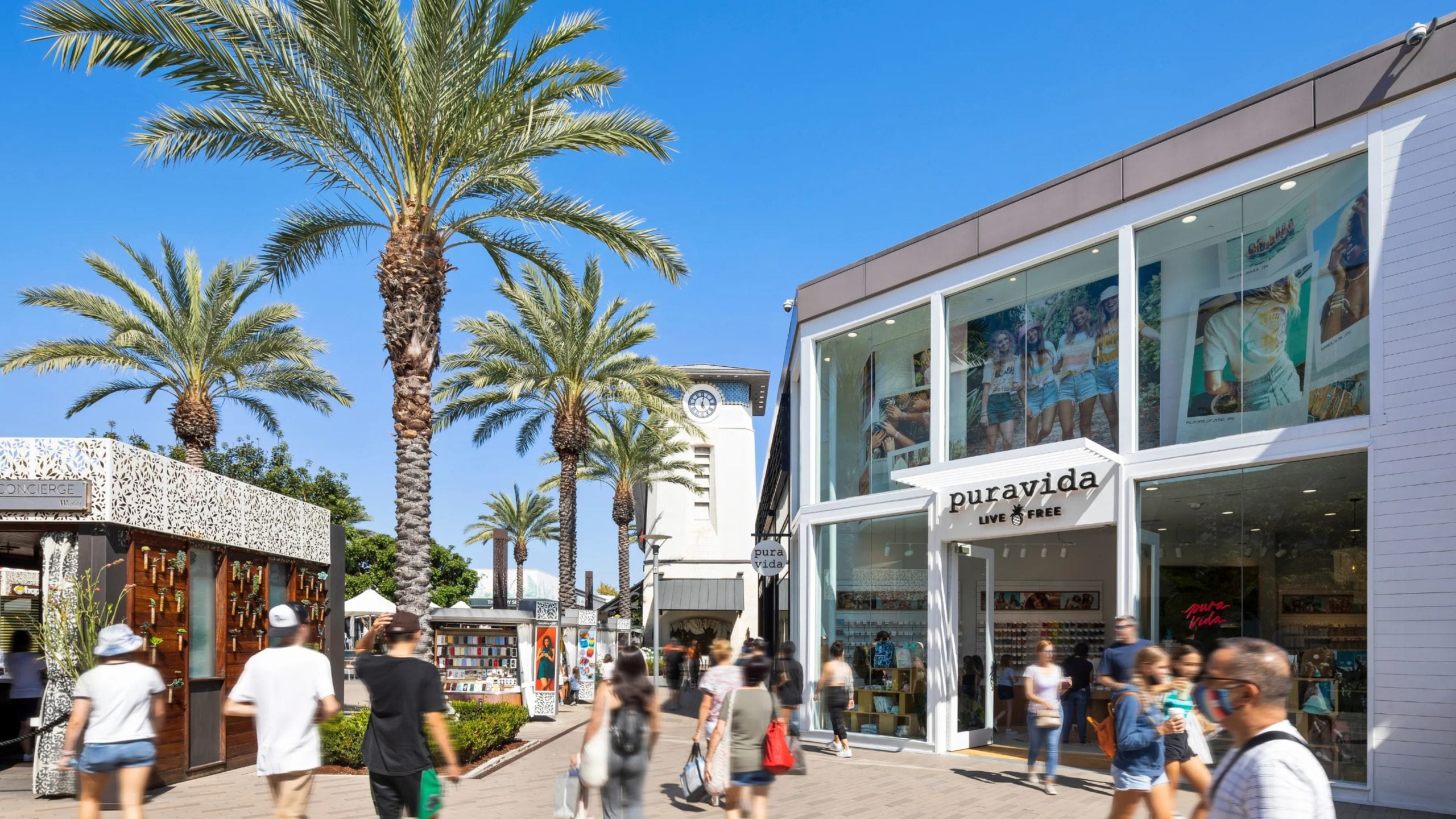
Once widely viewed as one of the most challenged commercial property types in the wake of the COVID-19 pandemic, U.S. malls have emerged as the top-performing sector in the commercial real estate universe, according to reporting by the Wall Street Journal that cites data from Green Street. Over the past year, mall values have increased by 13%, more than twice the rate of overall commercial property price growth.
The reversal underscores how investor perceptions of the retail mall format have shifted since the height of pandemic-era store closures and concerns about long-term structural decline. Green Street’s data, as referenced by the Journal, indicate that malls have not only stabilized but are now outpacing other major property types on a value appreciation basis.
Research analysts point to a stronger fundamental backdrop as a key component of the sector’s renewed momentum. Ronald Kamdem, head of U.S. REIT and commercial real estate research at Morgan Stanley, told the Wall Street Journal that this is probably the best the mall sector has felt in the post-Covid period when viewed through a fundamental lens. His comments highlight how leasing, sales productivity and balance sheet positioning have collectively improved enough to change the narrative around malls.
Part of the renewed attention to malls is being driven by comparative performance across property types. With returns in multifamily and office described as lackluster, some investors are redirecting capital into retail and mall assets. This rotation is occurring at a time when consumer spending has remained resilient and retailer bankruptcies are relatively limited, providing additional support for income stability and valuations at better-quality centers.
Public market signals are reinforcing these sector-level trends. Shares of Simon Property Group, one of the best-known mall real estate investment trusts, surpassed their previous record high in July, achieving a milestone not seen since 2016. That price action signals a more constructive market view of future cash flows from Simon’s portfolio and, by extension, from malls more broadly.
Strategic decisions by major owners also reflect improving confidence. Unibail-Rodamco-Westfield, which had previously planned to exit the U.S. mall sector, has reconsidered that strategy. The company recently chose to deepen its exposure by buying out its partners in two West Coast properties, rather than continuing to dispose of its American assets. That move suggests that expected risk-adjusted returns from selected U.S. malls now compare more favorably with alternatives than they did during the earlier phase of its portfolio realignment.
Taken together, these developments point to a mall sector that has moved from being considered structurally impaired to one that is now attracting incremental capital. While performance dispersion remains within retail, the latest valuation data, investor reallocations and REIT share price behavior indicate that enclosed malls, at least in stronger locations and under experienced ownership, are playing a more prominent role again in U.S. commercial real estate portfolios.