**U.S. Government Shutdown: What It Means for CRE and the Economy**
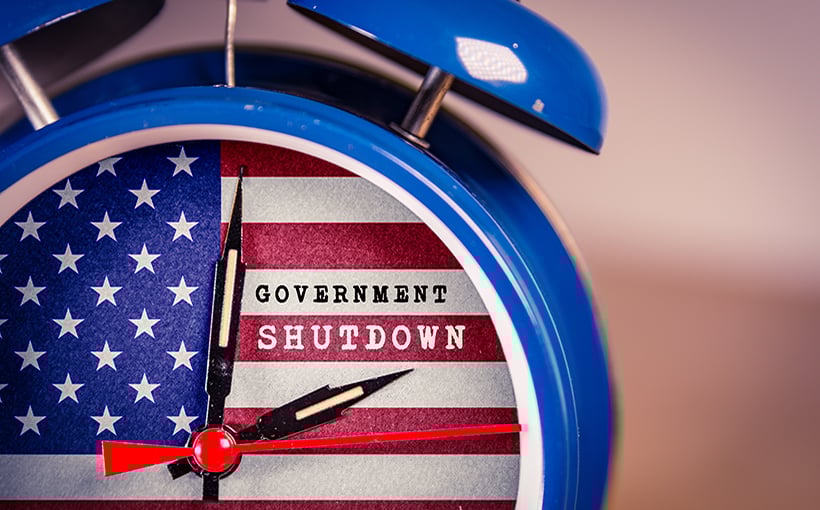
As of October 9, the U.S. government has entered its ninth day of shutdown, with Congress still deadlocked on achieving the necessary votes to pass a funding plan. So far, the consequences have included furloughs for federal employees and disruptions in air travel, with more issues looming if the stalemate continues.
**The Good News: Minimal Immediate Impact on Commercial Real Estate**
According to a recent video from Marcus & Millichap titled “Will the Federal Shutdown Impact CRE?”, government shutdowns generally do not have a direct effect on the operations of commercial real estate properties. Financing, including through government-sponsored entities like Fannie Mae and Freddie Mac, remains available. Senior Vice President John Chang noted that transactions are still closing despite the ongoing shutdown.
One area to watch is the Department of Housing and Urban Development (HUD). Payments from HUD could be delayed, but this is likely only if the shutdown extends beyond 30 days.
**The Not-So-Good News: Wider Economic Impacts**
While commercial real estate has been spared immediate trouble, the broader economy may not be as fortunate. According to Chang, the shutdown could:
– Put downward pressure on economic growth
– Delay important government data releases needed for informed decision-making
– Influence business and investor confidence and behavior
**Potential Economic Impacts Based on Past Shutdowns**
History offers some perspective on the potential fallout. The 2018–2019 partial shutdown lasted 35 days, resulting in approximately 380,000 furloughed federal employees and an estimated $11 billion in economic impact—though $8 billion of that was later recovered when the government reopened.
In contrast, the full shutdown in 2013 lasted 16 days and furloughed approximately 850,000 workers, leading to an estimated $20 billion loss in GDP.
As for the current situation, up to 750,000 federal employees could be temporarily out of work. Chang estimates that GDP growth could decline by 15 to 20 basis points per week, depending on the duration of the shutdown.
**Lack of Key Economic Data a Concern**
Another ripple effect is the suspension of vital economic data releases, such as employment and inflation statistics. The Federal Reserve relies on such data to guide its decisions on interest rates. Chang explained that, although rate cuts for October and December may still proceed, they could be based on incomplete information if data remains unavailable.
**Recession Risks Rising**
Softening in the job market—highlighted by recent Bureau of Labor Statistics reports and increasing government layoffs—could also weaken areas like retail and home sales, all of which impact commercial real estate demand. Chang warned that an extended shutdown could increase the risk of a recession, especially if it leads to deteriorating business sentiment and consumer confidence.
**A Silver Lining: Strong Household Financials**
Despite the ongoing turmoil, there is a bit of good news. Household balance sheets remain healthy, with high savings levels and relatively low debt-to-income ratios. This financial resilience could help cushion the broader economy if the shutdown is resolved in a reasonable timeframe.
In closing, while the shutdown is undoubtedly causing concern and dominating headlines, its long-term impact on commercial real estate is expected to be minimal. As Chang concludes, investors should continue to focus on the bigger picture and the long-term outlook.