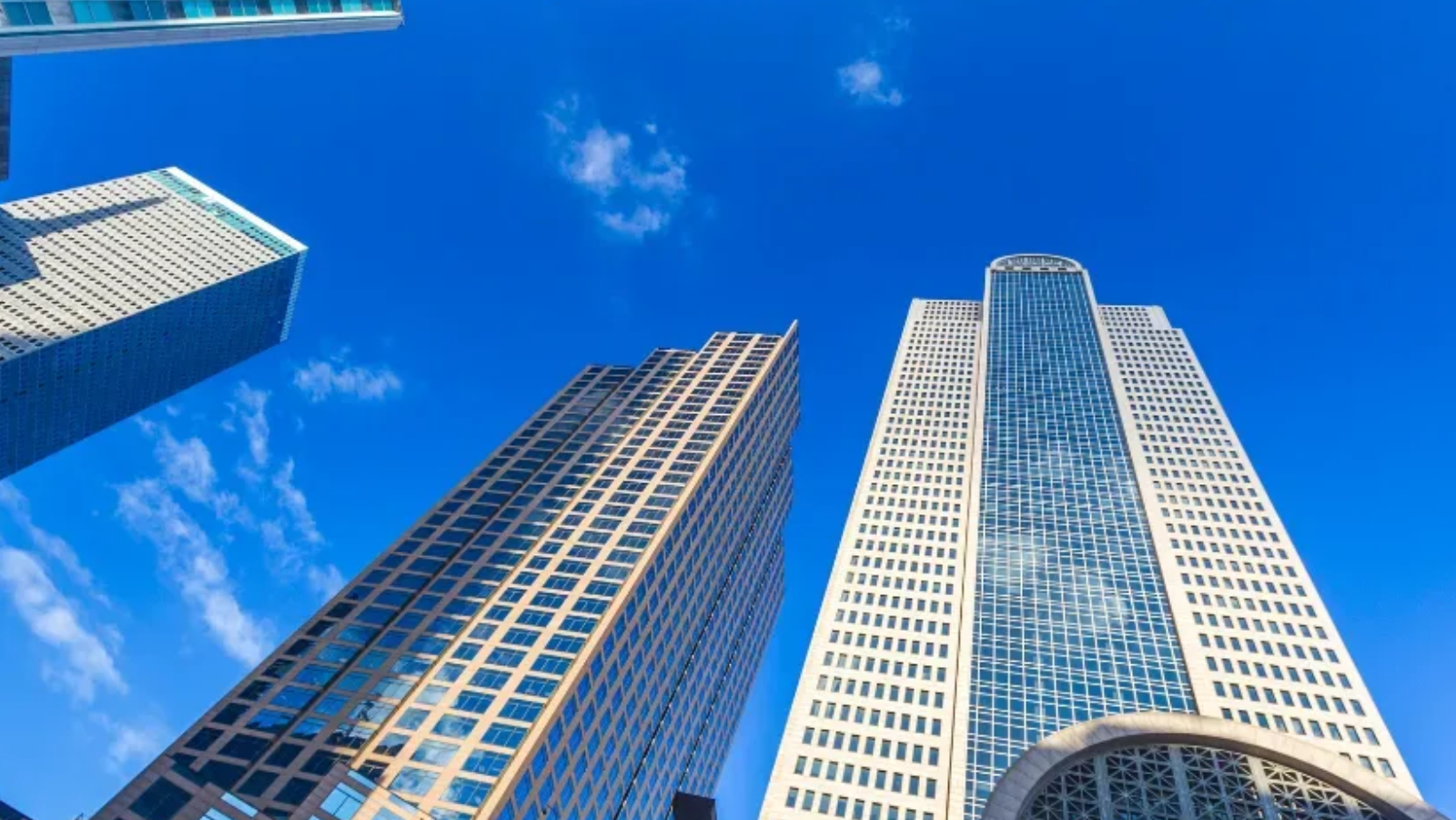
A 33-story office tower in Dallas’ Arts District, 2100 Ross Ave., is moving toward a potential foreclosure auction as pressure mounts on its capital stack. The downtown high-rise, which serves as a prominent office address in the urban core, is now the subject of a foreclosure proceeding after its ownership reportedly failed to retire or refinance its debt at maturity.
The tower’s ownership group, consisting of Woods Capital and Pacific Elm Properties, is alleged to have defaulted on a $79 million loan tied to the property. According to reporting referenced from The Dallas Business Journal, the debt was not paid off by its due date, triggering remedies under the loan documents. The loan was originally sized at $98 million when it was provided by Wells Fargo in 2016, underscoring how a significant portion of the original balance remains outstanding.
A Dallas County court has appointed Trigild IVL as receiver over 2100 Ross, placing day-to-day oversight of the asset and its cash flow under court supervision while the foreclosure process advances. The office tower totals approximately 840,000 square feet and is reported to be 53% occupied, meaning nearly half of the building’s rentable space is currently not leased. That combination of elevated vacancy and a maturing loan appears to have contributed to the building’s current distress.
In June, Fitch Ratings classified the $79 million debt on 2100 Ross as a nonperforming, matured balloon loan. The rating agency’s classification followed the loan’s failure to be paid off in full or refinanced prior to its scheduled maturity. The designation highlights that the loan has reached maturity without resolution and is no longer being treated as a performing credit, reinforcing the severity of the situation for both borrower and lender.
The property is currently slated for a foreclosure auction on October 6. However, the scheduled auction date does not guarantee that a sale will occur. The foreclosure could be delayed or cancelled if Woods Capital and Pacific Elm Properties are able to negotiate a resolution with their lenders before the auction takes place. Such a resolution could take several forms, including a modification, payoff, or alternative agreement, though none have been detailed publicly in the available reporting.
Until a workout is reached or the foreclosure process is completed, 2100 Ross will remain a closely watched case study in how office assets with significant vacancy and matured debt are being handled in the current environment. The combination of a large, partially occupied tower, a receivership appointment, and a nonperforming balloon loan illustrates the challenges facing some downtown office owners whose financing structures are colliding with changing market fundamentals.