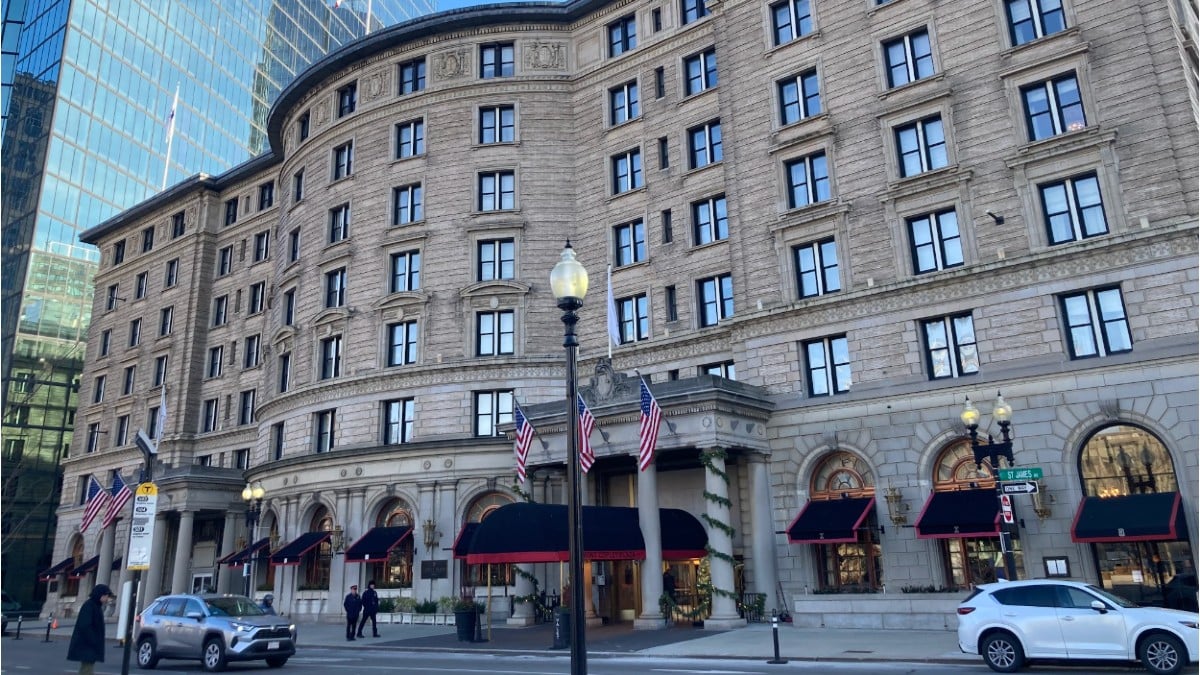
The City of Boston has officially granted landmark status to the Copley Plaza Hotel, located at 138 St. James Ave. in the Back Bay neighborhood. With this designation, any proposed work that would alter the building’s exterior envelope will now be subject to review by the Boston Landmarks Commission or its staff.
Under the new protections, owners and project teams must seek commission oversight before undertaking exterior changes, adding an additional layer of scrutiny to future capital projects or façade work at the historic hotel. The move formalizes the property’s standing as a protected historic asset within Boston’s regulatory framework.
According to the Boston Landmarks Commission, the Copley Plaza Hotel, which began operating in 1912, holds significant historical importance for the city, the Commonwealth, and the broader New England region. For more than 110 years, it has been recognized as one of Boston’s leading hotels and a key part of the city’s hospitality landscape.
The commission notes that the property has particular relevance to the evolution of the hospitality industry. The hotel is cited as the first in the world to implement an international reservation system and to accept credit cards, among other operational advances. These innovations positioned the Copley Plaza as an early adopter of technology and guest-service practices that later became standard across the sector.
The hotel currently operates under the Fairmont brand and is owned by Accor. The 383-key property has long served as a venue for major events and has accommodated numerous high-profile guests. Since opening in 1912, it has hosted most U.S. presidents, underscoring its ongoing role as a prominent destination for political, business, and social functions in Boston.
The landmark designation underscores both the historic character and ongoing relevance of the Copley Plaza Hotel within Back Bay, reflecting the city’s intent to balance preservation objectives with the continued use of the property as a full-service hospitality asset.