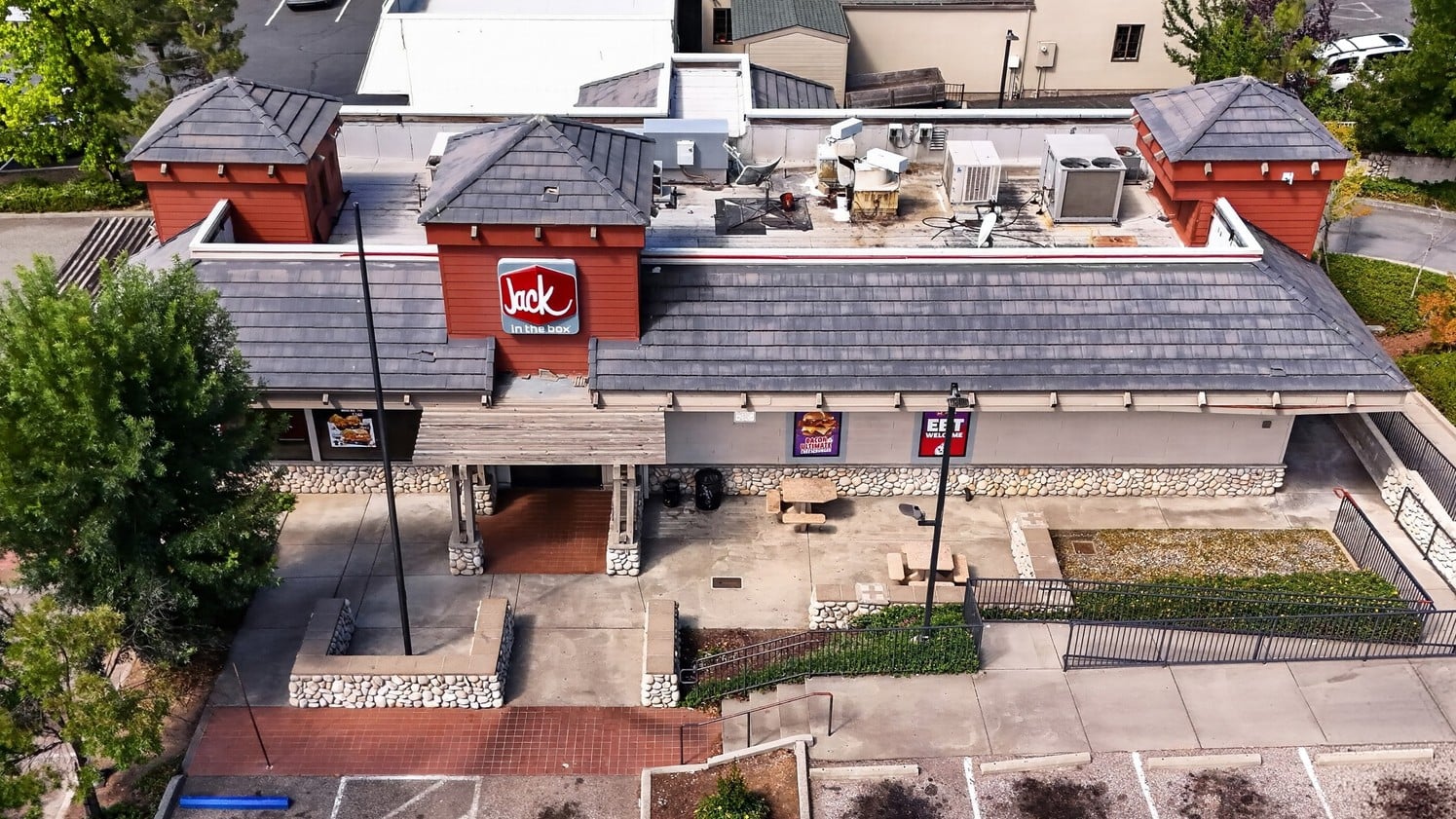
Avatar Financial Group LLC has originated a $5.1 million bridge loan backed by two freestanding, net-leased Jack in the Box restaurants located in Redding and Grass Valley. The financing is structured as a first-lien mortgage with an approximate 60% loan-to-value ratio and a two-year term, providing short-term capital against the stabilized quick-service restaurant properties.
The sponsor previously had a first-lien loan on the properties that had reached its maturity date. Despite the loan’s maturity, the borrower had remained current on all required payments, indicating that the underlying assets continued to perform as expected. Avatar’s bridge loan was used to retire that matured first-lien obligation and also to consolidate the sponsor’s existing subordinate liens into a single junior position in the capital stack.
With the new loan in place, the sponsor now has additional time and flexibility to execute on its longer-term strategy for the two assets. According to the transaction details, the sponsor intends either to market the properties for sale or to pursue permanent financing before the new bridge loan comes due. The two-year term is designed to bridge that transition period while the sponsor evaluates disposition and refinancing options in the market.
Commenting on the transaction, Avatar president and co-founder T.R. Hazelrigg IV characterized the situation as a capital-structure challenge rather than an operational one. He noted that both Jack in the Box restaurants were open and paying rent under leases that extend well into the 2030s, and that no material change had occurred with respect to the underlying real estate. Instead, the complexity resided above the assets, in a capital stack that had become more layered than the properties themselves.
The bridge loan structure addresses this by simplifying the borrower’s debt profile at the senior level while preserving the income stream from the long-term net leases. The financing exemplifies how short-term, asset-backed capital can be used to resolve loan-maturity issues for performing properties, allowing sponsors to avoid default while they reposition their balance sheets and determine whether to monetize the assets through a sale or stabilize them further with permanent debt.