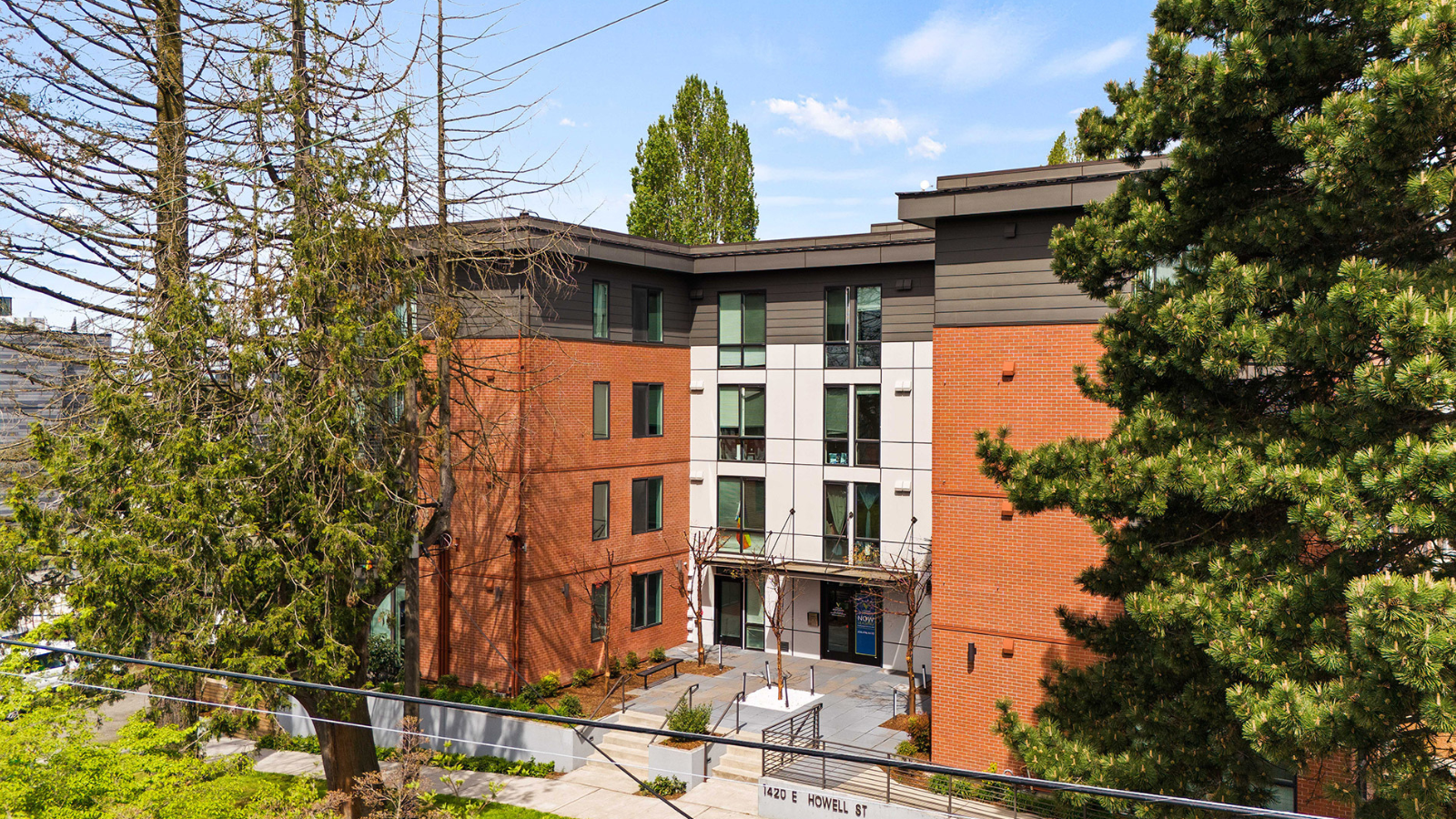
The Vitality on Howell apartment building in Seattle’s Capitol Hill neighborhood has changed hands, marking a trade for a modern small-unit multifamily asset. The five-story property is located at 1420 E. Howell Street and is positioned within one of the city’s most established urban residential districts. The transaction underscores ongoing investor interest in compact housing formats that offer residents privacy in highly amenitized neighborhoods near major employment centers.
Vitality on Howell was completed in 2016 and is configured with 57 small efficiency dwelling units. The apartments average 297 square feet, reflecting a design strategy that prioritizes efficient layouts and individual living spaces over traditional larger studio or one-bedroom configurations. While the units are smaller than conventional apartments, each provides the privacy and functionality associated with a self-contained dwelling, appealing to renters who value personal space over shared arrangements.
The sale was arranged by the Simon | Anderson Multifamily Team at Kidder Mathews. Team members Jerrid Anderson, Jack Shephard, Matt Laird, and Matt Johnston represented the seller, described as a private investor and developer. Their assignment focused on positioning the property as a contemporary, efficiency-oriented multifamily asset within a dense, transit-served urban neighborhood. Specific pricing details, buyer identity, and transaction terms were not disclosed.
The property benefits from proximity to some of the region’s largest employers and employment clusters. Nearby corporate and technology employers include Amazon, Google, Meta, and Nordstrom, along with the healthcare concentration in Seattle’s First Hill medical corridor. Major medical institutions in that corridor include Swedish, Virginia Mason, and Harborview, all of which support a deep pool of potential renters seeking housing close to work.
Kidder Mathews’ Anderson noted that Capitol Hill has seen limited new multifamily supply in recent years. Against that backdrop, the neighborhood continues to appeal to renters who prioritize easy access to light rail, connectivity to major employment hubs, and an established mix of restaurants, retail, and other neighborhood amenities. The combination of transit access, employment adjacency, and lifestyle offerings positions properties like Vitality on Howell to capture demand from renters willing to trade unit size for location and convenience.
While the parties did not release financial terms, the transaction highlights sustained capital interest in well-located urban multifamily assets that cater to single-occupant and efficiency renters. In a submarket where new construction has been constrained, existing properties with modern design and small-unit configurations can serve as a key part of the rental housing stock near Seattle’s core employment and medical districts.