The Trepp CMBS Delinquency Rate moved sharply higher in July 2026, rising 51 basis points to 7.86%. According to Trepp, the jump was driven primarily by a cluster of very large securitized loans that shifted into non-performing matured balloon status or foreclosure during the month.
Newly delinquent balances totaled $6.0 billion, and just five large loans accounted for $2.6 billion of that figure, or roughly 44%. The largest new problem loans include a showroom and exhibition-space portfolio split between North Carolina and Nevada, two properties in New York’s Times Square, a major office tower in Chicago, and an office portfolio in Seattle. Trepp reported that most of these assets became delinquent due to refinancing challenges rather than immediate deterioration in property performance.
By loan status, non-performing matured balloon loans represented the bulk of new distress, making up 66% of July’s newly delinquent CMBS balances. Shorter-term payment slippage was also evident, with 30-day delinquent loans comprising 23% of the new delinquencies. Loans already in foreclosure accounted for 19%, underscoring that both recently stressed and longer-troubled credits are contributing to the overall increase.
At the property-type level, four of the five major sectors tracked by Trepp saw higher delinquency rates in July, while one moved lower. Multifamily recorded the largest increase, with its CMBS delinquency rate rising 46 basis points to 7.69%. Trepp attributed this move to a series of loans backed by multifamily properties in Ohio, Texas, and New York that transitioned into 30-day delinquency during the month.
Industrial was the lone major property type to improve, with its CMBS delinquency rate decreasing by seven basis points to 1.13%. This divergence highlights the relative stability of industrial collateral in current CMBS pools compared with more challenged segments.
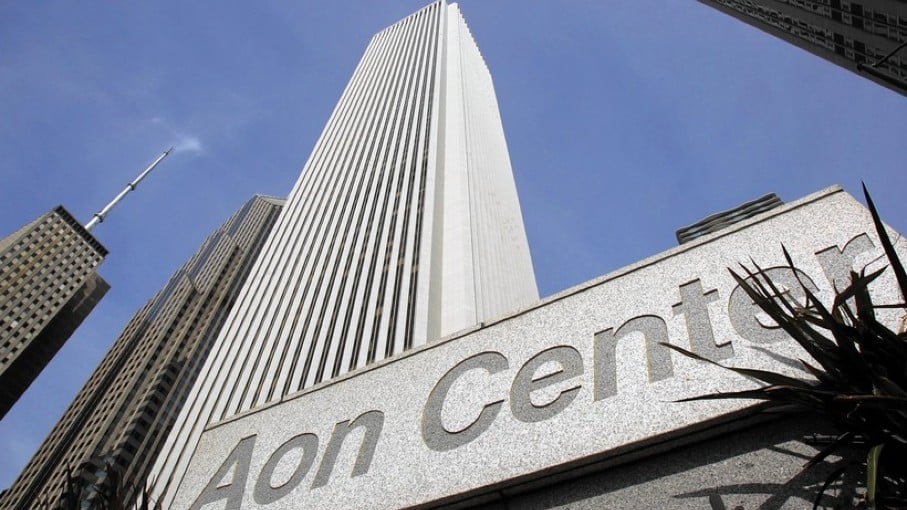
Among the newly troubled assets, the Aon Center in Chicago is notable as it backs one of the five largest CMBS loans to become delinquent in July. Alongside the Times Square and Seattle office assets and the showroom portfolio spanning North Carolina and Nevada, it illustrates that large, high-profile properties are increasingly represented in the non-performing CMBS universe, largely because of maturing debt and refinancing pressure.