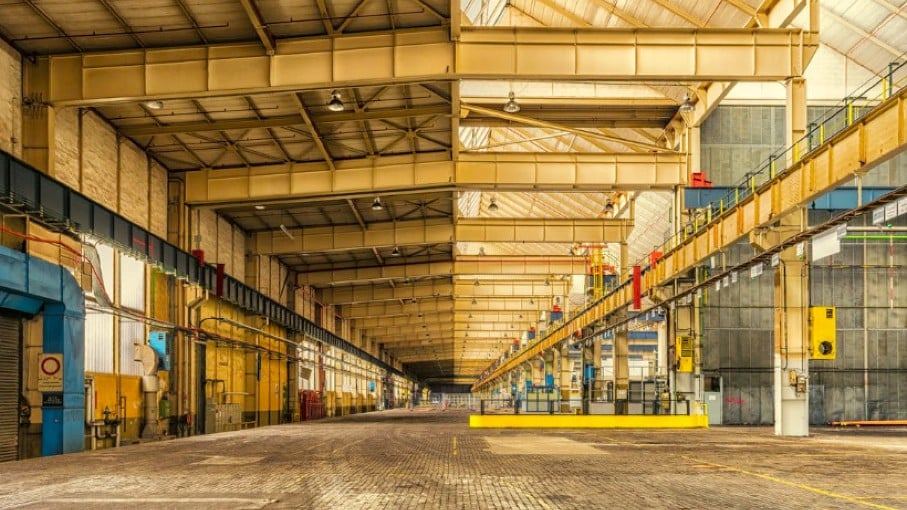
The U.S. industrial property sector continued to firm in the second quarter of 2026, as demand and new supply aligned closely and pushed national vacancy to its lowest point in more than a year. Cushman & Wakefield reported that the overall U.S. industrial vacancy rate slipped below 7% during the period, settling at 6.9%, while leasing volumes climbed to their strongest level since mid-2022.
Occupier activity remained solid through the first half of the year. According to the firm, industrial users had collectively absorbed 113.6 million square feet of space year-to-date by the end of the second quarter. That level of net absorption represents the sector’s best first-half performance since 2023, underscoring the resilience of user demand even as broader economic conditions have been evolving.
On the supply side, new construction deliveries moderated compared with the prior year. Developers completed 62 million square feet of industrial product in the second quarter, bringing total deliveries for the first half of 2026 to 119 million square feet. Cushman & Wakefield noted that this volume of new space is nearly 20% lower than the amount delivered during the same period a year earlier, indicating a more measured development pipeline.
Cushman & Wakefield characterized the current environment as a new phase for the U.S. industrial market, following several quarters of recalibration after the peak construction and demand cycle. Jason Tolliver, president of Logistics & Industrial Americas at the firm, said the sector is now marked by healthier fundamentals and more balanced growth as occupier demand continues to build while development activity has become more disciplined.
This combination of steady demand and restrained new supply is contributing to a renewed tightening of market conditions, particularly in segments where modern logistics space is limited. Tolliver highlighted that newer, higher-quality logistics facilities are seeing especially strong competition from occupiers, reflecting user preferences for contemporary, efficient industrial product.
Overall, the data from Cushman & Wakefield’s latest industrial report points to a national market that has moved past an adjustment period and into a more stable trajectory. Vacancy has edged down as tenants continue to absorb space, while the pace of new deliveries has eased relative to last year, reducing the risk of near-term oversupply and reinforcing the importance of modern, well-located assets within the industrial landscape.