The Denver City Council has approved a zoning request that clears the way for a four-party joint venture to advance the Denver Spur mixed-use development. The entitlement allows the team to pursue a large-scale plan that calls for nearly 700 new housing units and between 50,000 and 125,000 square feet of combined retail, commercial and hospitality space. The project is positioned as a sizable addition to the city’s housing and commercial stock, with flexibility embedded in the range of nonresidential square footage permitted under the new zoning.
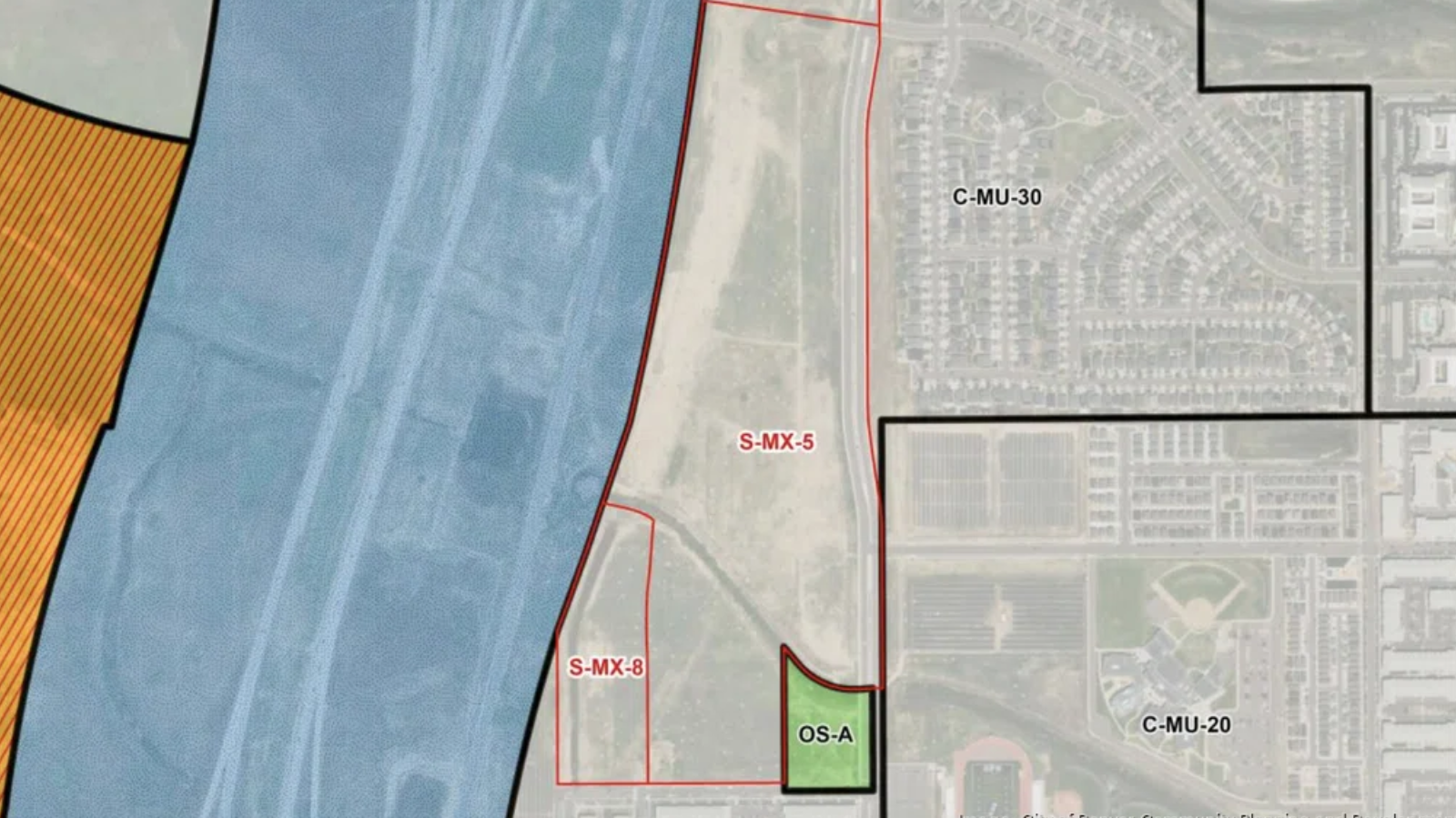
Denver Spur encompasses 74 acres located to the east of Peña Boulevard and south of 56th Avenue, with Telluride Street forming one of its boundaries. The site’s scale provides room for a mix of building types and uses, reflecting the broader shift toward master-planned mixed-use environments that integrate residential and commercial functions on a single large land tract.
Under the approved zoning, the development team can construct buildings up to eight stories tall on two defined portions of the property, while most of the remaining land is limited to five stories. These height allowances set the framework for a mid-rise residential and commercial program across the site. Permitted land use types include drive-thru and shopfront building forms alongside general residential and commercial uses, giving the joint venture latitude in how street-level activation and auto-oriented components are combined.
According to reporting from The Denver Business Journal, the development site was acquired in 2018 for $14,500,000 by a group that includes construction firm Rago, the Troesh Family Foundation, Wall Development and Equity Ventures Commercial Development of Kansas. That buyer group now underpins the joint venture moving the Denver Spur zoning forward. The entitlements position the ownership to plan detailed phases of housing and commercial space while responding to market demand within the broad parameters of the approved framework.
The council’s decision concludes a key step in the entitlement process for the 74-acre property. With zoning in place, the joint venture can refine its program mix within the allowed range of residential units and commercial square footage, as well as determine how to deploy the permitted building heights across the site. The project’s progress from land acquisition in 2018 to today’s zoning milestone illustrates the multi-year horizon often required to bring large mixed-use concepts from initial site control through local approvals.