**The 2025 Industrial Real Estate Rebalance: Active Capital, Selective Occupiers**
In the wake of the COVID-19 pandemic, the U.S. industrial leasing market experienced unprecedented growth. This boom was fueled by a rebounding economy, shifting supply chains, and a surge in e-commerce. During this heated period, speculative mega-buildings exceeding one million square feet were leased before construction even began. Manufacturers, third-party logistics providers, and retailers scrambled to secure space, driving net operating income (NOI) growth, inflating valuations, and compressing cap rates. The result: record-setting sales volumes and near-frenzied investor enthusiasm.
That was then. This is now.
In 2025, the sector experienced a shift from that era of rapid expansion to a period of normalization and recalibration. As experts previously shared, 2025 marked a transition—a calmer phase where occupier preferences evolved and a more balanced momentum took hold in the industrial real estate space.
### Tenant Behavior: Selectivity and Strategic Flexibility
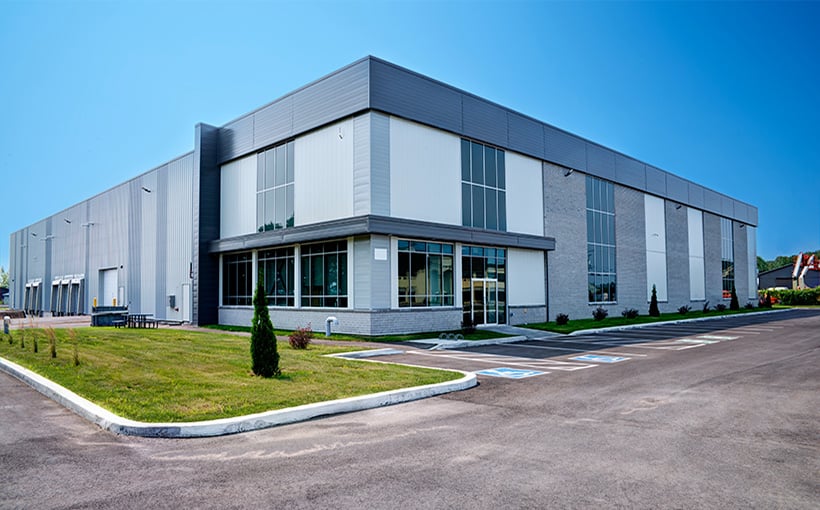
Tenants in 2025 displayed more intentional behavior. Gone were the days of mass space grabs. Instead, occupiers showed a preference for smaller, modern facilities located within strategically advantageous regions.
“Expansion is still occurring,” said Ryan Butler, Northmarq’s Regional Managing Director. “But it’s driven by productivity improvements, stronger supply-chain resilience, and cost control. Capital is now targeted where fundamentals and labor dynamics are most favorable.”
Jeff Thornton, Executive Vice President at Centerpoint, noted that uncertainty about tariffs and economic conditions led many tenants to delay long-term commitments. Instead, they favored shorter-term leases that provided operational flexibility. “Tenants had a harder time understanding from a mid- to long-term perspective how much space they needed and where it needed to be,” Thornton explained.
Steve Reents, Managing Partner and Deputy Head of U.S. at BGO, added that many occupiers are now prioritizing automation-focused facilities. However, limitations persist—particularly in infill markets with aging and fragmented building stock not suited for modern distribution.
An emerging trend among industrial users is direct property ownership. Elizabeth Holder, Senior Analyst with JLL, pointed out that some occupiers have opted for purpose-built facilities that cater to their unique operational needs. “Direct ownership is becoming a strategic advantage for facilities occupiers intend to hold long-term,” she said.
### Capital’s Continued Confidence in Industrial
While investor exuberance has cooled since the sector’s peak, capital continues to show strong interest in industrial real estate.
“Investor appetite for industrial has remained remarkably resilient, even after the tariff disruptions in Q2 2025,” said Trent Agnew, JLL’s Senior Management Director and Industrial Group Co-Lead. “This durability stems from the sector’s recent strong leasing performance.”
According to JLL, 2025 saw $91.3 billion in industrial sales volume—the fourth-highest annual figure on record. Core and trophy industrial assets were priced with cap rates in the high 4% to mid-5% range, reflecting their strong value retention and continued positive investor sentiment.
“The current environment has increased opportunities to acquire high-quality assets at valuations meaningfully below replacement cost,” noted BGO’s Reents. That said, concerns remain about overvaluation. Thornton highlighted institutional perspectives suggesting that robust demand may have driven cap rates lower than fundamentals support. “A lot of capital continues to chase industrial, driving values probably a bit higher than where they should be at the moment,” he said.
Mason Waite, Senior Managing Director of Asset Management with BKM Capital Partners, emphasized that future performance may depend more on how quickly the market absorbs excess supply than on rate volatility. “We expect a clearer environment once deliveries are worked through over the next one to two years,” he said.
### Looking Ahead: Steady Demand, Strategic Investment
Experts agree that both occupier demand and investor confidence are expected to remain steady through the remainder of 2026. BGO’s Reents predicted a focus on accelerating NOI growth and improved market fundamentals.
Improving fundamentals could lead to further cap rate compression and optimistic rent-growth underwriting. “While rent growth is moderating from the previously unsustainable levels, stable demand and strong structural factors underpin long-term sector confidence,” said Lukas Huberman, Vice President and Director of Acquisitions at BLT Enterprises.
Trent Agnew noted, “Markets experiencing higher leasing velocity are poised to outperform and will likely attract the most capital and buyer activity.”
Reents added that 2026 presents opportunities for value creation through disciplined acquisitions and proactive asset management. Meanwhile, Waite emphasized the growing investor focus on quality operations. “Strong operators can protect occupancy, manage tenant rollover, and compete effectively while new supply works its way through the system,” he concluded.
As the industrial sector rebalances from its previously frenzied pace, it stands on solid ground. With strategic occupiers, resilient capital, and a focus on long-term fundamentals, industrial real estate is poised for a strong and stable 2026.