**U.S. Government Enters Ninth Day of Shutdown: CRE Sector Remains Mostly Unaffected**
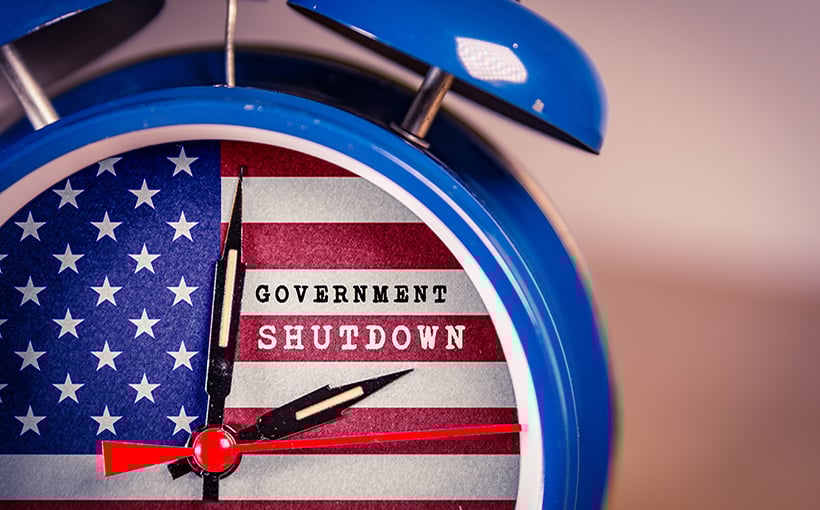
As of October 9, the U.S. federal government has entered its ninth consecutive day of a shutdown, with Congress remaining at an impasse over a funding plan to reopen operations.
The immediate consequences have included furloughs for federal employees and disruptions in air travel. Yet, despite these challenges, the commercial real estate (CRE) sector appears largely insulated—for now.
**The Good News: Commercial Real Estate Holding Steady**
In a recent analysis by Marcus & Millichap, Senior Vice President John Chang noted that government shutdowns typically do not impact commercial real estate property operations. Financing remains accessible—even from government-sponsored entities like Fannie Mae and Freddie Mac—and transactions continue to close.
However, a notable exception could be the Department of Housing and Urban Development (HUD). If the shutdown extends beyond 30 days, delays in HUD payments might start to impact certain CRE markets.
**The Not-So-Good News: Broader Economic Ripples**
While CRE may avoid immediate disruption, the broader economy faces potential risks if the deadlock continues. According to Chang, the shutdown could:
– Place downward pressure on economic growth
– Delay the release of essential economic data
– Influence decision-making among businesses and investors
**Potential Economic Impacts Based on History**
Historical context offers an idea of what prolonged shutdowns could mean. The partial shutdown of 2018–2019 lasted 35 days, affecting roughly 380,000 federal employees and resulting in an $11 billion economic loss—though $8 billion of that was subsequently recovered. The 2013 full shutdown saw approximately 850,000 employees furloughed and an estimated $20 billion hit to the nation’s GDP over just 16 days.
If the current shutdown continues, as many as 750,000 federal employees could be furloughed, potentially shaving off 15 to 20 basis points from GDP growth per week.
**Missing Data Could Complicate Policy Decisions**
Shutdowns also pause operations across multiple government agencies, delaying key economic reports on employment, inflation, and other indicators used by policymakers. The Federal Reserve depends on this information for interest rate decisions.
Despite ongoing discussions surrounding potential rate cuts later this year, Chang noted that the Fed might need to act without access to the full spectrum of economic data.
**A Fragile Recovery at Risk**
Recent job market data from the Bureau of Labor Statistics reflects softening conditions, including increased government-sector layoffs. This, Chang warned, could ultimately affect retail and home sales—both of which have strong ties to CRE demand.
Should employment continue to falter and the shutdown persist, the risk of a recession could rise, particularly if business and consumer confidence erode further.
**Final Thoughts: Staying Focused on the Long-Term**
Although uncertainties remain, there is some positive news. Household balance sheets are still relatively healthy—bolstered by strong savings and manageable debt-to-income ratios.
While the shutdown is generating headlines, Chang emphasized a measured outlook: “The long-term impact should be minimal. At the end of the day, investors should focus on the long game.”