**Midyear 2025 Economic and CRE Outlook: Stagflation Concerns Mount**
At the beginning of 2025, commercial real estate (CRE) showed promising signs of recovery, particularly in the capital markets. According to Cushman & Wakefield’s “Midpoint 2025 U.S. & CRE Outlook,” the industry was gaining positive momentum with several green shoots emerging.
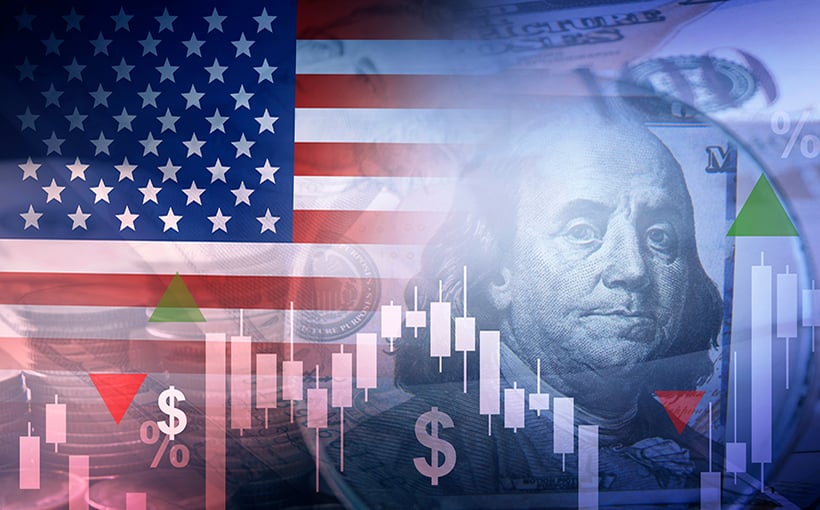
However, fast-forward six months, and the economic landscape has changed dramatically. A shift in policy direction, especially surrounding trade tariffs, has introduced significant uncertainty. As a result, Cushman & Wakefield now forecasts a period of short-term stagflation — a combination of slowing economic growth and rising inflation — for the remainder of 2025. According to the report, early indicators of stagflation are already present, including rising unemployment, layoff announcements, surging inflation, increased prices, and reduced supply of goods.
These concerns are shared by the Federal Reserve. On June 18, following its Federal Open Market Committee meeting, the Fed confirmed it would maintain interest rates at their current levels — between 4.25% and 4.5% — citing ongoing uncertainty about tariff policies and their impact on the U.S. economy. Earlier Fed statements also flagged stagflationary risks, prompted by both trade policy and higher projected unemployment.
Despite these macroeconomic challenges, the outlook for commercial real estate remains cautiously optimistic. Cushman & Wakefield analysts suggest that demand for most property types and markets will stay resilient. A tightening construction pipeline could potentially reduce vacancy rates, creating stability in many segments of the market.
From a capital markets perspective, the report projects that the 10-year Treasury yield will remain in the low-to-mid 4% range through year-end. Cap rates could experience a modest rise, as motivated sellers adjust pricing expectations and buyers capitalize on revalued assets. The firm notes that many pricing corrections have already occurred, which may entice more transactional activity moving forward.
Finally, the intrinsic nature of real estate investment may provide a buffer during economic volatility. According to the report, “During periods of uncertainty, real assets are favored, and CRE stands to benefit from this dynamic in the immediate term.”
As 2025 reaches its halfway point, the evolving economic and policy environment continues to shape the outlook for CRE, highlighting the sector’s resilience but also underscoring the need for strategic navigation in potentially turbulent times.