The Urban Land Institute has selected nine winning projects for its 2026 ULI Americas Awards for Excellence, drawing from 93 submissions across the region and a shortlist of 16 finalists. A 15-member jury of professionals from development, finance, planning, and design evaluated entries for overall excellence in market acceptance, design, planning, technology, amenities, economic impact, management, community engagement, innovation, and sustainability.
Highland Phase II in Austin, Texas, was recognized for converting a dormant shopping mall into Austin Community College’s flagship campus for 5,000 students. The 420,000-square-foot adaptive reuse project reuses structural steel and other building components and creates specialized academic spaces informed by more than 16 campus departments. A newly created Paseo breaks through the former mall configuration to improve walkability and public access.
Line 5 Eglinton in Toronto, Ontario, is the city’s largest transit expansion in decades, extending 11.8 miles with 25 stations that link 22 communities along a key east-west corridor. The line connects to 54 bus routes, three subway stations, and two GO rail lines and is expected to serve about 123,200 daily riders by 2027. Station designs integrate with surrounding neighborhoods, incorporating passive ventilation, adaptable entrances, and canopies that maximize natural light.
Mission Rock Phase One in San Francisco, California, was cited for resilient waterfront planning, with the site elevated to account for up to 66 inches of projected sea level rise. The former industrial waterfront and surface parking area has been transformed over 17 years of planning and community engagement into a mixed-use neighborhood with residential towers, commercial buildings, local retail, and the five-acre China Basin Park that strengthens the city’s connection to the Bay.
Parrott Creek in Oregon City, Oregon, rethinks residential treatment facilities for youth and families through trauma-informed and ecology-focused design. The 22,410-square-foot campus sits on 80 acres and combines outdoor programming areas with three main buildings that house therapeutic spaces, bedrooms, shared learning zones, recreation spaces, staff operations, and a cultural ecology area. The project was developed with input from youth, universities, community organizations, and Indigenous community members.
Presidio Tunnel Tops in San Francisco reclaims former highway infrastructure as 14 acres of new national park land. By bridging the tunneled Presidio Parkway, the project reconnects the Presidio’s Main Post to the Bay. Since opening, it has welcomed nearly 6 million visits and hosted more than 500 community organizations and 1,000 school groups. The design links trails, transit access, educational spaces, and gathering areas to replace a long-standing pedestrian barrier.
Riverlife’s Shore Thing in Pittsburgh, Pennsylvania, delivers a 4,800-square-foot solar-powered floating platform that strengthens the public’s relationship with the Allegheny riverfront. Achieved through complex interagency coordination and delivered within three years of planning, the project attracted over 50,000 visitors in its first year. Modular barges provide flexible space for free public programming, including yoga and performing arts, as well as a beer garden, hammock nets, and lounge areas, all completed at a total cost of $1.3 million.
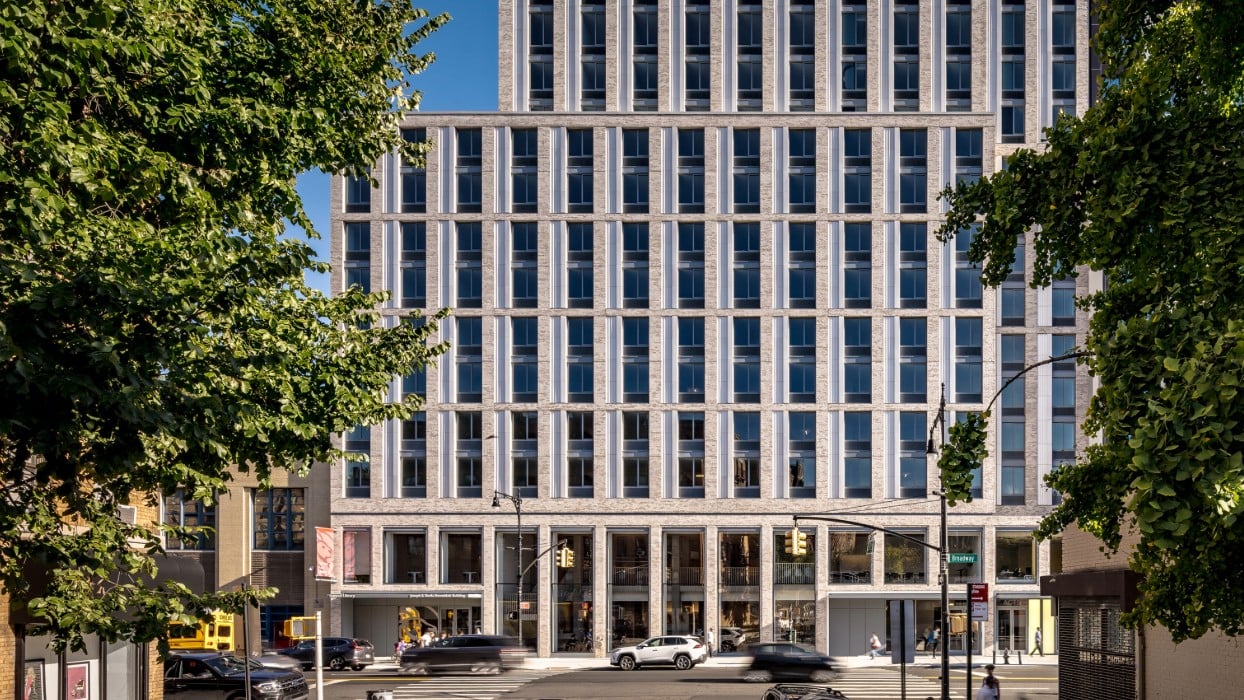
The Eliza + Inwood Library – Joseph and Sheila Rosenblatt Building in New York City, New York, combines a new public library with 174 affordable housing units in the Inwood neighborhood. Shaped by local residents, community groups, elected officials, and nonprofits, the development supports a live-work-play environment with a Universal pre-K school, a teaching kitchen, and job training and placement services, and showcases collaboration between the City, nonprofit developers, and the New York Public Library.
The Victor in St. Louis, Missouri, repositions a 735,000-square-foot vacant warehouse into a mixed-use project with 384 apartments, parking, tenant amenities, and retail. Backed by a $130 million capital plan that prominently features state and federal historic tax credits, the project activates an entire downtown west city block and seeks to catalyze additional nearby investment, while maintaining the character of the historic garment district.
Wadaag Commons in Minneapolis, Minnesota, is a 39-unit affordable housing development that completes the transit-oriented, mixed-use Seward Commons redevelopment. Designed with cultural sensitivity for primarily East African, multigenerational households, the $26 million project includes one- to four-bedroom units, six townhomes, high-flow air circulation, floor drains, a sensory-sensitive playground, a green roof, and EV charging stations. The project is intended to support walkable, transit-accessible family living environments.
Established in 1979, the ULI Awards for Excellence program recognizes top-performing developments in private, public, and nonprofit sectors across the Americas that are substantially complete, financially viable, and in stable operation, highlighting a broad range of land use solutions and geographies.