U.S. apartment demand has moved back in front of new supply for the first time since early 2022, according to Cushman & Wakefield’s second-quarter 2026 U.S. Multifamily MarketBeat report. The shift marks a notable change from the supply-heavy conditions that have characterized the sector over the past several years.
Over the 12 months leading into the second quarter, renters absorbed more units than developers delivered. On a trailing four-quarter basis, the sector absorbed approximately 362,000 units, compared with about 358,000 units brought online. This balance tipped in favor of demand after an extended period in which new construction outpaced leasing activity.
Second-quarter fundamentals underscored this turn in the cycle. Net absorption reached 124,600 units in Q2 2026, which Cushman & Wakefield identified as the fifth-highest quarterly total in nearly 25 years. That figure also represented an 8% year-over-year increase, signaling that demand has not only remained steady but has strengthened compared with the same period a year earlier.
Vacancy rates improved alongside the stronger leasing performance. National apartment vacancy fell below 9% for the first time since 2024, landing at 8.9% in the second quarter. This reflected a 35-basis-point decline from the prior quarter and ended more than a year of comparatively stable vacancy levels. The move lower suggests that excess capacity created during the recent construction wave is beginning to be absorbed.
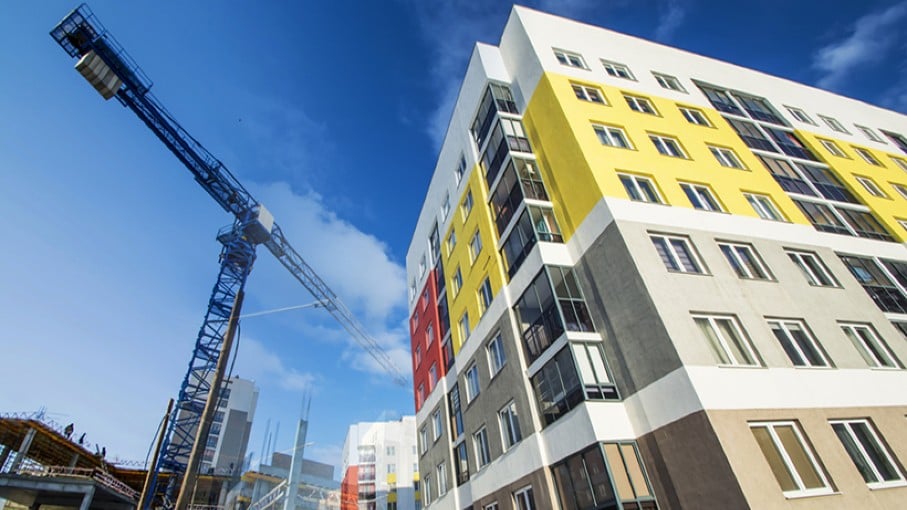
On the supply side, construction activity continued to retreat in the second quarter. While the report did not specify the volume of new starts or the size of the remaining pipeline, Cushman & Wakefield noted that building activity is slowing, reducing the pace at which new units are entering the market. This moderation is occurring just as demand is proving resilient, narrowing the gap between deliveries and leasing.
Sam Tenenbaum, head of multifamily insights at Cushman & Wakefield, characterized the environment as a clear departure from the recent past. He observed that the apartment market is no longer defined primarily by new supply pressures, pointing to the combination of slowing construction, steady demand and declining vacancy as evidence of improving fundamentals. Tenenbaum added that these dynamics represent a meaningful shift from the conditions that have shaped the multifamily landscape in recent years and indicated that fundamentals are poised to keep strengthening as the construction pipeline continues to thin.
Together, these indicators portray a national multifamily sector that is transitioning away from a period of pronounced supply growth toward a more balanced state, with demand once again leading deliveries and vacancy beginning to trend lower.