**Trimont’s Mitchell Hunter Sees Rising Demand for Special Servicing**
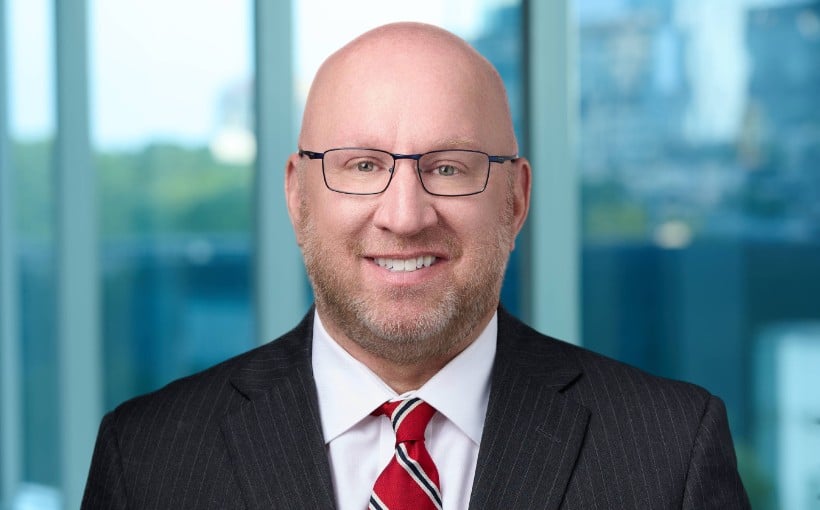
Trimont has reinforced its leadership in commercial real estate services in 2025 by acquiring the third-party non-agency commercial mortgage servicing (CMS) business of Wells Fargo, making it the largest servicer of securitized commercial real estate debt in the country. In addition, the company has experienced a continued upswing in its distress-related business lines. With these developments marking a pivotal year for the firm, Connect CRE caught up with Mitchell Hunter, President of Trimont, to discuss the integration of the Wells Fargo CMS platform and the broader economic outlook affecting real estate finance.
**Q: Trimont recently completed its acquisition of Wells Fargo’s third-party non-agency CMS business. How does the acquisition enhance Trimont’s existing platform?**
**A:** The acquisition strengthens Trimont’s platform across several strategic dimensions:
– **Expanded Scale and Resources:** With the addition of approximately 700 team members—350 in the U.S. and 350 in India—Trimont has significantly boosted its global workforce. This expansion enables 24/7 client support across a broader array of asset classes and financial instruments.
– **Enhanced Operational Efficiencies:** Increased scale translates into improved operational and financial efficiencies. These gains allow Trimont to streamline internal processes, leverage economies of scale, and adapt more nimbly to market shifts.
– **Technology and Innovation Advancement:** The acquisition included eight proprietary software platforms that align well with Trimont’s existing technology investments. These tools support the company’s growth in public and private credit servicing and add momentum to its AI innovation initiative, including further development of its large language model, Tribot.
– **Greater Client Value:** The combined strengths of expanded resources, global reach, and technology allow Trimont to provide best-in-class services—regardless of the complexity or structure of a transaction.
**Q: Within the overall Trimont platform, where do the distress-related business lines (e.g., special servicing) rank in terms of year-over-year growth?**
**A:** Trimont’s distress-related business lines have continued to experience consistent year-over-year growth. This trend is expected to accelerate throughout the rest of 2025 into 2026, driven primarily by a significant volume of loan maturities occurring within the next 18 months. As refinancing becomes more challenging and defaults begin to rise, the need for experienced special servicing will grow in parallel. Additionally, mounting costs and ongoing macroeconomic uncertainty will continue to pressure commercial real estate fundamentals, further increasing the demand for these services.
**Q: In terms of distressed real estate, which property types have seen the most movement—positive or negative—in the past six months?**
**A:** The hospitality sector is facing persistent challenges. Many assets in special servicing struggle with low average daily rates and low occupancy levels. The disposition of these properties is often hindered by franchise management structures, which are less attractive to buyers who prefer independently operated hotels. Moreover, owners are hesitant to invest in needed property improvements due to uncertain returns. Broader concerns—such as travel disruptions, fluctuating tariffs, increased insurance and labor costs, and volatility in the airline industry—are further constraining the sector.
In contrast, the regional mall sector recently saw a notable success: a resolution that achieved full recovery of both principal and default interest—an uncommon accomplishment in that asset class.
Multifamily agency loans have seen increased cases of distress, though largely due to non-monetary issues such as deferred maintenance and lacking insurance, rather than payment defaults. Meanwhile, multifamily loans within the CMBS space are confronting more monetary and maturity defaults, often compounded by poor property conditions.
**Q: Has the current economic uncertainty—domestic and global—begun to affect commercial property fundamentals and the lending environment?**
**A:** Absolutely. There are clear signs of impact in both commercial property fundamentals and the broader lending climate:
– **Commercial Property Fundamentals:** Market volatility is reducing asset values and increasing operating expenses. High vacancy rates, slowed rent growth, and cautious tenant behaviors are prevailing in the office and retail sectors. Consumer stress is also affecting businesses, and multifamily renters are grappling with rent burdens. Additionally, concerns around new tariffs are contributing to a cooling industrial market.
– **Lending Environment:** In response to heightened risk, lenders are tightening underwriting standards and increasing loan pricing while reducing leverage ratios. Market liquidity has shrunk, leading to a more selective lending environment. Borrowers, especially those holding transitional or underperforming assets, are finding it more difficult to refinance or secure new loans.
As the economic environment continues to evolve, Trimont remains positioned to guide stakeholders with the expertise and tools needed to navigate these challenging conditions.