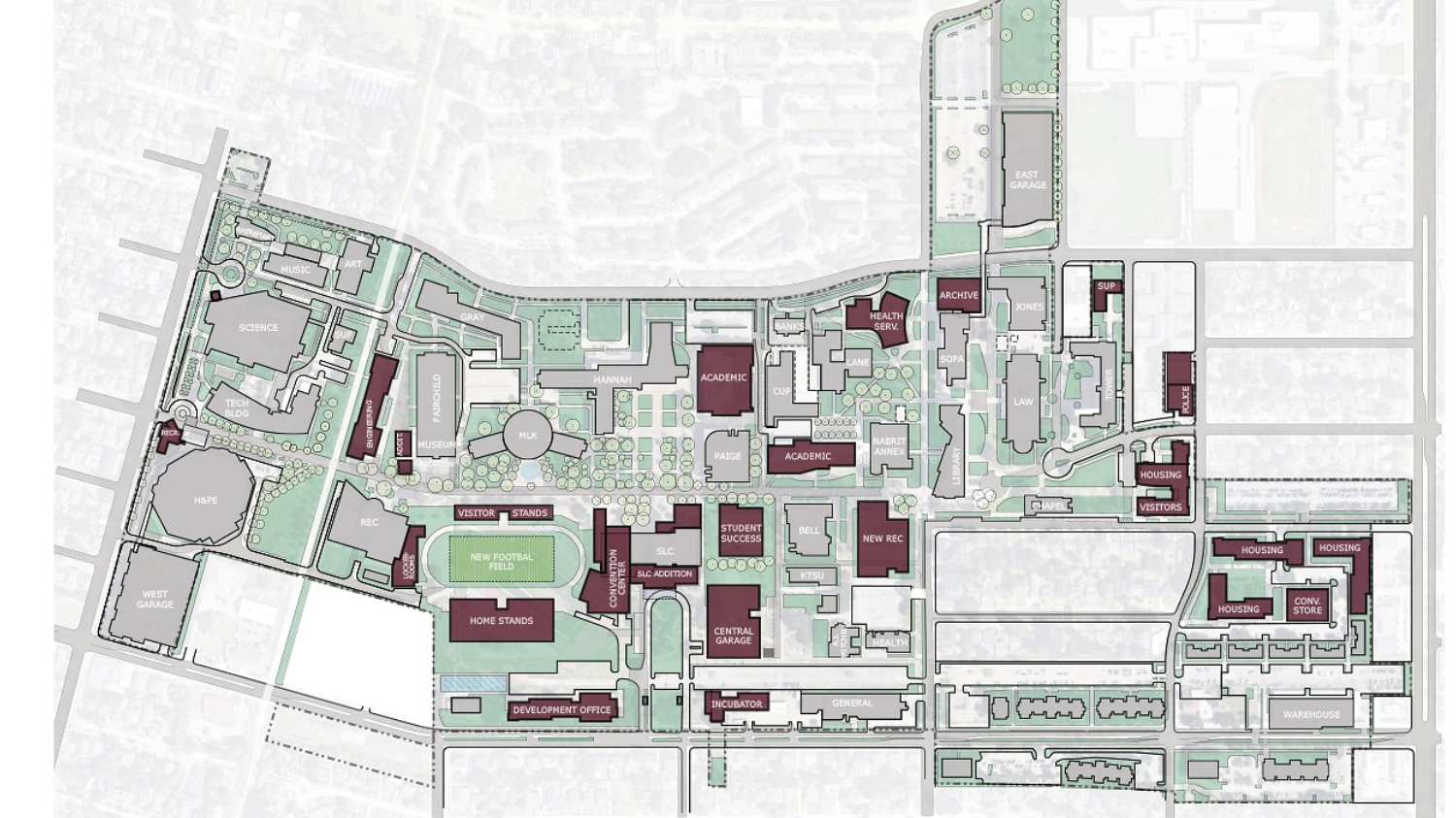
Texas Southern University in Houston has unveiled a new Campus Master Plan that will guide the institution’s physical growth and investment priorities over the coming decade. The framework is intended to steer how the university allocates capital for buildings, infrastructure, and campus amenities, while staying aligned with its broader strategic objectives.
The plan calls for approximately $1.7 billion in campus investment, spread across more than 20 phased projects. These initiatives are structured to roll out over the next ten years, giving the university a roadmap for sequencing construction, coordinating resources, and aligning new development with academic and operational needs.
According to the plan, the proposed capital projects are designed to intersect and reinforce one another, with an emphasis on supporting student success, workforce preparation, research expansion, and community engagement. The program highlights future priorities such as student-centered facilities, new and upgraded academic and research buildings, and expanded residential and recreational amenities for the campus community.
The Master Plan also points to the importance of spaces that foster stronger ties between Texas Southern University and the surrounding community. These may include facilities and environments that can host outreach, collaboration, and partnership activities, providing a physical platform for the university’s engagement efforts while enhancing the overall campus experience.
Several major projects under the plan are already moving forward. Construction on three new academic and research facilities is expected to begin later this year. The projects include the interconnected Catalyst for Urban Transformation, the Nabrit Science Center, and the Health and Wellness Center. Together, these buildings are positioned as key components of the university’s future academic and research infrastructure.
The three facilities are backed by more than $95 million in state funding, underscoring the role of public capital in advancing the university’s long-term campus vision. All three buildings are expected to open during Texas Southern University’s Centennial year, tying the delivery of these assets to a significant institutional milestone.
As the broader Campus Master Plan unfolds over the next decade, the university will be executing a series of phased capital projects that reshape its physical footprint. The coordinated approach outlined in the plan is intended to ensure that new investment supports academic goals, enhances student outcomes, and strengthens the university’s role as a research and community institution within Houston.