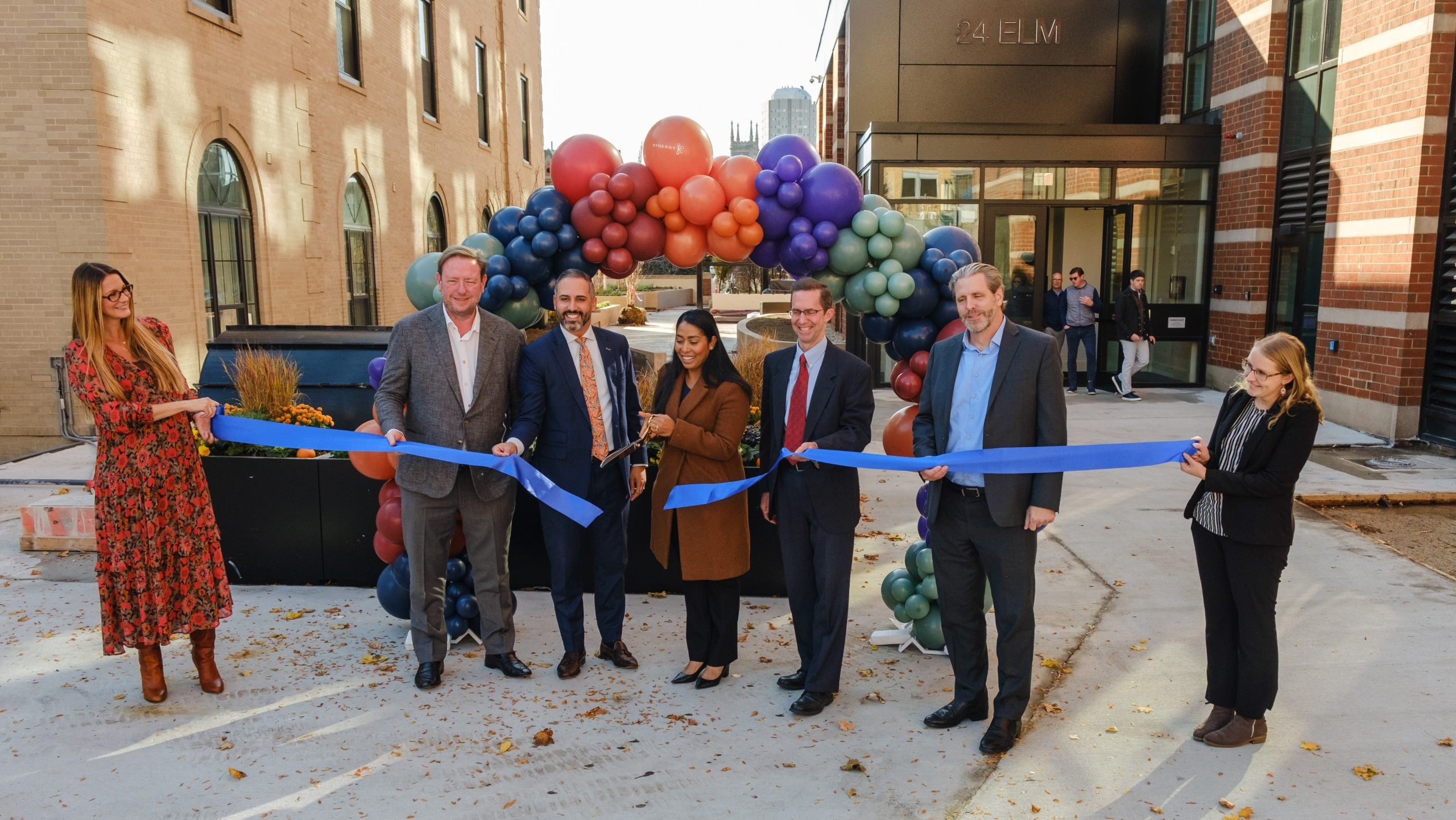
Synergy has marked the official opening of Altitude Worcester, described as the largest office-to-residential conversion in Massachusetts, with a ribbon-cutting ceremony attended by Juana Matias, Secretary of the Massachusetts Executive Office of Housing and Livable Communities, and representatives of the City of Worcester. The event celebrated the transition of a former corporate headquarters into new housing and underscored the municipality’s role in supporting additional residential options in the urban core.
The opening also coincided with the completion of 22 Elm St., an adjacent affordable homeownership community that Synergy co-developed with The Planning Office for Urban Affairs. Residents have already begun moving into both Altitude Worcester and 22 Elm St., signaling that the homes are delivered and occupied rather than simply announced or under construction. Together, the two properties introduce a mix of rental and ownership opportunities in close proximity, with an explicit focus on affordability at scale.
Synergy acquired the former Fallon Health headquarters in 2023 and undertook the conversion of the 11-story office tower into 198 apartments. The former headquarters building is now fully repositioned as a residential asset, representing a significant change in use from single-tenant office space to multifamily housing. This repositioning aligns with broader efforts to reuse underutilized office properties while increasing housing supply in established employment centers.
The project timeline was compressed by the fact that Fallon Health remained in place until its lease expired in March 2025. Synergy therefore had only 16 months from that date to complete the conversion, an unusually tight schedule for a large-scale office-to-residential effort. Despite this constraint, the conversion was delivered in time for residents to move into the newly created apartments.
David Greaney, founder and CEO of Synergy, noted that Altitude Worcester was conceived to demonstrate that large-scale office-to-residential redevelopment can be executed in Massachusetts while incorporating long-term affordability. He highlighted that residents are now living at both 24 and 22 Elm, and that downtown Worcester has gained additional residents who are supporting local restaurants and businesses on a daily basis. The combination of a completed office conversion and an adjacent affordable homeownership project illustrates how multiple housing types can be introduced through coordinated urban infill and adaptive reuse.