Rockpoint, LCOR and Potomac Investment Properties have formed a joint venture to acquire an office property in Washington, D.C.’s Georgetown neighborhood and convert it into a multifamily community. The partners plan to reposition the existing complex, currently configured as office space, into rental housing while retaining a street-level retail component.
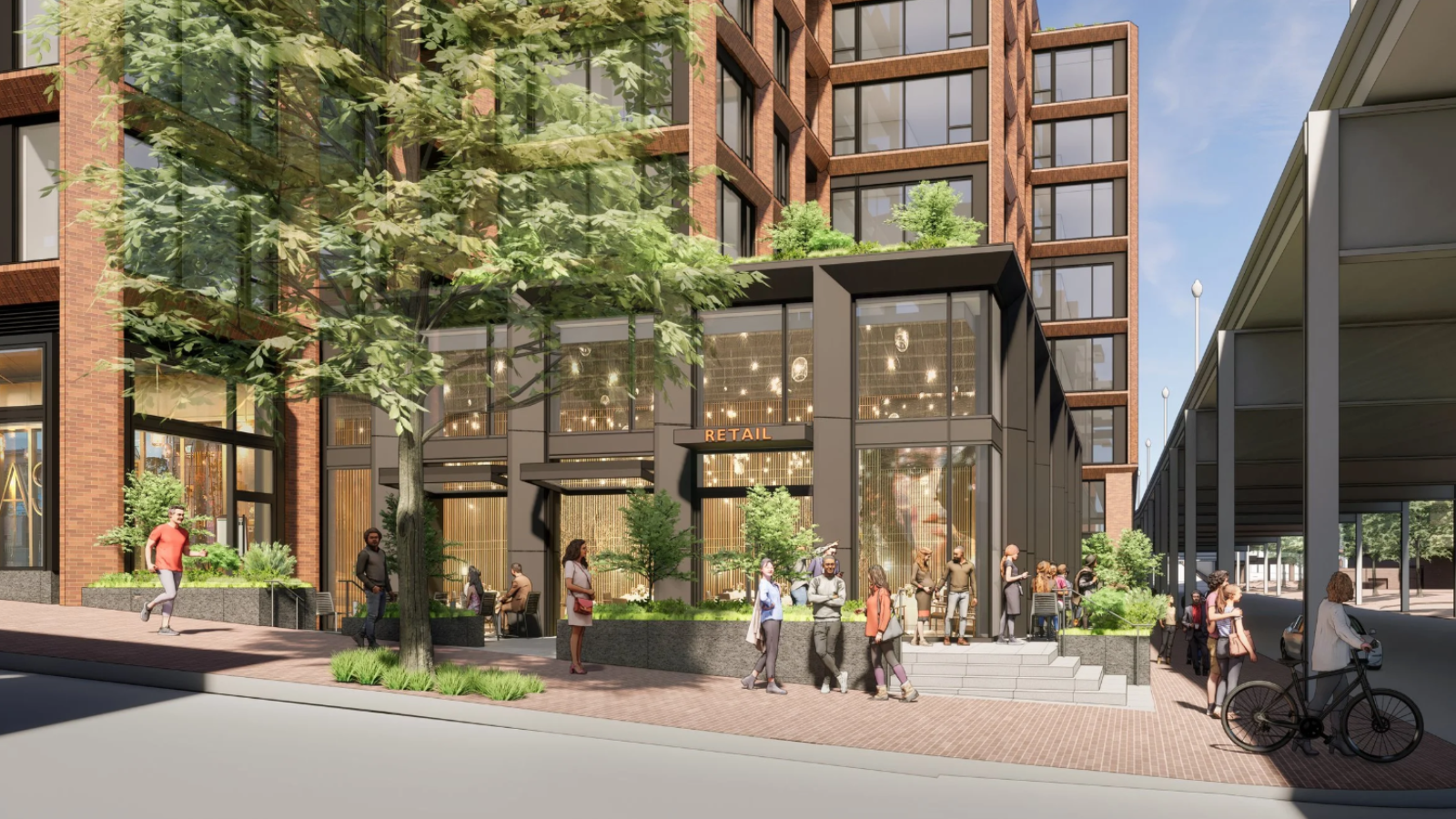
The two-building property is located at 1000 and 1050 Thomas Jefferson Street NW, a walkable corridor just off Georgetown’s historic waterfront. Under the redevelopment plan, the buildings will be transformed into a 299-unit residential community supported by approximately 18,100 square feet of street-level retail space. The ownership group did not disclose terms of the acquisition.
The project is notable as the first office-to-residential conversion in decades to deliver multifamily rental units within the Georgetown neighborhood. The area has long been known for its constrained housing supply, historic fabric and mix of retail, academic and hospitality uses, and has not seen many recent purpose-built rental additions of this scale.
The buildings were originally developed in the 1980s by Potomac Investment Properties as office assets. The joint venture now intends to redevelop the adjacent structures into a range of rental units, from studio apartments through four-bedroom penthouse residences. This approach is designed to broaden the potential resident base, from smaller household types to larger households seeking more space in a walkable urban setting.
The site benefits from proximity to Georgetown’s waterfront, which offers recreational space, dining and access to neighborhood amenities. The property is also situated within a hospitality cluster that includes the Ritz-Carlton, Four Seasons and Rosewood hotels, underscoring the neighborhood’s appeal to both visitors and residents.
In addition, the future residents will have immediate access to Georgetown University, nearby historic sites and museums, and a mix of local boutiques and national retailers along the area’s primary commercial corridors. The project aims to leverage these locational attributes while reusing the existing office structures for a residential-led program.
By shifting the use of the property from offices to apartments with ground-floor retail, the joint venture is executing an adaptive reuse strategy that reflects the ongoing evolution of demand in established urban submarkets such as Georgetown. The conversion also illustrates how older-vintage office product can be repositioned to meet housing needs in high-barrier neighborhoods.