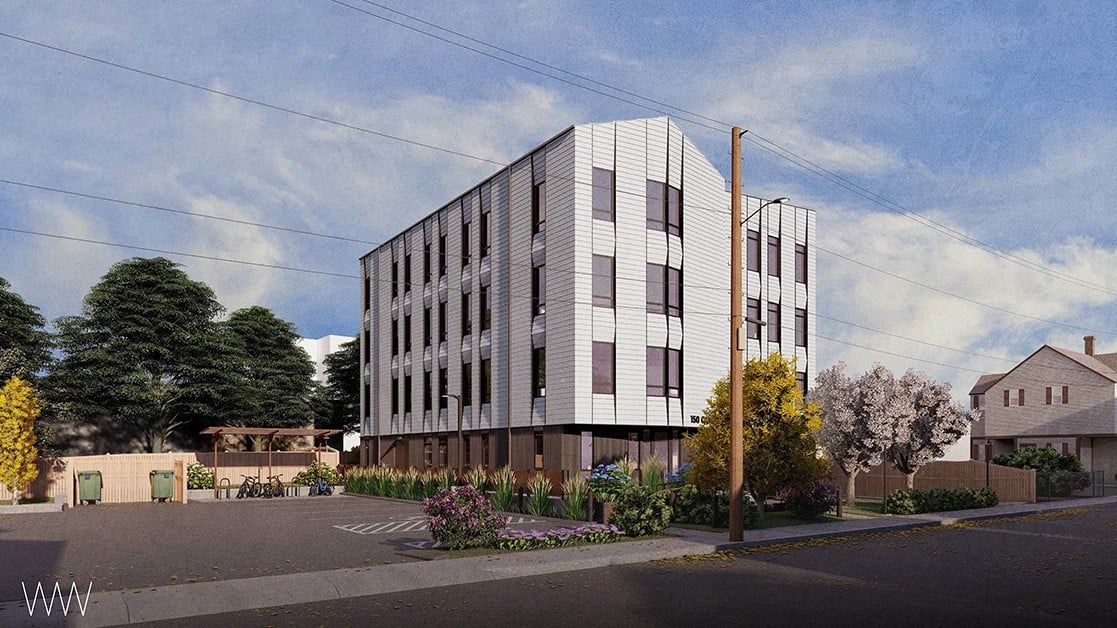
Rockland Trust is supplying a $7.4 million financing package to Father Bill’s & MainSpring for a new affordable housing development at 150-156 Quincy Street in Quincy, MA. The Quincy Street Apartments project is planned as a 24-unit multifamily community, with the stated goal of expanding access to housing in an area facing pronounced affordability pressures.
The financing supports the ground-up development of a residential property dedicated to affordable units. According to the parties, the project is intended to help address a shortage of accessible housing options for individuals and families, positioning Quincy Street Apartments as part of a broader effort to respond to regional housing challenges.
The capital stack for the development incorporates Low-Income Housing Tax Credits alongside additional public and private funding sources. These elements are designed to maintain long-term affordability for the residents and to improve the financial feasibility of delivering income-restricted units. Stratford Capital is serving as the tax credit syndicator, bringing in equity associated with the tax credits to complement Rockland Trust’s financing package.
By combining bank financing, tax credit equity, and other funding sources, the Quincy Street Apartments development illustrates how affordable housing projects are frequently structured in Massachusetts. The involvement of a nonprofit sponsor, Father Bill’s & MainSpring, alongside a commercial bank and a specialized tax credit syndicator reflects the multi-party partnerships often required to move affordable housing from concept to delivery.
Commenting on the project, Charles Testa, VP Commercial Banking Officer at Rockland Trust, highlighted Father Bill’s & MainSpring’s track record in expanding housing opportunities for people in need. He emphasized that the initiative demonstrates how nonprofit organizations, public agencies, and financial institutions can align to address growing demand for affordable housing across Massachusetts and to support the creation of stronger communities.
The Quincy Street Apartments financing underscores the ongoing role of bank lenders and tax credit capital in addressing housing affordability constraints in established New England markets. While specific terms of the loan and project timeline were not disclosed, the transaction signals continued lender engagement with mission-driven residential projects, particularly those leveraging Low-Income Housing Tax Credits and public-sector support.