**After the Firestorm: CBRE’s Lew Horne and Cox Castle’s David Waite Map Out Rebuilding and Recovery**
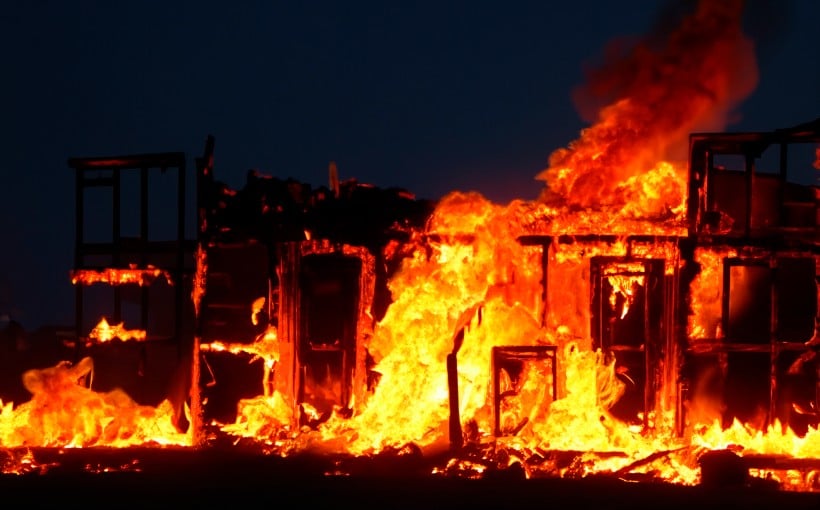
“This is a disaster of epic proportions,” said Lew Horne, President for Advisory Services at CBRE’s Greater Los Angeles, Orange County, and Inland Empire region, describing the devastating wildfires that swept through Los Angeles County in January 2025. “When you see what’s happened in these communities, there is no way to be trained for this or to prepare for this.”
Horne joined David Waite, a partner at Cox, Castle & Nicholson, on a recent episode of the *Leading Voices in Real Estate* podcast to reflect on the wildfires, their aftermath, and the ongoing rebuilding efforts. Both Horne and Waite played instrumental roles in creating a Rebuild Advisory Committee—a joint effort by the UCLA Ziman Center for Real Estate, the USC Lusk Center for Real Estate, and the Urban Land Institute (ULI) Los Angeles chapter. Horne currently serves as the incoming chair of ULI’s LA chapter.
The committee’s work culminated in a comprehensive document titled *Project Recovery: Rebuilding Los Angeles After the January 2025 Wildfires*. The guidance was compiled with the help of around 100 experts in land use, urban planning, and economic development and aims to serve as a collaborative, living resource to support the rebuilding process.
“We organized a group of private practitioners in law, finance, development, and insurance,” Horne explained. The advisory committee was divided into nine specialized working groups that dove deep into relevant areas, providing data and guidance tailored for both the County of Los Angeles and the City of Los Angeles—despite the two government entities having very different infrastructures and operational processes.
Waite contributed through his role on the Organizing and Governance Committee and led the team responsible for implementing a “Building Permit Self-Certification Program.” Other key contributors included Cox Castle partner Preston Brooks, who led the Hazardous Materials and Debris Management team, and Mitch Menzer, who co-led the team focused on rebuilding infrastructure in Pacific Palisades and Altadena.
Despite the strong caliber of expertise in the group, integrating so many voices and ideas posed challenges. Waite referred to the brainstorming process as being surrounded by “whirling dervishes” and credited Horne with developing a clear structure and timeline—just four weeks—for producing the final report.
“That structure is what’s so replicable about what we did in terms of what can happen in the future with other circumstances like this,” Waite added.
The wildfires left significant destruction in their path, impacting nearly 24 million square feet of structures and burning through 40,000 acres between Altadena and Pacific Palisades. As the cleanup and rebuilding continue, complex issues still remain—particularly around permitting and infrastructure restoration.
Waite noted that securing construction permits in Los Angeles can take over a year due to the need for 13 different departmental approvals. A self-certification process, in which licensed architects certify that plans comply with applicable codes, could significantly shorten the timeline—potentially to just 30 days. “We are really happy that both the city and the county embraced that recommendation,” he said.
Six months after the disaster, much analysis remains. Questions persist around infrastructure—including the extent of damage to water and sewer systems, feasibility of repairs, and potential for utility upgrades such as undergrounding power lines.
“We don’t know the answer to that. We want to underground the utilities. We think that makes a ton of sense. There’s no reason not to do it. This is the time to do it, but what’s the cost and how do you pay for it?” Waite said, pointing to the many logistical and financial considerations that communities will continue to face in the wake of natural disasters.
As Waite and Horne emphasized, the work being done now serves as both a roadmap for today’s recovery and a blueprint for addressing future catastrophes.