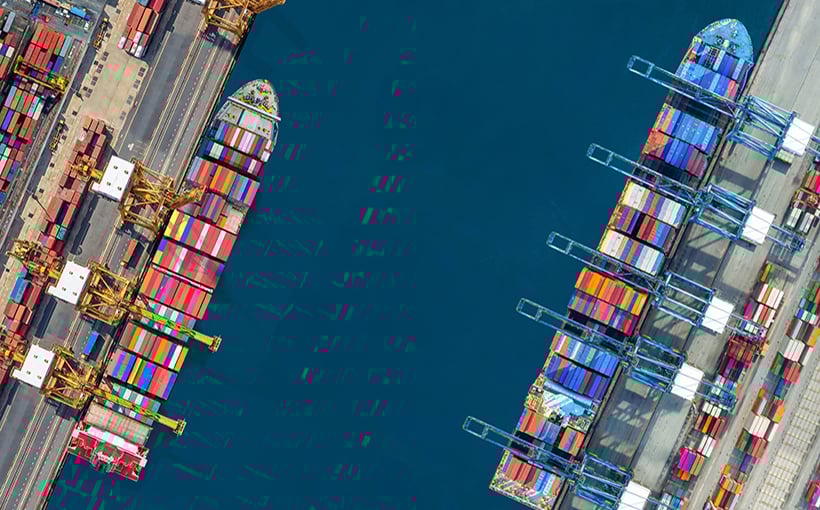
North American ports endured a turbulent trade environment in 2025, yet overall cargo volumes at ten key maritime gateways slipped only 0.3% year over year, according to Cushman & Wakefield’s “North America Ports and Trade Update.” The report notes that new trade announcements, shifting tariff policies, softer retail sales, and persistent inflation created uncertainty across supply chains without triggering a steep decline in port throughput.
In response, many retailers, manufacturers, and third-party logistics providers reconfigured their real estate footprints. Rather than concentrating operations solely in higher-cost coastal markets, users have been relocating activity to more affordable inland hubs as part of broader cost-containment strategies. These relocations coincide with a 16.3% increase in industrial absorption in 2025, as occupiers targeted locations that support efficient, multimodal distribution and access to skilled labor.
Cushman & Wakefield’s analysis highlights that tariff volatility and trade-policy shifts are encouraging occupiers to build more flexible logistics networks. Nearshoring is helping to accelerate activity along inland corridors, altering traditional port-centric supply chains. Occupiers are also prioritizing modern facilities that incorporate automation and artificial intelligence-enabled logistics over older, port-adjacent buildings that may lack the same operational capabilities.
This preference for newer product extends to investors. Rather than focusing narrowly on proximity to seaports, investors are weighing asset quality, infrastructure strength, and accessibility to large population bases. Inland hubs are gaining favor because of their strong rail and truck intermodal connectivity and the availability of sizable labor pools to support logistics operations.
The report outlines several risks and themes shaping the near-term outlook. The first mandatory joint review of the United States-Mexico-Canada Agreement is scheduled to begin this summer. Cushman & Wakefield notes that the United States is likely to emphasize reducing its trade deficit and may seek bilateral discussions, but warns that failed negotiations could result in higher tariffs and import costs for goods moving across both the northern and southern borders.
Tariff uncertainty and elevated inventory positions are already influencing trade forecasts. The National Retail Federation expects U.S. port import volumes to soften in the first half of 2026, with full-year volumes projected to be flat relative to 2025 levels. At the same time, rising costs are expected to slow the pace of materials intake and construction deliveries, which could further encourage nearshoring and onshoring in sectors such as automotive, semiconductors, electric vehicles, and pharmaceuticals.
Cushman & Wakefield’s central conclusion is that while tariffs and policy volatility are pressuring ports and trade flows, diversified strategies can mitigate risk. Owners, investors, and occupiers that emphasize portfolio diversification, flexible logistics networks, and strategic inland positioning may be better able to distribute exposure while controlling operating costs in a fluid trade environment.