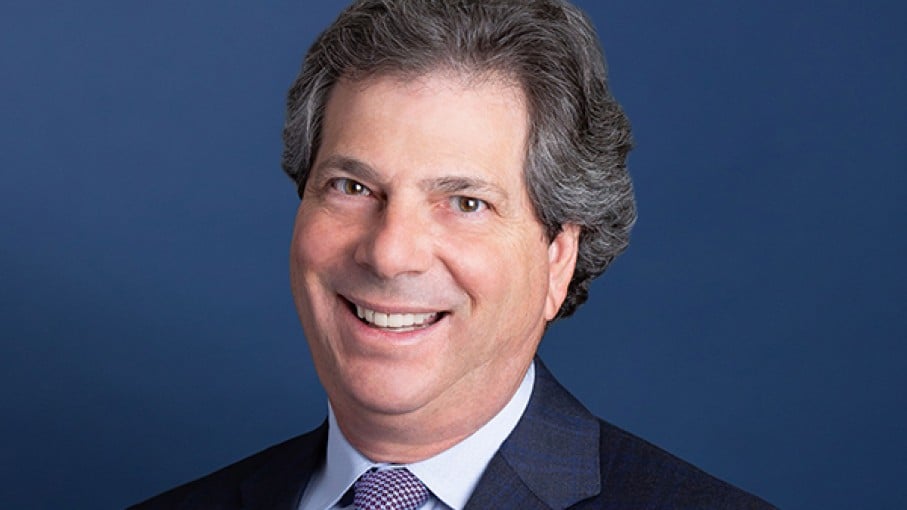
Industry leaders will open this year's Connect Retail West conference in Los Angeles on November 17 with a discussion on the future of West Coast retail. Among the speakers is Sandy Sigal, founder, CEO and president of NewMark Merrill Companies, who uses the firm's nearly three decades in the shopping center business to frame a long-term, operations-focused view of growth.
Sigal notes that NewMark Merrill's core approach has remained consistent even as the retail landscape has shifted. The company continues to emphasize hands-on operations, long-term relationships with merchants, lenders, investors and communities, and a team culture centered on innovation and connection. As the portfolio has grown, those priorities have only become more central to the platform.
What has changed most, Sigal says, is the transparency and depth of information available to owners and operators. Retail has always been data-rich, but today that data can be more easily seen, analyzed, shared and acted upon. NewMark Merrill has shifted from relying primarily on subjective insights supported by limited data to navigating an environment with an abundance of information. The challenge now is to distinguish meaningful signals and apply them in ways that benefit merchants and neighborhoods.
Geographically, NewMark Merrill's footprint remains concentrated in Southern California, but the company has also built a significant presence in the Chicago area and major metropolitan markets in Colorado. Expansion followed the firm's ability to align with strong local partners who grew up in those markets, are rooted in their communities and are committed to long-term neighborhood investment. Sigal describes the company's guiding motto as a desire to be a major factor in helping people love their neighborhoods more.
On the technology front, the company has been an early adopter of property technology and has created a dedicated retail technology division. Sigal says NewMark Merrill has invested in more than 50 proptech companies, using tools that illuminate who customers are, where they come from, how they move through centers, how long they stay and where they go afterward. These tools help define trade areas, shopper composition, cross-shopping patterns and loyalty behavior, providing inputs for leasing, marketing and merchandising strategies.
NewMark Merrill is also leaning into sentiment analysis, seeking to understand how shoppers experience its properties. The company looks at whether visitors feel safe and welcomed, how they perceive value and service, and whether centers function as places to create memories or simply convenient stops. When sentiment data is integrated with traffic, sales performance, marketing and outreach, Sigal believes it produces actionable insights that support both tenants and consumers.
Technology is further used to refine tenant mix, focusing on merchants that not only fit the space and pay rent but also support co-tenancy, cross-shopping and neighborhood needs. Looking ahead to 2027, Sigal sees the greatest opportunity in combining data, local market knowledge and careful assessment of rent-roll stability and growth potential. He argues that long-term value creation is increasingly driven by hands-on management and data-tested leasing and promotion strategies, rather than financial engineering alone. Neighborhoods characterized by loyalty and multigenerational connections, he adds, may outperform traditional income-based targeting over time.
The Connect Retail West event at the SLS Hotel in Beverly Hills will provide another forum for these themes, bringing together owners, developers, retailers and investors, with perspectives from industry leaders including NewMark Merrill and the president and CEO of ICSC.