**The JLL Data Center Outlook: Growth, Growth, and More Growth**
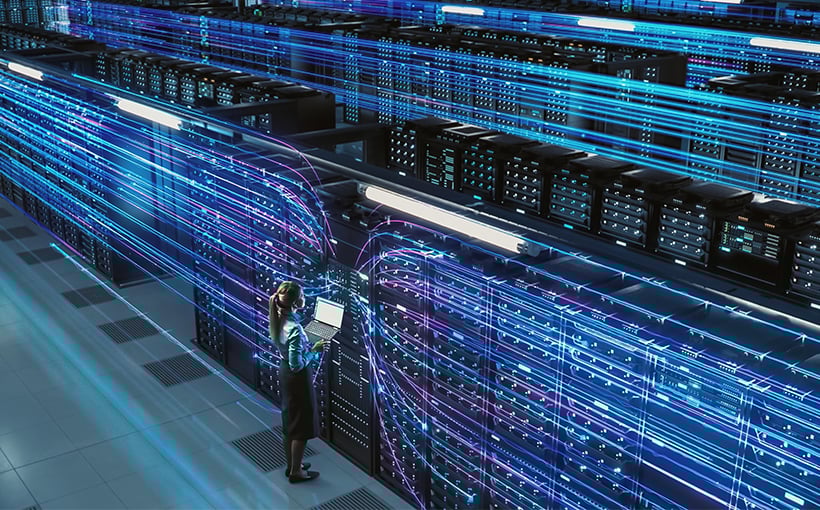
Almost everyone today understands that technology is expanding at an unprecedented pace. Powering that expansion are data centers — highly equipped facilities that store, process, and distribute digital data critical for everything from complex medical procedures to everyday online shopping.
According to JLL’s newly released “2026 Global Data Center Outlook,” the demand for new data center capacity is surging, driven by an explosion in digital data usage and enhanced technology capabilities.
### What’s Fueling Demand?
While artificial intelligence (AI) is a significant factor in the sector’s growth, it’s not the only one. The report notes that AI could represent up to half of all data center workloads by 2030. A major shift is expected in 2027 when inference workloads are projected to exceed training workloads—marking a transformation in AI computing needs.
Sean Farney, Vice President of Data Center Strategy at JLL, emphasized that while AI is getting most of the spotlight, the industry’s momentum predates AI’s rise. “AI is simply the ‘icing on the top’ right now, as we have an industry that was already growing at double-digit CAGR,” Farney said. He added that AI’s visibility on Wall Street is accelerating investments in GPU-dense facility development.
### A Surge in New Facilities
The outlook anticipates nearly 100 gigawatts (GW) of new data centers coming online from 2026 through 2030, which will double global capacity to approximately 200 GW by the end of the decade.
This massive development, however, comes with notable challenges. Lead times for equipment have stretched to an average of 33 weeks—a 50% increase from pre-2020 levels. Meanwhile, construction timelines for 50-megawatt data centers are now around 18 months.
“The longest lead time is for transformers, generators, and chillers, with some regional variation,” Farney noted.
To combat delays, some developers are taking proactive steps by storing six to twelve months of strategic inventory. Others are working more closely with supply chain partners to share manufacturing risks and reduce delivery times.
Additionally, modular systems and micro data centers are becoming more prevalent. Farney explained that “chiller plants, electrical line-ups, and even data halls have been designed and deployed in Lego block chunks,” allowing developers to build faster and more efficiently.
### Powering Growth
JLL expects the sector to grow at a compound annual growth rate (CAGR) of 14%. However, growth demands power, and securing adequate energy is proving to be a bottleneck. Farney pointed out that average wait times for grid connectivity are now around four years.
To reduce this gap, data center operators are evaluating alternatives like battery storage, natural gas, and direct investments in energy generation.
Renewable energy sources such as solar and wind are also under consideration, though they come with limitations—primarily the inconsistency of supply and lack of mass storage options. Farney emphasized that utilities must be the off-takers for these sources to be immediately effective.
### The Infrastructure Investment Supercycle
With exponential growth comes considerable investment. The report projects that capital expenditures for the sector could total up to $3 trillion over the next five years. This level of funding places data centers at the center of what JLL calls an “infrastructure investment supercycle.”
These facilities are becoming larger and more costly to build, which has had the side effect of reducing speculative development. “The supercycle and its extraordinary capital spending are a result of a long pipeline of demand and critical load commitment from the largest, most financially stable companies in the world,” Farney said.
Major players like Microsoft, Google, Amazon, and Meta are behind a combined $500 billion annual investment in data centers.
High-profile acquisitions further validate investor interest. In 2023, Brookfield Infrastructure Partners and the Ontario Teachers’ Pension Plan acquired Compass Data Centers for $5.5 billion. Farney said this acquisition showed that capital markets are embracing the risk of data center investment. “Since then, every segment of funding has been piling into the space,” he added.
### Mitigating Risk
Despite strong investor interest, the data center industry is not without risk. JLL’s report advises companies to focus early on power acquisition, design flexible structures, and factor risks into deployment plans. Investors are also advised to prioritize AI-ready and retrofit-ready properties, as well as to plan for earlier investment exits.
Even with these challenges, data centers are essential to the ongoing evolution of the digital world. “Behind all the numbers, cool tech, and amazing growth, we should all appreciate the key role that data centers have in making our lives easier, safer, and more enjoyable,” Farney concluded.
—
**Upcoming Event: North America’s Premier Digital Infrastructure & AI Investment Summit**
More than 400 leaders in digital infrastructure, cybersecurity, and AI are set to gather in Montreal on February 11 for the “Connect North American Investment in Digital Infrastructure & AI” conference. This major executive event will focus on digital security, infrastructure resilience, and long-term competitiveness in the region.
For more information, visit www.connectdigitalai2026.com.