**Live, Work, Play… and Healthcare: The Rise of Medical Services in Mixed-Use Developments**
*The idea of incorporating residential living with nearby office and retail spaces isn’t new—mixed-use development has been around for a while. What’s evolving, however, is the growing inclusion of medical offices in these community environments.*
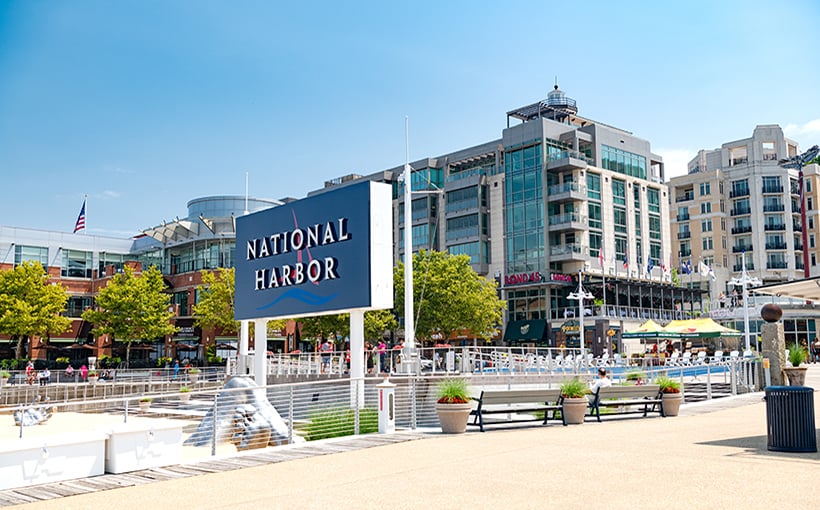
To delve deeper into this trend, ConnectCRE spoke with Peter G. Papantoniou, Principal at Gittleson Zuppas Medical Realty, the leasing agent for the Medical Pavilion I & II at National Harbor in Maryland.
—
**Is placing medical services into a mixed-use format new?**
*Peter Papantoniou:*
Not at all. This model has been evolving for over a decade and has gained significant momentum in recent years. The post-COVID shift toward remote work and decentralized lifestyles accelerated this trend. More healthcare providers now favor multiple satellite clinics embedded within communities over a single, centralized facility. From a real estate perspective, this means growing demand for convenient, accessible medical space woven into the fabric of retail, residential, and office developments. Healthcare has become a critical anchor in these mixed-use environments.
—
**Which healthcare-oriented facilities operate more effectively in mixed-use environments?**
*Peter Papantoniou:*
A wide range of medical facility types are thriving in mixed-use settings. Many specialty groups are choosing single-story, standalone medical buildings or highly visible retail storefronts that offer both visibility and ease of access. Ambulatory surgery centers are also increasingly being built as standalone facilities with designated drop-off areas. These are often located near hospitals or within larger, multi-building medical complexes. It’s all part of a broader shift toward patient-centered accessibility, which in turn drives demand for flexible and conveniently located healthcare real estate.
—
**What makes a good healthcare tenant combination for mixed-use properties?**
*Peter Papantoniou:*
Both independent practices and hospital-affiliated groups are embracing mixed-use development to improve patient convenience and enhance overall property value. A solid medical tenant mix typically begins with a strong primary care anchor. From there, it’s ideal to include complementary services such as imaging, labs, and pharmacies. A mix of specialty practices—such as dermatology, cardiology, orthopedics, physical therapy, OB/GYN, and allergy care—rounds out the healthcare ecosystem effectively.
—
**What factors should developers consider when integrating healthcare into mixed-use projects?**
*Peter Papantoniou:*
Beyond proximity to major healthcare systems, developers should look at strategic adjacency to regional hospitals as well as connectivity to major highways. Easy access to densely populated neighborhoods helps ensure a strong built-in patient base. Most importantly, ample and convenient parking is non-negotiable. Patients and providers alike need easy access, and parking availability will often make or break the success of a medical tenant.
—
**What is your outlook for the live, work, play—and now healthcare—model?**
*Peter Papantoniou:*
Very positive. Demand is steadily increasing as patients continue to prioritize convenience and seek healthcare that’s close to home and fits seamlessly into their lifestyle. From a development standpoint, healthcare-focused mixed-use projects represent a clear growth segment, and I expect it to continue expanding in the years ahead.
—
As the “Live, Work, Play, Healthcare” model rises in popularity, developers and healthcare providers are reimagining how and where care is delivered. Integrated medical services not only improve convenience for patients but also enhance property value, increase foot traffic, and create vibrant, community-centered environments. For many developments, healthcare is no longer an add-on—it’s a cornerstone.