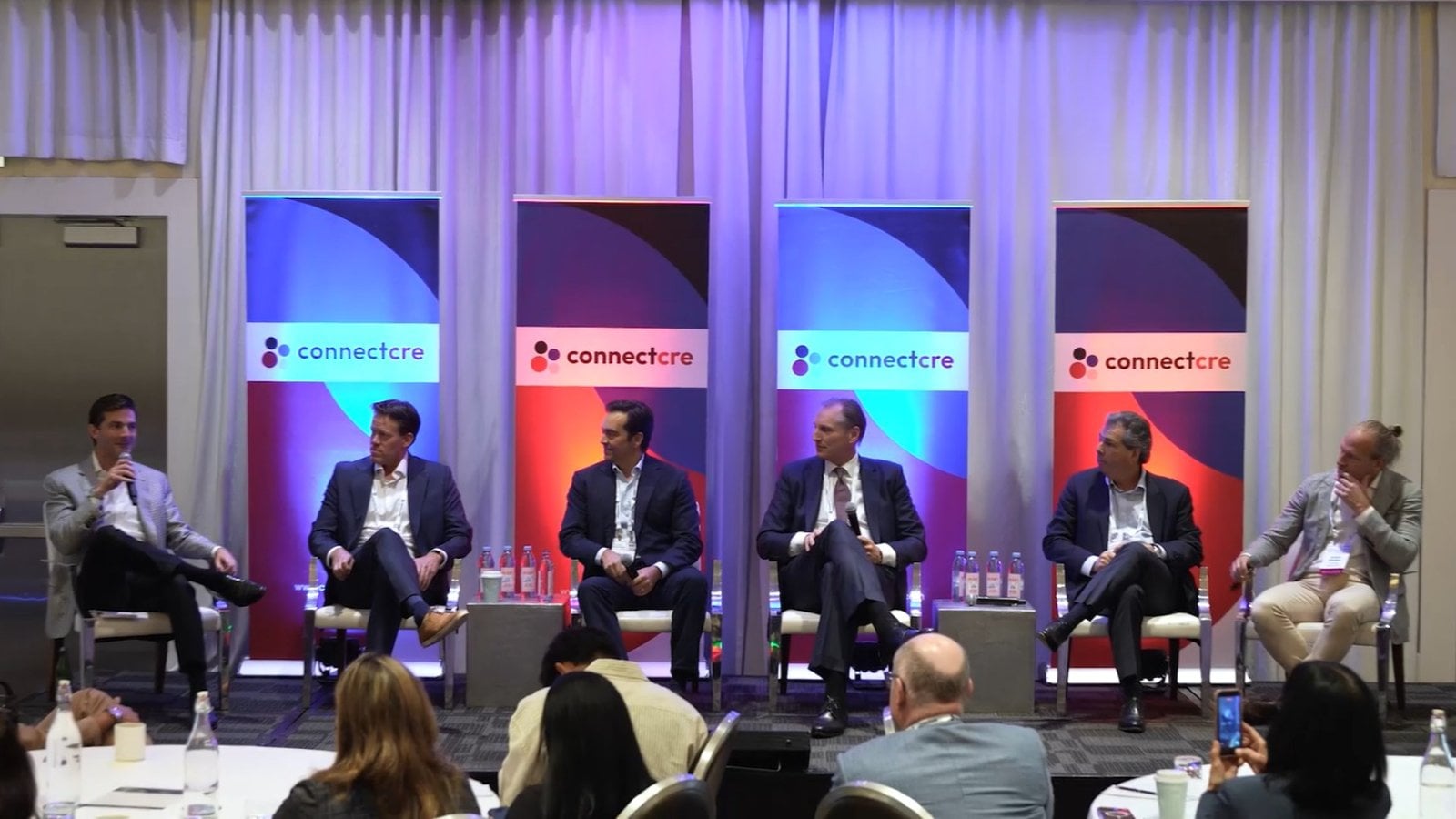
Retail executives and investors gathered in Los Angeles last week for the Connect Retail West conference, where a panel of industry leaders explored what is shaping the future of West Coast retail. The “Industry Leaders Panel: The Future of West Coast Retail” brought together voices from investment, development and operations to discuss how tight supply, evolving tenant needs and shifting capital have altered the retail landscape.
Moderator Alex J. Caruso, counsel at Cox Castle, framed the discussion with two key data points: national retail vacancy is around 4 percent, while construction starts for new retail centers are at their lowest level in a decade. That combination of historically low new supply and lean vacancy set the context for a conversation focused on both opportunity and risk in today’s market.
Responding to the supply picture, Jim Dillavou, co-founder and principal at Paragon Commercial Group, noted that institutional capital has largely stepped back from the retail sector. He said this pullback has severely limited new ground-up development, which in turn has given existing space time to lease up as tenant demand persisted. Even with fundamentals having improved, he observed that very few new retail projects are currently moving forward.
Arturo Sneider, CEO of Primestor Development, whose platform targets underserved communities, echoed the view that retail demand and occupancy are healthy. At the same time, he cautioned that some tenants may be stretching themselves on occupancy costs. He emphasized the importance of landlords working collaboratively with tenants to manage those costs and reduce the risk that strong demand today turns into distress for operators tomorrow.
The panelists generally agreed that grocery-anchored and discount-grocer-anchored centers continue to be among the most resilient and sought-after retail formats, regardless of city. When asked whether grocery-anchored retail might be reaching saturation, Sandy Sigal, chairman, CEO and president of NewMark Merrill Companies, rejected that idea, saying that operators have differentiated their offerings and that dense markets such as those in California can still support multiple grocery concepts.
Panelists also highlighted the role of local tenants in creating durable centers. Several speakers said that locally based retailers often show a deeper commitment to both the property and the surrounding community. Sneider characterized these local operators as the core of a successful shopping center, underscoring the strategic value of merchandising plans that blend national credit tenants with strong local concepts.
Alongside Caruso, Dillavou and Sneider, the discussion featured Kevin Gerrity, CEO of Gerrity, and Brett Nielsen, COO of Bolthouse Properties, who contributed perspectives from ownership and operations across a range of Western markets. Together with Sigal, they offered an on-the-ground view of how constrained new supply, selective capital and tenant cost pressures are influencing decisions on leasing, investment and long-term portfolio strategy.
The session provided attendees with a snapshot of a retail sector where fundamentals are comparatively tight, new development is limited, and operators are rethinking how to support tenant health while positioning centers for sustained performance.