**Industry Veterans Outline Post-Pandemic Leasing Strategies at Connect Retail West 2025**
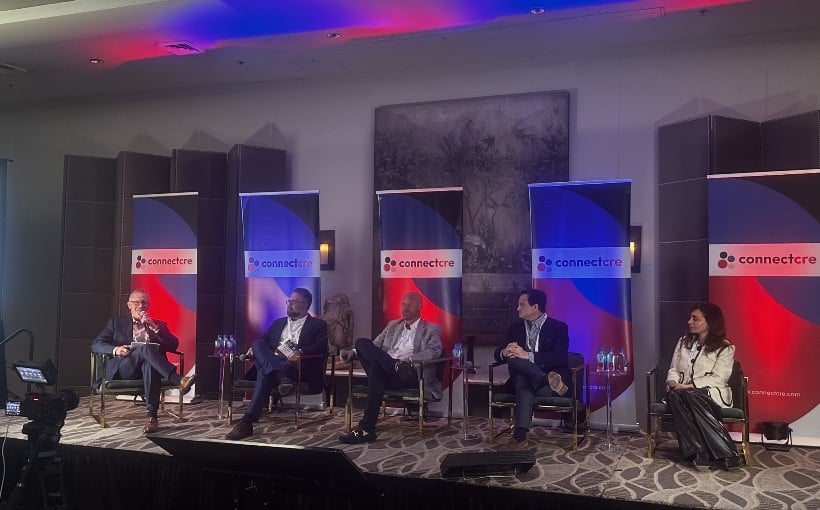
At Connect Retail West 2025 in Los Angeles, the second of four dynamic panels, titled *Retail Leasing Trends: Unblocking Value in a Shifting Market*, featured veteran brokers, developers, and designers who shared candid insights with an optimistic tone about the evolving West Coast retail landscape. Panelists from Matthews, Simon Property Group, Kennedy Wilson (KWP Real Estate), and architecture firm RDC explored emerging consumer behaviors, the rise of experiential retail tenants, and the critical importance of reinvestment by landlords.
Experts agreed that the pandemic accelerated trends already underway. Michael Pakaravan of Matthews noted that coffee concepts and boutique fitness studios are leading tenant demand, as consumers seek social and wellness-oriented experiences after years of isolation. Lifestyle and wellness brands are outperforming legacy retailers, while entertainment offerings are increasingly used to lengthen customer visits to retail destinations.
In urban markets like downtown Los Angeles, the evolution has been particularly pronounced. Justin Weiss of KWP Real Estate cited a surge in experiential leasing activity, such as the addition of Ballers—an indoor-outdoor sports operator—an 80,000-square-foot arcade and bowling concept, and a new Asian grocer. Weiss stressed the importance of landlord-delivered, turnkey spaces, particularly since many smaller or regional tenants lack the capital or patience for lengthy permitting processes.
“Invest upfront,” Weiss advised property owners. “The probability of success goes up exponentially.”
From the design perspective, Mitra Esfandiari, partner at RDC, emphasized the value of research-driven placemaking and community-focused experiences. She highlighted adaptive reuse projects like Erewhon and Rivian’s transformation of a historic theater as examples of how good design fosters brand loyalty and immersive shopping experiences.
Bring the institutional investor point of view, Matt Sebree of Simon Property Group shared that demand at top-tier centers remains robust, with many properties over 95% leased. While Simon is embracing short-term leases for emerging local operators, the company maintains its core credit and leasing standards. “We reinvest and reinvent,” Sebree said. “As long as you stay relevant to what people want, you’ll keep your consumer.”
Panelists concluded with a shared message: invest early, understand your local community, emphasize relationship-building, and re-engage with the market directly. As Weiss put it: “It’s the people. That’s why we’re in this business.”
—
**Deal Volume Rebounds, But Headwinds Persist: Getting Deals Across the Finish Line**
The third panel, *Getting Deals Across the Finish Line*, brought together Shaunt M. Kodaverdian (moderator), Cody Charfauros of Slatt Capital, David Chasin of Pegasus, and Shauna Smith of Chicago Title. The discussion offered a view from the transaction frontlines, mapping the dramatic rebound and ongoing challenges facing the retail real estate industry.
Panelists agreed that retail deal volume has come roaring back, with 2025 activity now approaching pre-pandemic levels seen in 2019. David Chasin shared that Pegasus’ investment sales activity, which fell 75% after its 2022 peak, has now surged back, registering a 200% year-over-year increase as buyers return, 1031 exchange deadlines near, and bonus depreciation prompts deal urgency.
Both Chasin and Charfauros reported that transaction levels are now tracking closely with 2019 trends. According to Charfauros, the resurgence is driven by stabilized interest rates, renewed confidence from private investors, and institutional players eyeing strip retail again.
Yet despite the momentum, complexity in deal structuring has increased. Shauna Smith explained that construction holdbacks and mezzanine financing structures are becoming more common as landlords reposition assets for experiential or mixed-use redevelopment. Deals are also taking longer to close—not due to financing holdups, but rather a general lack of urgency. “Nobody feels like they have a gun to their head anymore,” Charfauros observed.
The conversation also touched on challenges specific to Los Angeles. Rising insurance costs, political uncertainty, and increasing taxes are pushing investors to consider other markets. Chasin, not mincing words, described the current landscape as “toast” in LA, noting a growing number of clients who are shifting capital to more business-friendly regions like Phoenix, Salt Lake City, Nashville, Tampa, and Charlotte.
Despite these headwinds, the panel agreed that retail’s core fundamentals remain sound. “It’s a cash-flow business,” Chasin summarized. “And right now, retail has the tailwinds.”
—
**Facing Global Challenges: Navigating Supply Chain Disruptions**
The fourth panel, *Navigating Supply Chain Disruptions and Uncertainty*, featured insights from Jacqueline M. Moore of the Pacific Merchant Shipping Association and Erin Poulson Morris of Wonderful Real Estate. Panelists explored how evolving tariff policies, changing trade routes, and geopolitical uncertainty are shaping location strategies and real estate decisions across the retail sector.
As supply chains continue to evolve, retail stakeholders are adapting their strategies for sourcing, distribution, and location planning in a rapidly shifting global environment.