**U.S. Government Shutdown: Impact on Commercial Real Estate and the Economy**
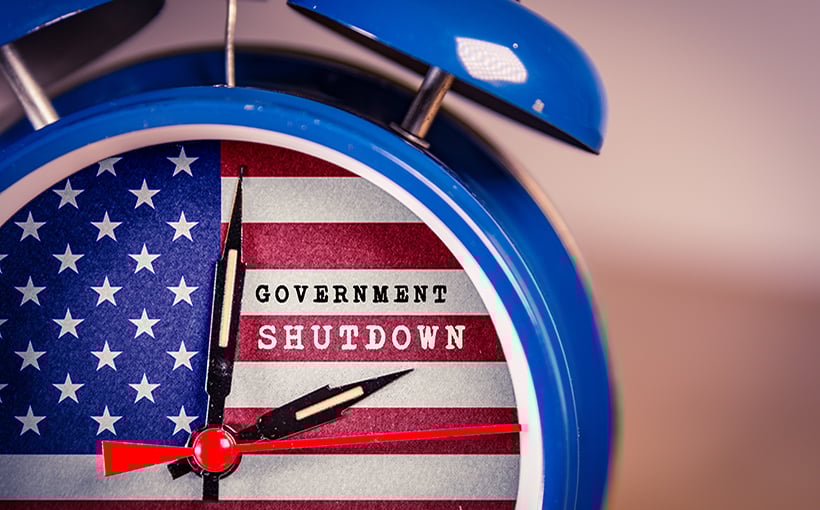
As of October 9, the U.S. government has entered its ninth day of a partial shutdown, with Congress still deadlocked on passing a funding bill to reopen operations. The ongoing impasse has resulted in furloughs for federal employees and disruptions in certain public services, such as air travel.
**The Good News: No Direct Impact on Commercial Real Estate**
According to a recent Marcus & Millichap update, the commercial real estate (CRE) sector is not expected to experience immediate or significant effects from the shutdown. Financing remains accessible, including through federally backed entities such as Fannie Mae and Freddie Mac, and property transactions continue to close without major disruption.
John Chang, Senior Vice President at Marcus & Millichap, noted that operations across most commercial real estate sectors remain stable. One potential exception is Department of Housing and Urban Development (HUD) payments, which might experience delays if the shutdown extends beyond 30 days. Even then, the impact would likely be limited.
**The Not-So-Good News: Economic Ripple Effects**
While CRE may be shielded from immediate shutdown consequences, the broader economy could feel the strain, especially if the political stalemate drags on. Chang outlined several potential impacts:
– Slower economic growth
– Delays in the release of essential government data
– Hesitation in business and investor decisions
**Potential Economic Impacts Based on Past Shutdowns**
Looking back at previous government shutdowns provides some historical perspective:
– The 2018–2019 partial shutdown lasted 35 days and furloughed about 380,000 federal employees. The estimated economic impact totaled $11 billion, though about $8 billion was later recovered once the government reopened.
– The 2013 full shutdown lasted 16 days and led to the furlough of roughly 850,000 government workers, resulting in an estimated $20 billion loss in GDP.
In the current scenario, up to 750,000 federal employees could face furloughs. Marcus & Millichap estimates that ongoing delays could reduce GDP growth by 15 to 20 basis points per week, depending on how long the shutdown persists.
**Lack of Government Data Could Disrupt Fed Decisions**
The closure of several key government agencies means that essential data—such as employment reports and inflation statistics—will likely not be released on schedule. This presents a significant challenge for the Federal Reserve, as these figures are central to making informed decisions about future interest rate policies, particularly the Effective Federal Funds Rate.
Chang indicated that, although expected rate cuts in October and December may still proceed, the Fed might have to act without the benefit of full economic context.
**The “R” Word Could Return—Recession Risks Loom**
Recent labor data from the Bureau of Labor Statistics shows a softening job market and an uptick in government-sector job losses. Chang warned that this could have ripple effects across retail sales, home sales, and broader public health services—all of which are tied to commercial real estate demand.
An extended shutdown, especially against the backdrop of already fragile employment figures, could tip the economy into recession. Much will depend on the shutdown’s duration and how it affects business and consumer confidence.
**A Glimmer of Optimism**
Despite the uncertainty, there are reasons for cautious optimism. Household balance sheets remain relatively strong, savings levels are healthy, and debt-to-income ratios are under control. These factors could help cushion the broader economy and real estate markets from severe or lasting damage.
Chang concluded with a reassuring perspective for investors: “While the shutdown is generating buzz and capturing headlines, the long-term impact should be minimal. At the end of the day, investors should focus on the long game.”