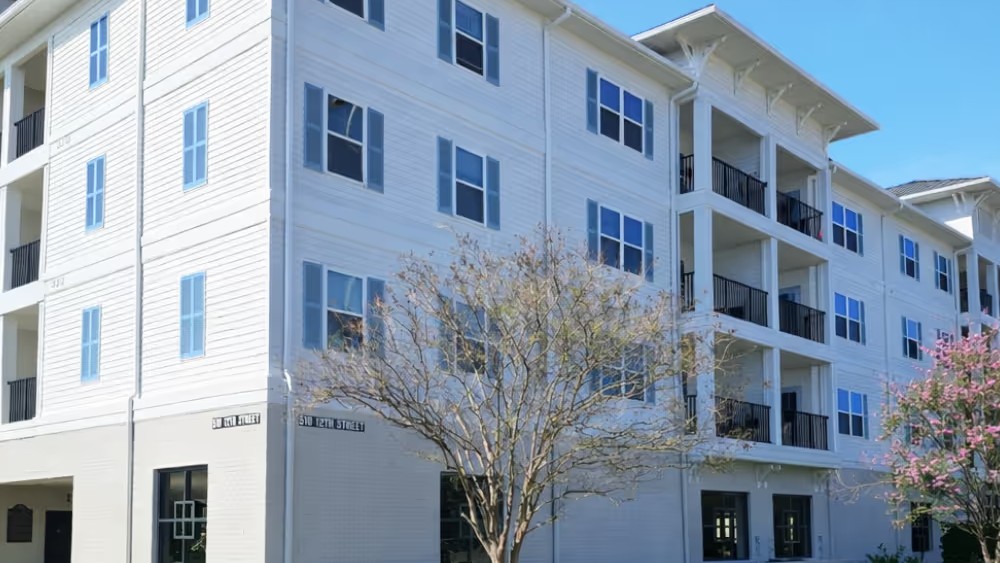
Hackberry Lane has expanded its student housing footprint with the acquisition of six properties serving major public universities in Florida and Arkansas. The vertically integrated investment and operating company reported closing separate transactions in Gainesville, FL, home to the University of Florida, and Fayetteville, AR, home to the University of Arkansas. Sellers and pricing for the acquisitions were not disclosed.
The newly acquired assets collectively add approximately 400 student housing beds to Hackberry Lane’s portfolio. The properties span a mix of townhome, cottage and boutique apartment formats, reflecting the firm’s focus on lower-density, housing-style product rather than larger purpose-built student housing complexes. With these latest acquisitions, Hackberry Lane now controls roughly 2,000 beds, assembled through more than 20 transactions since the company was founded in 2023.
The Fayetteville acquisitions represent Hackberry Lane’s first investments in that university market. The company noted that this move brings its platform to seven student housing markets where it now has an established presence. By entering a new university market while simultaneously adding scale in Gainesville, Hackberry Lane is continuing to grow its portfolio through a multi-market acquisition strategy.
Headquartered in New York City, Hackberry Lane targets student housing communities located in walkable, campus-adjacent corridors. Its investment focus includes townhome, single-family, garden-style and boutique apartment communities that serve students but are not always classified as traditional purpose-built student housing. The company is concentrating on what it describes as the shadow market, where many assets remain in the hands of local owner-operators rather than institutional investors.
According to the company, much of the broader student housing sector has centered on mid- and high-rise, purpose-built developments in recent years. In contrast, Hackberry Lane is deploying capital into more fragmented asset types that are often smaller scale and dispersed around campus areas. By aggregating these properties across multiple university markets, the firm is building a portfolio positioned in a segment of the sector that has historically seen less institutional consolidation.