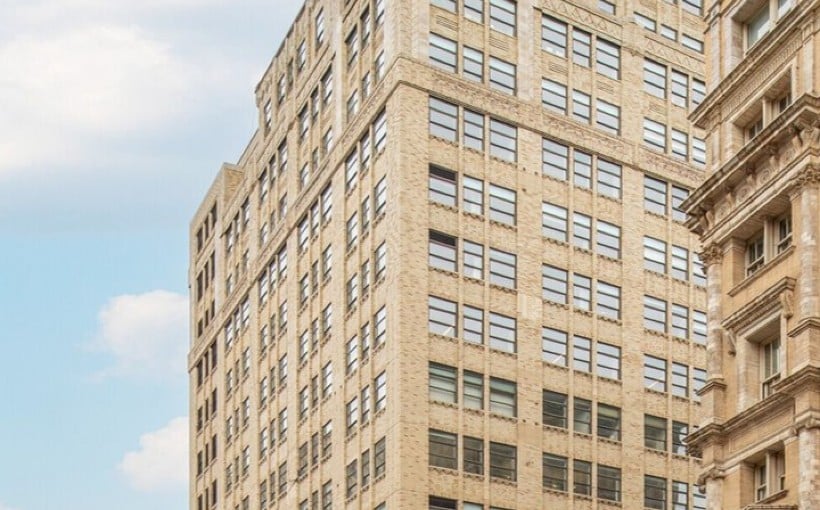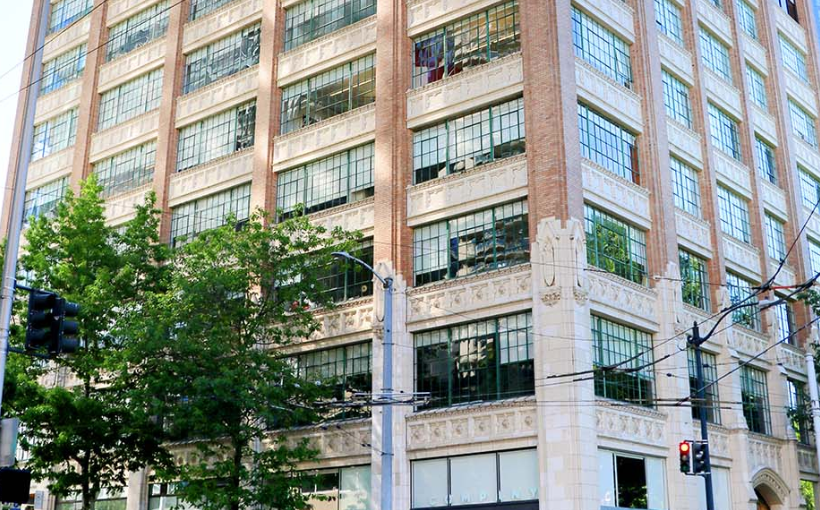
Gantry has arranged a $10.2 million permanent loan to refinance the Terminal Sales office building in downtown Seattle. The historic property, located at 1932 1st Ave next to Pike Place Market, serves as a creative office asset with street-level retail space. The refinancing proceeds are secured by the existing improvements and reflect lender interest in a well-known asset within Seattle’s core business district.
The Terminal Sales building was originally delivered in 1925 and now rises 11 stories, encompassing 92,400 square feet of class A office space. Following renovations that repositioned the property for modern creative office users, the building combines historic character with contemporary workspace configurations. Ground-floor retail further activates the street frontage along 1st Avenue near Pike Place Market, one of the city’s most recognizable commercial destinations.
Gantry’s Mike Wood, a Principal with the firm, and Tim Brown, a Senior Associate, led the financing assignment from the company’s Seattle production office. They represented the borrower, described as a private real estate investor, in securing the new loan. The financing is structured as a ten-year, fixed-rate, non-recourse facility, offering long-term balance-sheet stability for the sponsor. The loan features a 25-year amortization schedule, providing a predictable principal paydown profile over the term.
As part of the transaction, Gantry will service the loan on behalf of the lender. While the financing source is not identified by name, the servicing arrangement keeps Gantry involved with the asset over the life of the loan. The structure aligns with a typical permanent financing execution for stabilized office properties, with non-recourse provisions that limit the borrower’s liability to the collateral.
Wood noted that conditions for office lending improved over the course of 2025 as assets began trading at what he described as a new basis and as return-to-office trends supported better occupancy levels. He indicated that this shift in fundamentals and pricing has strengthened the investment thesis for office properties relative to earlier periods in the cycle. According to Wood, these dynamics helped create a more favorable context for underwriting office loans.
Looking ahead, Wood stated that he expects this positive momentum to continue into 2026, particularly as Gantry’s insurance company correspondents grow more comfortable with the office asset class. He pointed to an improving interest rate environment as another factor aiding borrowers in meeting debt service and stability benchmarks required by lenders. The Terminal Sales refinance illustrates how lenders are engaging with well-located, renovated office properties in established urban cores as market conditions and rate trends become more supportive of long-term office financing.