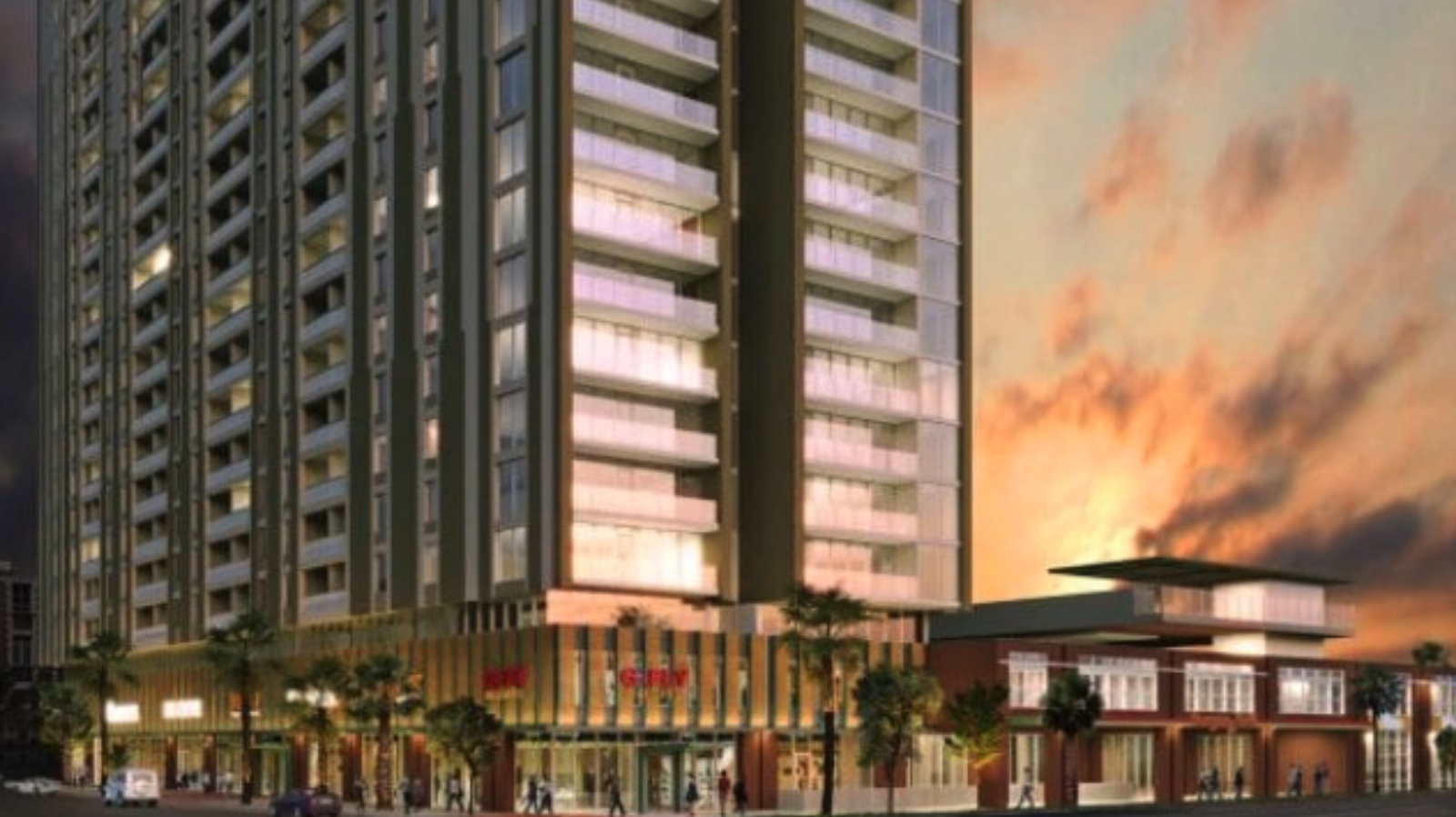
Empire Group of Cos. has closed a $131.2 million financing package and commenced construction on The Whitney, a new high-rise multifamily tower in Phoenix. The project is planned as a 24-story apartment building at the southwest corner of Central Avenue and McDowell Road, according to reporting from The Phoenix Business Journal. Total development costs for the tower are estimated at around $170 million.
The capital stack for The Whitney includes an $84.7 million senior loan provided by Axos Bank. In addition, the project is being capitalized with a $46.5 million mezzanine loan from Lionheart Strategic Management and Schroders Capital. With both senior and mezzanine debt in place, Empire Group has moved the development into the construction phase.
The Whitney is planned as a 328-unit apartment community, adding new residential inventory to Phoenix’s urban core. The project will incorporate ground-floor commercial space, with plans calling for more than 22,000 square feet of retail at street level. The mix of residential units over retail is designed to activate the prominent corner at Central Avenue and McDowell Road.
Planned resident amenities at The Whitney include a rooftop pickleball court offering views of the city, a fitness center, and various coworking and lounge spaces distributed throughout the building. These features are intended to support both lifestyle and work-from-home needs within the tower.
The site is diagonally across the street from the Phoenix Art Museum and the Phoenix Theatre Co., positioning the property within one of the city’s primary cultural clusters. The Whitney’s name is drawn from the Whitney Museum of American Art in New York, serving as a reference to Phoenix’s expanding arts and culture scene and underscoring the development’s connection to its immediate surroundings.
With financing closed and ground broken, The Whitney advances from planning into active development as a new multifamily and retail project in a highly visible central Phoenix location. The combination of residential density, ground-floor retail, and proximity to cultural institutions positions the tower as part of the continued evolution of the Central Avenue corridor.