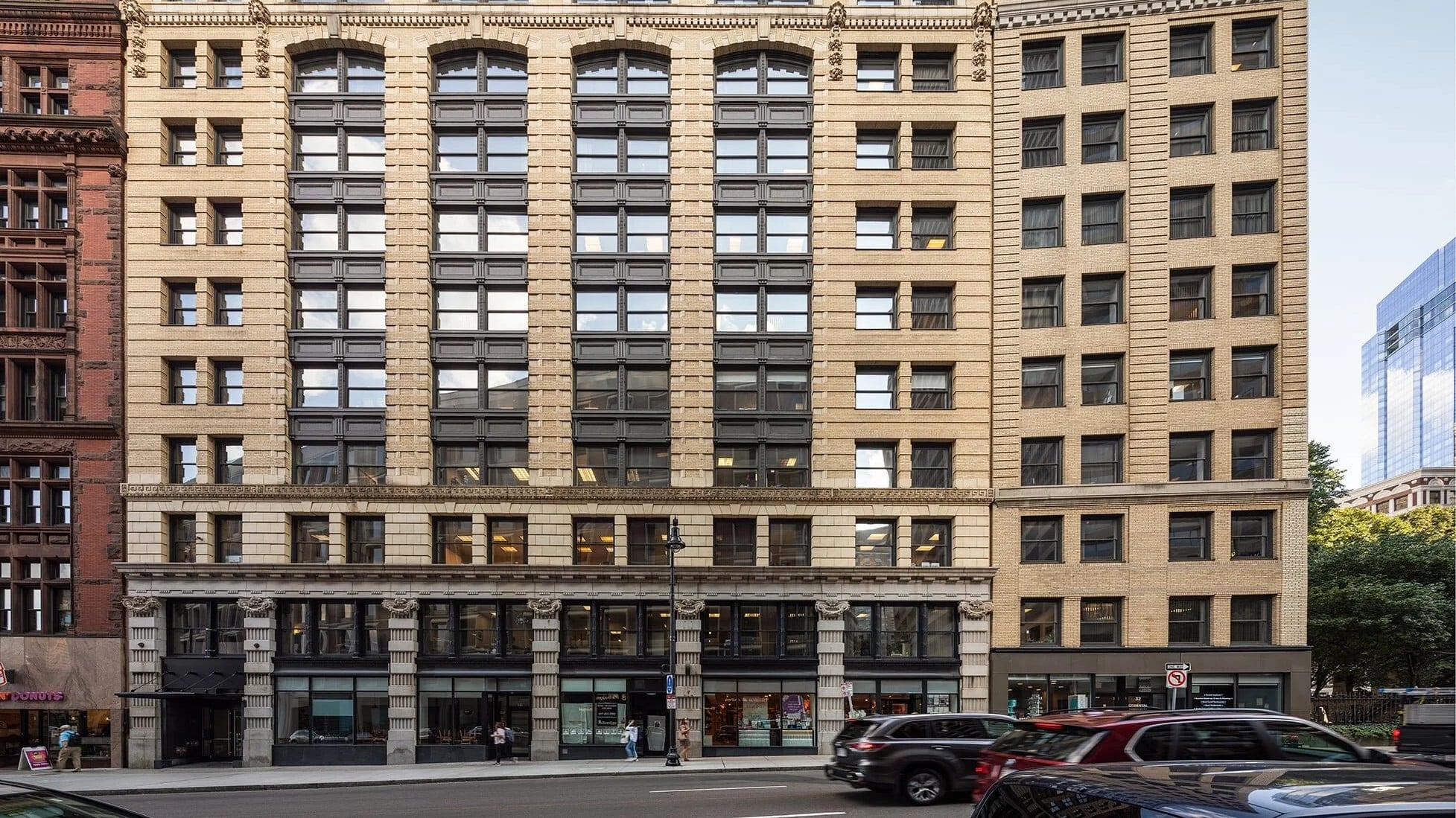
An 11-story office building in downtown Boston has changed hands at a sharply reduced price, underscoring how far office values in the city have fallen from their late-cycle peak. The property at 18 Tremont St., situated between Boston Common and City Hall, sold for $30 million, according to reporting from the Boston Business Journal.
The building was sold by Atlanta-based Jametown, which acquired the asset in 2019 for $103 million. The transaction therefore represents a substantial loss relative to the prior purchase price and illustrates the degree of repricing now occurring in Boston’s office sector. The buyer is an affiliate of locally based investor Mai Luo, reflecting continuing interest from local capital even as values reset.
The Boston Business Journal noted that the sale comes against the backdrop of a marked deterioration in fundamentals since Jametown’s acquisition. When the firm bought 18 Tremont St. in 2019, Boston’s office vacancy rate stood at approximately 5%. By the end of the first quarter of 2026, that figure had climbed to 18.5%, highlighting the pressure from weaker tenant demand, hybrid work patterns and a larger pool of available space.
According to the Business Journal, the Tremont Street deal ranks as one of the largest price cuts seen in Boston’s office market in recent years. The sale aligns with a broader pattern in which many office assets in both the city and its suburbs have traded at only a fraction of prior valuations, particularly those acquired near the market’s pre-pandemic peak.
Recent sales of other notable Boston office properties reinforce the depth of the value reset. The article cited 1 Lincoln St., which was valued at $1 billion only three years before it ultimately sold for $400 million. In another example, 99 Bedford St. sold at auction late last year for $19 million, after having traded for $51 million in 2019.
Collectively, these transactions point to sustained downward pressure on office pricing across the Boston market, not only in the urban core but also in surrounding submarkets. For owners, the combination of higher vacancy and sharply lower sale proceeds illustrates the challenge of refinancing or exiting assets acquired at peak pricing. For buyers with available capital, the new clearing levels suggest an environment where discounts to pre-2020 benchmarks are becoming more common as sellers adjust expectations.
The 18 Tremont St. sale thus serves as a fresh datapoint in the ongoing repricing of Boston offices, with a well-located downtown asset transacting at a significantly reduced value compared with its 2019 trade. Market participants will likely view the deal, along with the recent sales at 1 Lincoln St. and 99 Bedford St., as key reference points for underwriting and pricing similar properties in the current environment.