The Dell Foundation has committed $750 million to fund a major new healthcare and research initiative at the University of Texas, anchoring a large-scale medical campus in Austin. The contribution will support the creation of the UT Dell Campus for Advanced Research and the UT Dell Medical Center, marking a significant expansion of the university’s healthcare footprint and Dell’s long-running engagement with the institution.
With this latest commitment, Dell’s cumulative support for the university now exceeds $1 billion, underscoring a long-term philanthropic relationship. Michael Dell, who studied at the University of Texas before founding one of the world’s most successful computer companies, continues to channel resources back to the campus where his business career began.
According to reporting from the Austin Business Journal, the UT Dell Medical Center is described as a transformative project for Austin, with broad implications for healthcare access in Central Texas. The new hospital is expected to provide more specialized care than has previously been available in the region, positioning the facility as a higher-acuity destination for patients seeking advanced treatment options.
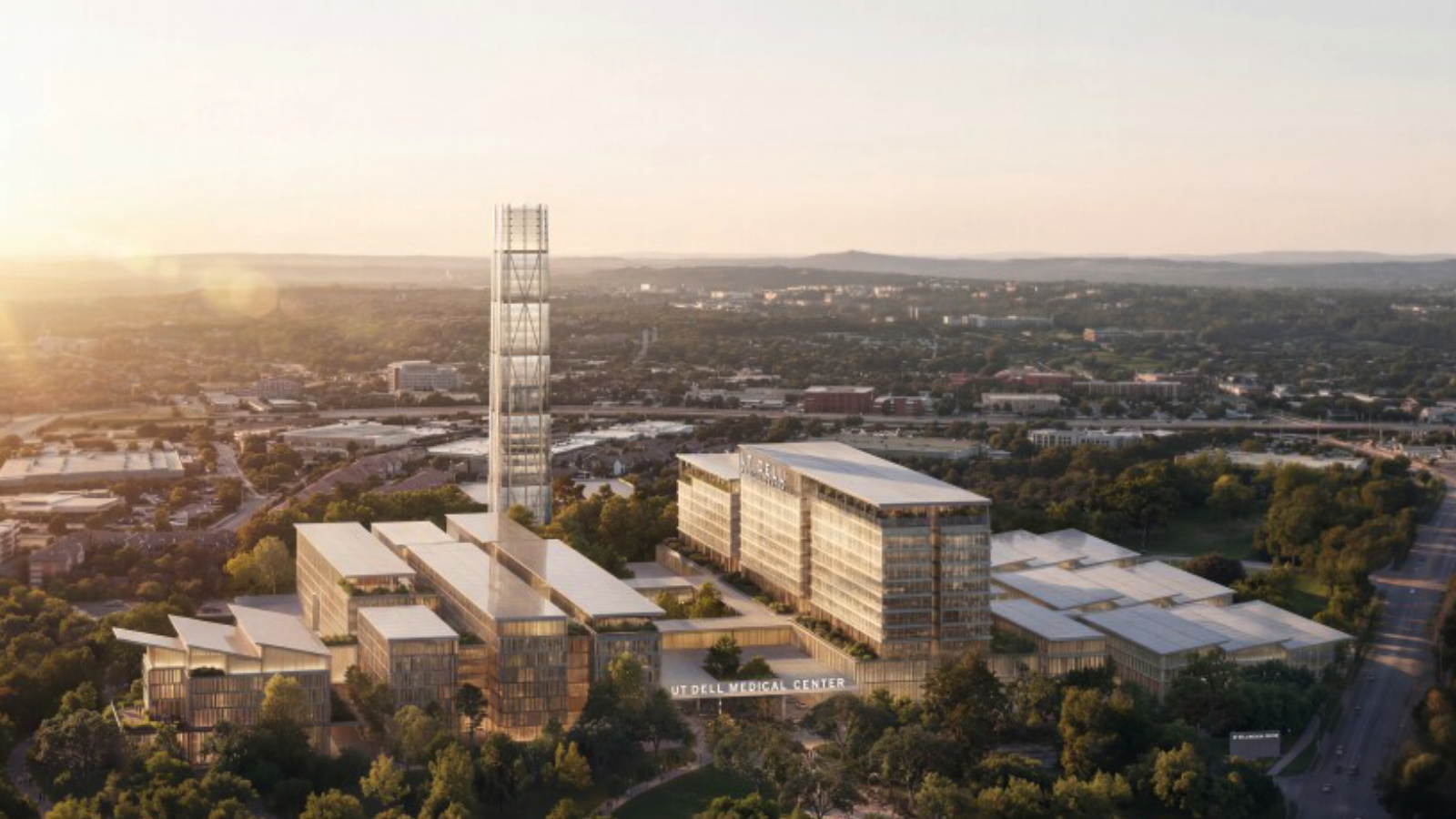
The medical center will rise on a 27-acre site within the broader UT Dell Campus for Advanced Research, which is planned to encompass more than 300 acres in total. This configuration will concentrate clinical care, research activity and advanced computing on a single, large contiguous campus, creating a dedicated environment for medical innovation and education.
Groundbreaking for the UT Dell Medical Center is scheduled to take place this year, with the facility currently slated to open in 2030. The hospital component is expected to include between 300 and 500 beds, giving it the scale to serve a wide catchment area while supporting a variety of specialty services as they are developed over time.
The project will emphasize a patient-centered care model that integrates prevention, diagnosis, treatment and research. Plans call for the use of artificial intelligence and advanced computing to help connect these functions, with the goal of creating a more seamless continuum of care. By embedding technology and research capabilities directly into the clinical environment, the campus is intended to foster closer collaboration between caregivers and scientists.
Taken together, the new UT Dell Campus for Advanced Research and UT Dell Medical Center represent a substantial expansion of healthcare-oriented real estate tied to the University of Texas, backed by a single, large-scale philanthropic investment. For the Austin area and Central Texans more broadly, the development is positioned to deepen local access to specialized medical services while reinforcing the university’s role as a regional hub for medical research and innovation.